Thinking about a weighted vest? This weighted vest buying guide covers the real benefits and risks, how much weight to start with, and how to choose the right fit.
Weighted Vest Guide: Benefits, Risks and How to Choose
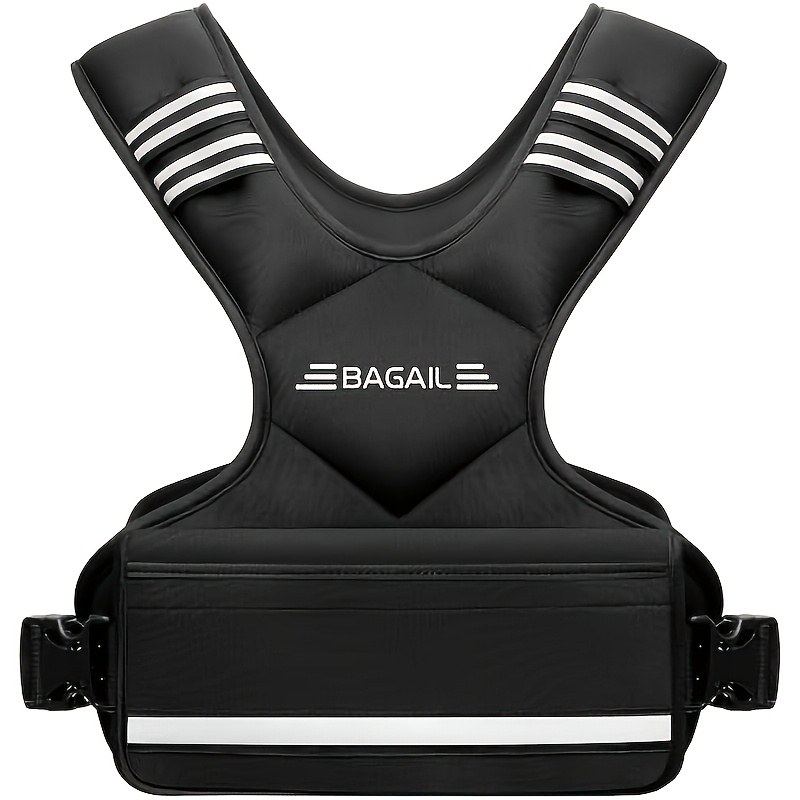
Weighted vests have quietly become one of the most useful home-training tools around. They turn the walk you already take into a strength-and-cardio session, make bodyweight exercises more challenging, and take up zero floor space. But because they load your whole body — spine, joints, and all — choosing and using one deserves more care than most gear. This weighted vest buying guide covers the real benefits, the honest risks, how much weight to start with, and how to pick a vest that actually fits a woman's body.
This guide contains affiliate links. If you buy through them, VÉLORA may earn a commission at no extra cost to you.
What a Weighted Vest Actually Does
A weighted vest distributes extra load across your torso — close to your center of gravity, which is the safest place to carry weight. That added load quietly raises the effort of everything you do while wearing it: walking, stair climbing, squats, push-ups, and core work all demand more from your muscles, heart, and bones. Think of it as turning your own body into adjustable gym equipment.
The benefits are real, if unglamorous:
- Walking becomes resistance training. A 10 lb vest on a brisk 30-minute walk raises the muscular and cardiovascular demand of a habit you already have. Many women get more from their existing walks this way than from adding a second workout to an already-full day.
- Bodyweight exercises scale up. Push-ups, squats, lunges, and planks all become harder without adding a single piece of equipment to your floor.
- Bone loading. Walking and stepping with extra weight is a form of impact-plus-load that supports bone density — genuinely relevant for women in their 40s and beyond, since bone mass naturally declines with age.
- Posture and core engagement. A well-fitted vest nudges your trunk muscles to stay active. Slouching in a vest feels immediately wrong, which is a surprisingly effective teacher.
None of this requires heroics. The vest works best when it disappears into a routine you already follow — which is exactly why it suits busy women.
The Risks: Read This Before You Buy
Vests are safe for most healthy adults when used sensibly. But "sensibly" has specific meaning here:
- Start light — 5–10% of your bodyweight. If you weigh 150 lb, that means starting with 8–15 lb, and honestly the lower end is smarter. Your joints, tendons, and spine need time to adapt to load, even if your muscles feel fine. Many people rush this and pay with sore knees a week later.
- No running or jumping until you are conditioned. Added weight multiplies impact forces. Until you have several weeks of comfortable vest walking under your belt, keep it to walking, stairs, and controlled strength moves. Running in a vest is an advanced practice, not a starting one.
- Joint considerations. If you have knee, hip, ankle, or back issues — arthritis, disc problems, recent injuries — a vest adds load to exactly those joints. Get your provider's or physiotherapist's go-ahead before starting, and begin at the very bottom of the range.
- Stop if it hurts. Muscle fatigue is normal. Sharp, shooting, or joint pain is not. Remove the vest and reassess — this applies on day one and day one hundred.
- Spine and posture. A vest that fits poorly (bouncing, pulling forward, chafing the neck) will do more harm than good. Fit matters enormously — see the buying section below.
- Cardiac caution. A vest raises your heart rate more than you expect. If you have a heart condition, uncontrolled blood pressure, or take cardiac medication, clear it with your doctor first.
- Heat and hydration. Vests trap body heat. On warm walks, drink water, dress light, and shorten sessions. Overheating sneaks up when the load feels easy.
If anything above makes you hesitate, that is the right instinct — check with a healthcare provider. When in doubt, clearance first.
How to Choose a Weighted Vest
1. Adjustable beats fixed, every time
Fixed-weight vests are cheap and simple, but you are stuck with one load. Adjustable vests (pockets for weight plates or sandbags) let you start at 5 lb and grow to 20, 25, or more without buying again. Since adaptation is gradual, adjustability is the single most valuable feature. The Bagail Adjustable Weighted Vest (4–32 lb range) is a good example of the genre: it starts light enough for genuine beginners and tops out high enough for advanced strength circuits.
2. Fit for a woman's body
Many vests are built on men's sizing — long torsos, wide shoulders. Look for:
- Shorter torso options or women's-specific models so the vest sits on your chest and ribcage, not bouncing on your hips or riding into your throat.
- Adjustable shoulder straps and side straps to cinch it snug. The vest should not bounce when you walk briskly. If it does, it is too loose or too heavy.
- A soft inner lining against skin or a sports bra — cheap mesh can chafe over a long walk.
- Chest-friendly design. Some women find plate-style vests more comfortable than bulky sandbag styles around the chest area.
3. Weight distribution and construction
| Design | Pros | Cons | |---|---|---| | Plate-loaded (steel plates in pockets) | Slim profile, even weight, durable | Pricier, plates sold separately on some models | | Sandbag/iron-sand pockets | Cheaper, flexible, molds to body | Can shift during movement, bulkier | | Fixed-weight fabric vest | Simple, no setup | Cannot adjust; outgrown fast |
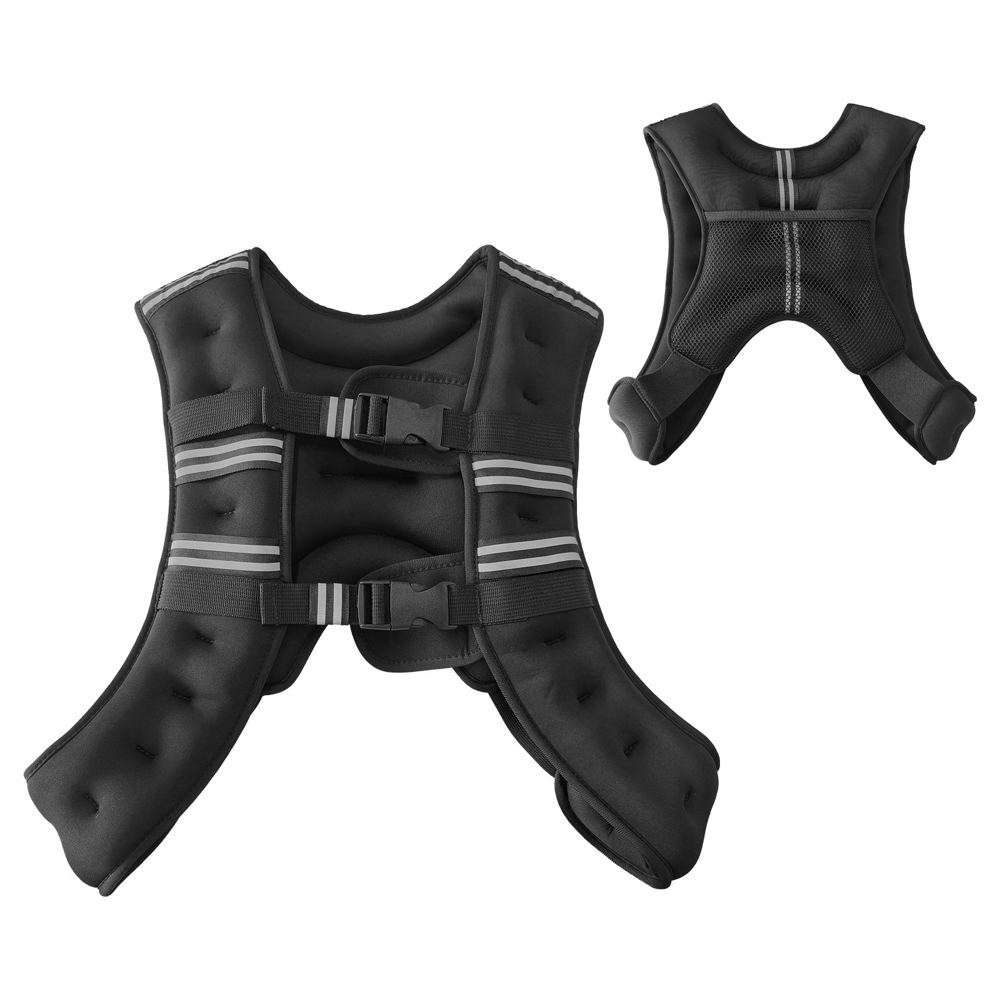
Plate-loaded adjustable vests are the best all-rounder for most women: slim enough to wear under a jacket on a walk, stable for strength moves, and easy to scale. Reflective strips (like the adjustable vest with reflective safety strips) are a thoughtful extra if your walks happen before sunrise or after dark.
4. Comfort details that matter
- Even front-back weight balance. Some vests let you load front and back pockets equally — balanced load protects posture.
- Breathable fabric. You will sweat. Mesh panels or moisture-wicking lining keep long sessions tolerable.
- Quiet hardware. Metal buckles that clank and Velcro that tears open mid-walk are small miseries worth avoiding; check reviews.
How to Start: Your First 4 Weeks
Week 1–2: Wear it walking only. Load 5–8 lb (or the vest's minimum). Take your normal walk — 20–30 minutes, easy pace. Two to three walks per week. Your only job is to confirm the fit is comfortable and nothing aches afterward.
Week 3–4: Add gentle strength. Keep the vest light (8–12 lb) and add it to bodyweight squats, step-ups, and incline push-ups during a home session. Two strength sessions per week, 2–3 sets of 8–12 reps each, with a day of rest between. Our walking workout for women pairs naturally with a vest program, and the low-impact workouts for women guide has gentle strength moves to combine it with.
Beyond month one: add 1–2 lb at a time, never more than 10% of total vest weight per week. Plateaus are fine — a vest you use consistently at 12 lb beats a 25 lb vest you dread.
Using a Vest in Strength Training
Once walking feels easy, the vest shines in bodyweight circuits. Practical guidance:
- Purpose: make bodyweight moves harder without equipment or a gym.
- Setup: cinch shoulder and side straps before the first rep; the vest should feel like part of your torso, not a backpack.
- Technique: keep form identical to your unweighted reps. The moment your squat depth shortens or your push-up hips sag, the vest is too heavy for that move.
- Breathing: exhale on effort (standing up from the squat, pressing up from the push-up), inhale on the lowering phase.
- Sets/reps: 2–4 sets of 8–15 reps per move — use lower reps for heavy-feeling moves (push-ups), higher for legs (squats, lunges).
- Beginner modifications: do the same moves without the vest first. Earn the load.
- Common mistakes: wearing the vest for the whole workout instead of the strength portion (fatigue degrades form in the last third); loading one side more than the other; bouncing through reps instead of controlling them.
Vest Care and Practical Notes
- Wipe it down after sweaty sessions — most vests are hand-wash or spot-clean only; check the label.
- Store flat or hung, not crumpled in a gym bag, so plates and pockets keep their shape.
- Re-check fit monthly. As the vest breaks in (and as your body changes), straps loosen. A vest that bounced last month might bounce again — retighten.
- Travel tip: adjustable vests with removable weights are carry-on friendly for fitness-focused trips. Load the pockets when you arrive.
FAQ
Q: How heavy should my weighted vest be?
Start with 5–10% of your bodyweight — for most women, 8–15 lb. Beginners should stay at the bottom of that range. An adjustable vest in the 4–20 lb range gives you room to grow for years.
Q: Will a weighted vest help me lose weight?
A vest raises the calorie burn of walking and strength work modestly, and results vary — no gear can override nutrition, sleep, and consistency. Think of the vest as making your existing exercise more effective, not as a weight-loss device.
Q: Can I run in a weighted vest?
Not until you are well-conditioned. Start with weeks of comfortable vest walking, then add short jog intervals if your joints feel great. Many experienced trainers advise keeping vest work to walking and strength — running adds impact forces that the extra load multiplies.
Q: Is a weighted vest bad for your back?
A well-fitted vest with sensible weight is fine for a healthy back, and the posture cue can actually help. But if you have disc issues, chronic back pain, or osteoporosis, get medical clearance first — and stop immediately if your back complains.
Q: Can I wear a weighted vest all day?
Please do not. Continuous loading fatigues the stabilizing muscles and stresses joints without recovery. Use the vest for workouts and walks — 30 to 60 minutes at a time — then take it off.
Q: Adjustable or fixed vest?
Adjustable. Fixed vests are cheaper upfront, but you will outgrow the weight (or find it too heavy) and end up buying again. One adjustable vest serves you from beginner to advanced.
Conclusion
A weighted vest is one of the most honest tools in home fitness: it makes the walking you already do more productive and the bodyweight exercises you already know more challenging, with no gym required. Start at 5–10% of your bodyweight, choose an adjustable model that fits your torso snugly, respect the risks — no running until conditioned, stop at pain, get clearance if you have joint or heart concerns — and add load slowly. Done patiently, the vest becomes invisible: just you, on your walk, getting stronger without adding a minute to your schedule.
