From incline push-ups to diamond and plyometric variations: 10 push-up progressions with form cues, rep ranges, and the mistakes to avoid as you level up.
Push-Up Variations: 10 Ways to Progress Beyond the Basics
The push-up is the most democratic upper-body exercise ever invented: no equipment, no gym, works your chest, shoulders, triceps, and core all at once. It is also the exercise most people do badly and progress randomly — stuck for months on sloppy knee push-ups, or jumping to advanced versions their shoulders are not ready for.
This guide fixes that with ten variations in true difficulty order, each with form cues, rep ranges, and a clear rule for when you have earned the next one. Whether your goal is your first full push-up or explosive plyometric reps, there is a rung on this ladder with your name on it.
This guide contains affiliate links. If you buy through them, VÉLORA may earn a commission at no extra cost to you.
Push-Up Fundamentals (Read This First)
Every variation below shares the same foundation. Get this right and every rung gets easier:
- Body line: head, hips, and heels in one straight line. No sagging, no piking.
- Hand position: slightly wider than shoulders, fingers spread, weight through the whole palm.
- Elbows: roughly 45 degrees from your torso — not flared to 90, not glued to your ribs.
- Range: chest to within a fist's height of the floor (or the surface), full lockout at the top without shrugging.
- Breathing: inhale on the way down, exhale as you press up.
- Tempo: two counts down, brief pause, one to two counts up. Fast reps are wasted reps.
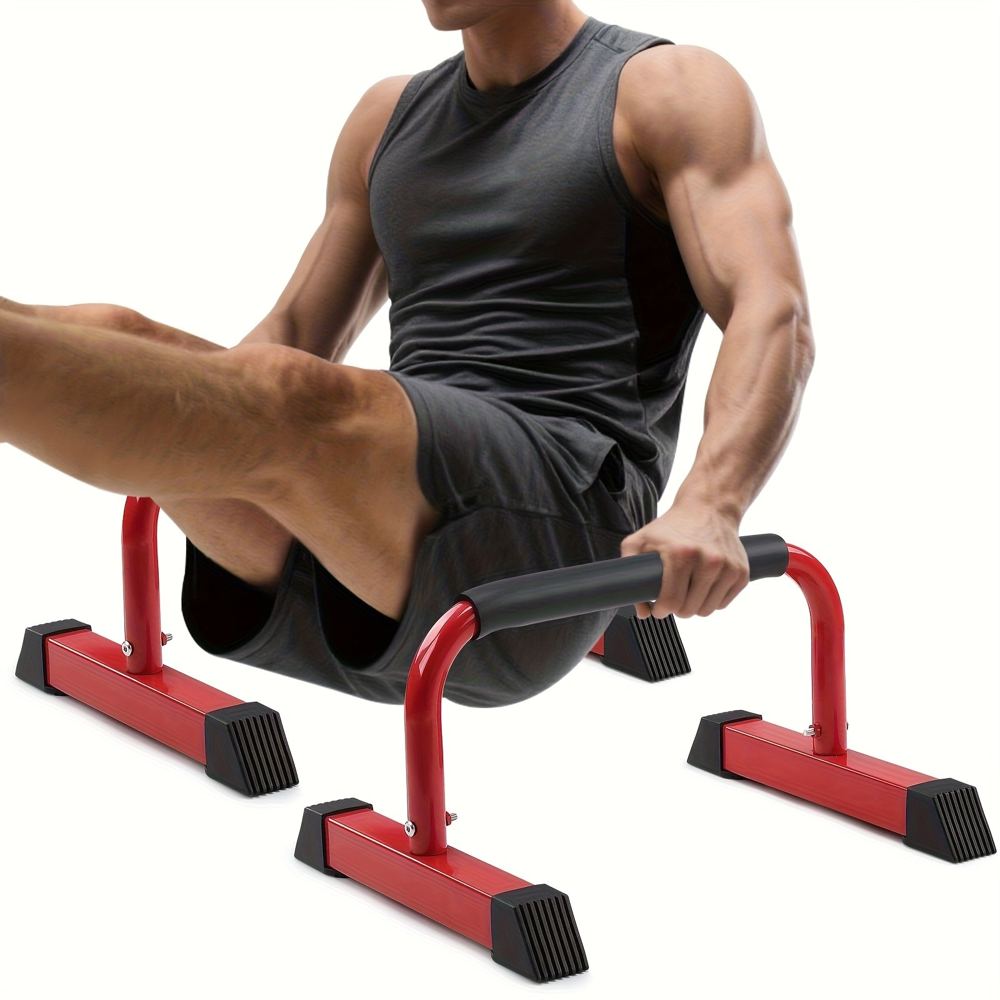
If your wrists ache during floor push-ups, you are not alone — it is the most common complaint. Push-up bars let your wrists stay neutral instead of bent back, which many women find far more comfortable. The Push-Up Bars with Padded Handles above are a simple, joint-friendly upgrade for every variation on this list.
The 10 Variations, Easiest to Hardest
1. Wall Push-Up
Stand arm's length from a wall, hands flat at shoulder height. Bend your elbows to bring your chest toward the wall, then press back. This is the true starting point — no shame in it; it teaches the movement pattern with minimal load. 3 sets of 12–15 reps. Move on when all sets feel easy.
2. Incline Push-Up (Counter Height)
Hands on a kitchen counter or sturdy table, body in a straight line from head to heels. Same pattern, more load than the wall. Lower until your chest nearly touches the surface. 3 sets of 10–15 reps. Progress to a lower surface (bench, then a step) as you get stronger — each few inches lower is a meaningful step up.
3. Knee Push-Up
On the floor, knees on a mat, body straight from knees to head — this is the key detail most people miss. Do not let your hips sag or stick up. Lower your chest to the floor with control. 3 sets of 8–12 reps.
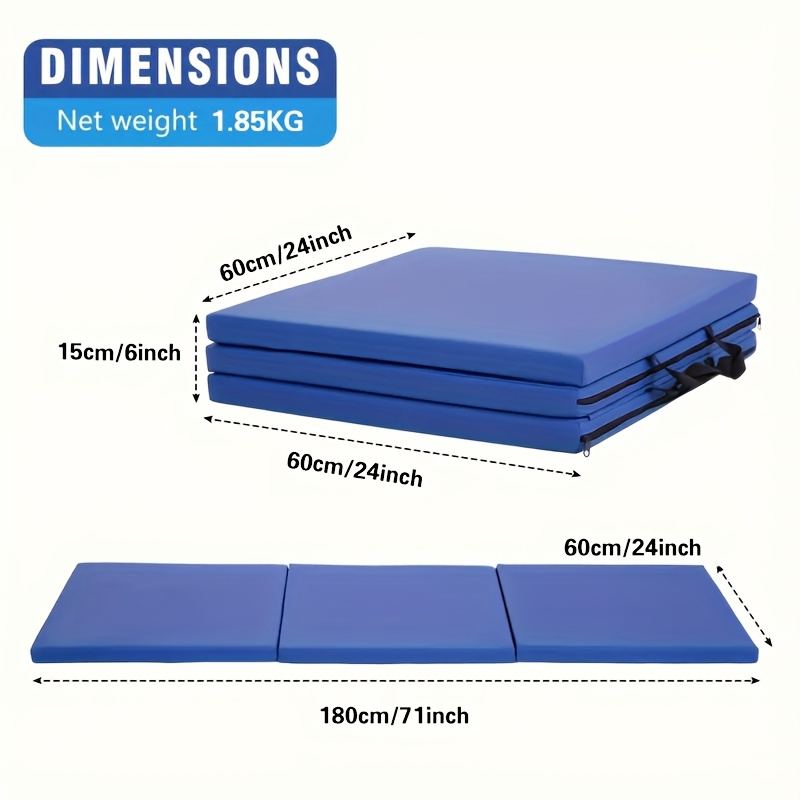
A cushioned surface makes floor progressions far more inviting — the Folding Foam Exercise Mat protects your knees during knee push-ups and floor work generally.
4. Full Push-Up
The classic. Toes on the floor, body one rigid line, chest to the floor, full press. Most women reach this within a few months of steady practice through the earlier rungs. 3 sets of 6–12 reps. Own this first: 3 sets of 12 clean reps is the graduation standard.
5. Wide-Grip Push-Up
Hands placed noticeably wider than shoulders. This shifts emphasis toward the chest and reduces triceps involvement, while demanding more shoulder stability. Keep the 45-degree elbow angle — wide hands tempt people into dangerous 90-degree flaring. 3 sets of 6–10 reps.
6. Decline Push-Up
Feet elevated on a bench, step, or sturdy chair; hands on the floor. More of your bodyweight shifts onto your hands, loading the upper chest and front shoulders harder. Start with a low elevation (one step) and raise it gradually. 3 sets of 6–10 reps. Keep your core extra tight — the decline angle punishes any sagging.
7. Diamond Push-Up
Form a diamond with your thumbs and index fingers under your chest, elbows tracking close to your body. This is a triceps-dominant variation and significantly harder than it looks. 3 sets of 5–10 reps. If your elbows flare or your lower back sags, you are not ready — go back to full push-ups for another few weeks.
8. Archer Push-Up
One arm stays nearly straight out to the side while the other does most of the pressing; alternate sides each rep. This is the bridge to single-arm strength — each side handles far more than half your bodyweight. 3 sets of 4–8 reps per side. Move slowly; the straight arm is a stabilizer, not a passenger.
9. Plyometric (Clap) Push-Up
From a full push-up, press explosively so your hands leave the floor — clap if you can, or just lift off and land softly with bent elbows. 4–5 sets of 3–6 reps, resting 90–120 seconds between sets — this is power work, not conditioning. Attempt only when you own 15+ clean full push-ups.
10. Single-Arm Push-Up Progression
The summit. Start with feet wide and the working hand under your chest, other arm behind your back. Most people need months of archer push-ups and dedicated practice to get here — treat it as a long-term project, not a next-month goal. Work up through partial ranges (elevated single-arm push-ups first) before attempting full floor reps. Even a few clean reps is an elite achievement.
Variation Difficulty at a Glance
| # | Variation | Difficulty | Primary Emphasis | Graduate When... | |---|---|---|---|---| | 1 | Wall push-up | Beginner | Movement pattern | 3 × 15 feels easy | | 2 | Incline push-up | Beginner | Chest, shoulders, triceps | 3 × 15 at low incline | | 3 | Knee push-up | Beginner | Full upper-body push pattern | 3 × 12 clean reps | | 4 | Full push-up | Intermediate | Chest, shoulders, triceps, core | 3 × 12 clean reps | | 5 | Wide-grip push-up | Intermediate | Chest emphasis | 3 × 10 with good elbow angle | | 6 | Decline push-up | Intermediate | Upper chest, front shoulders | 3 × 10 at moderate elevation | | 7 | Diamond push-up | Advanced | Triceps emphasis | 3 × 10 without form breakdown | | 8 | Archer push-up | Advanced | Unilateral pressing strength | 3 × 8 per side, controlled | | 9 | Plyometric push-up | Advanced | Explosive power | 15+ clean full push-ups first | | 10 | Single-arm progression | Elite | Maximal unilateral strength | Months of archer work completed |
How to Program Push-Up Progressions
Pick the hardest variation you can do for clean sets of 6+ reps — that is your working variation. Train push-ups 2–3 times per week:
- Main sets: 3–4 sets of your working variation, stopping 1–2 reps before failure.
- Volume top-up: after main sets, do 1–2 sets of an easier variation for higher reps.
- Progress when: you hit the top of the rep range on all sets with perfect form for two sessions in a row — then move up one rung.
Greasing the groove also works brilliantly for push-ups: several sub-maximal sets spread through the day, never to failure. Five sets of half your max, scattered across the day, 3–4 days a week, builds the skill fast.
For a complete step-by-step plan aimed specifically at women, our push-up progression for women maps this ladder onto a weekly schedule. And since push-ups are only half the upper-body story, pair them with the pulling and shoulder work in our upper-body workout for women.

Beyond the classic ladder, tools open new progression paths. Sliders add plank walkouts and archer-style sliding push-ups — smooth, joint-friendly ways to keep the challenge growing long after the basics feel easy.
Mistakes That Stall Push-Up Progress
- Flaring elbows to 90 degrees. The fastest route to shoulder pain. Keep them near 45 degrees on every variation.
- Half reps. Chest barely dipping and calling it a push-up builds half the strength. Full range or it does not count.
- Sagging hips. When your lower back aches during push-ups, your core has quit — drop to an easier variation rather than grinding through bad reps.
- Skipping rungs. Jumping from knee push-ups to diamond push-ups skips the strength base the middle rungs build. The ladder works because each rung prepares the next.
- Training to failure daily. Push-ups respond to frequent, sub-maximal practice — not daily max-outs that leave your shoulders aching.
- Neglecting pulling. All push and no pull creates imbalances. Rows, pull-aparts, or pull-ups belong in the same week as any push-up program.
Safety Notes
- Stop for sharp shoulder, wrist, or elbow pain. Muscle fatigue is normal; joint pain is a stop signal.
- Warm up your shoulders and wrists before hard variations: arm circles, wrist circles, and a set of easy incline push-ups.
- Plyometric and single-arm variations demand healthy shoulders — if you have a history of shoulder issues, get clearance before attempting rungs 9 and 10.
- Land plyometric reps softly with bent elbows. Locked-elbow landings are how injuries happen.
- Pregnant or postpartum women should check with their provider about prone pressing work, especially with diastasis recti considerations.
FAQ
Q: How long does it take to get your first full push-up?
Most women who practice consistently reach their first clean full push-up within 2–4 months of the incline and knee progressions. Timelines vary with starting strength, bodyweight, and practice frequency — the ladder works on your body's schedule, not a fixed one.
Q: Are knee push-ups "real" push-ups?
They are a real training tool, not a consolation prize. Done with a straight body line and full range, knee push-ups build genuine pressing strength and are the correct rung for thousands of women. What they are not is the final destination for most people — keep climbing when you are ready.
Q: Why do my wrists hurt during push-ups?
The bent-back wrist position loads the joint uncomfortably for many people, especially on hard floors. Try push-up bars or dumbbells as handles to keep wrists neutral, spread your fingers to distribute load, and warm up your wrists first. Persistent pain deserves a professional opinion.
Q: How many push-ups should I be able to do?
It depends on your goals. Rough markers: 5 clean full push-ups is a solid beginner achievement, 15–20 is strong intermediate territory, and 30+ with good form is well above average. Compare against your last month, not anyone else.
Q: Can push-ups alone build my upper body?
They build the pressing muscles (chest, shoulders, triceps) and core very well, but a complete upper body also needs pulling — rows, pull-ups, or band pull-aparts — for the back and biceps. Push-ups plus rows is a genuinely complete minimalist upper-body program.
Q: Should I do push-ups every day?
Frequent sub-maximal practice (greasing the groove) works well, but daily max-effort sets do not — shoulders and elbows need recovery like any joint. Either train them hard 2–3 times per week with rest days, or do easy daily volume well below failure. Not both.
Conclusion
The push-up is not one exercise — it is a ladder of ten, from the wall to the single arm, and every rung is a legitimate achievement. Find your current rung, train it with clean form two to three times a week, and climb only when your body has truly earned the next one. Respect the fundamentals, protect your shoulders, balance pushing with pulling, and the progressions take care of themselves. Your first full push-up — and every variation after it — is built one honest rep at a time.