Progressive overload explained simply: what it is, five ways to apply it at home, a sample progression plan, and how to avoid plateaus without injury.
Progressive Overload Explained: The Key to Getting Stronger
If you have been training for a few weeks and the workouts that once left you sore now feel easy, you have met one of strength training's friendliest truths: your body adapts. The same exercises, at the same weight, eventually stop producing change. Progressive overload is simply the planned answer to that — gradually asking a little more of your muscles over time so they keep getting stronger. It is not about suffering or constantly lifting heavier. It is about small, deliberate increases, week after week, that compound into real strength.
This guide explains what progressive overload is, five practical ways to apply it in a home workout, a sample six-week progression for one lift, and how to tell the difference between productive challenge and doing too much too soon. Results vary from person to person — no two people progress at the same pace — but with consistent training and patient progression, getting stronger is the normal outcome.
This guide contains affiliate links. If you buy through them, VÉLORA may earn a commission at no extra cost to you.
What Progressive Overload Actually Is
Your muscles adapt to the demands placed on them. When you lift a challenging weight, you create small amounts of fatigue and tissue stress; during recovery — especially sleep and rest days — your body rebuilds a little stronger than before, preparing for the same demand next time. That is adaptation.
Progressive overload means making sure the demand keeps nudging upward over time, so adaptation never stalls. Without it, you maintain what you have, which is fine if that is the goal, but you will not keep getting stronger. Importantly, "overload" does not mean overwhelming your body. The increases should be small enough that your form stays clean and you recover between sessions. A weight that is five percent heavier, two extra repetitions, or a slightly slower lowering phase are all legitimate forms of overload — and they add up.
The 5 Methods of Progressive Overload (With Home Examples)
1. Add Weight
The most direct method: lift slightly more than before. At home this is easiest with adjustable dumbbells, where you can increase in small jumps.
- Home example: You goblet squat with a 10 kg dumbbell for 3 sets of 10. Next week, use 12 kg for the same sets and reps.
- When to use it: When you can complete all your planned sets and reps with solid form and feel you could do 2–3 more reps on the last set.
- How much: Small jumps — roughly 2–5% for upper-body lifts and 5–10% for lower-body lifts. At home with limited increments, simply moving to the next available dumbbell size counts.
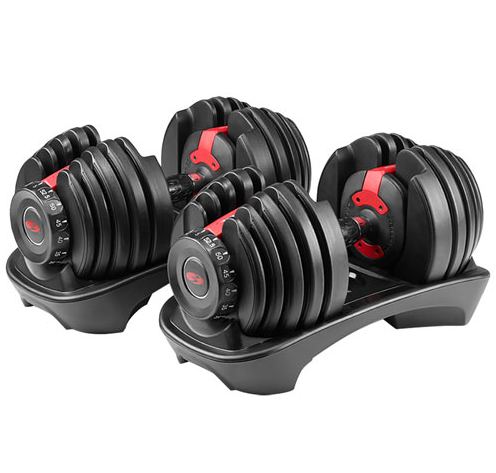
Adjustable options make this far more practical than buying pairs of fixed weights. The Bowflex SelectTech 552 Adjustable Dumbbells replace a whole rack in one pair, and our guide to the best adjustable dumbbells for small spaces compares options by footprint and weight range.
2. Add Repetitions
Do more reps with the same weight. This is often the smoothest progression for beginners because technique stays identical.
- Home example: You do dumbbell floor presses with 8 kg, 3 sets of 8. Add one rep per set each week: 3×9, then 3×10, then increase the weight and drop back to 3×8.
- When to use it: When you do not have heavier weights available, or when a weight jump feels too big. It also suits exercises where small weight increments are hard to make, like bodyweight movements.
3. Add Sets
Increase total volume by adding a set. If you currently do 2 sets of an exercise, a third set is roughly a 50% increase in work for that muscle.
- Home example: Your workout has 2 sets of Romanian deadlifts. After two weeks of clean 2-set sessions, make it 3 sets at the same weight and reps.
- When to use it: When sessions feel short or you recover quickly and want more stimulus without changing weights. Add only one set at a time, and watch your recovery — more sets also mean more fatigue.
4. Slow the Tempo
Make each rep harder without changing weight by controlling the lowering phase. A 3–4 second descent roughly doubles the time your muscles spend under tension compared to dropping quickly.
- Home example: In a goblet squat, take 3 seconds to lower down, pause one second at the bottom, then stand up in 1–2 seconds. The same 10 kg suddenly feels much heavier.
- When to use it: When you want more challenge but no heavier equipment, or to improve control and joint-friendly form. Count silently in your head to keep the tempo honest.
5. Reduce Rest Periods
Shortening rest between sets increases the density of the workout — more work in less time — which is a real training stimulus.
- Home example: You rest 90 seconds between sets of rows. Over several weeks, bring it down to 75, then 60 seconds, keeping the weight and reps the same.
- When to use it: When time is short and you want more productive sessions, or as a bridge before adding weight. Do not cut rest so short that your form breaks down on later sets.
Progressive Overload Methods at a Glance
| Method | Example | Best When | | --- | --- | --- | | Add weight | 10 kg → 12 kg goblet squat, same reps | You have adjustable weights and form is solid | | Add reps | 3×8 → 3×9 → 3×10 floor press | No heavier weights available; small steps needed | | Add sets | 2 sets → 3 sets of deadlifts | You recover well and want more total work | | Slow tempo | 3-second lowering on every squat | Limited equipment; want joint-friendly challenge | | Reduce rest | 90 s → 60 s rest between sets | Short on time; want denser, more efficient sessions |
You do not need to use all five at once. Pick one method per exercise, progress it for a few weeks, then switch methods or move to the next one when progress stalls.
A Sample 6-Week Progression for One Lift
Here is how a beginner might progress a goblet squat using the add-reps-then-add-weight approach. Assume good form throughout and 2–3 sessions per week where this lift appears.
- Week 1: 8 kg, 2 sets of 8. Focus on learning the movement.
- Week 2: 8 kg, 2 sets of 10.
- Week 3: 8 kg, 3 sets of 8.
- Week 4: 8 kg, 3 sets of 10. You could do 2–3 more reps on the last set — time to increase weight.
- Week 5: 10 kg, 2 sets of 8. Slightly fewer reps with the new weight while your body adjusts.
- Week 6: 10 kg, 3 sets of 8–10.
Notice the pattern: change one variable at a time, and give each change a week or two to settle.
When to Progress vs. When to Deload
Progress when: you complete all sets and reps with good form, you feel you could do 2–3 more reps on your last set, and you recover normally between sessions. That is your green light.
Take an easier week — a deload — when: your performance drops for two sessions in a row, joints ache in a way that is new, sleep or motivation tanks, or you feel stale and heavy rather than energized after workouts. A deload is not quitting. Cut your weights to about half, keep the movements, and train 2 lighter sessions that week. Most people come back stronger. If you are following a structured beginner plan, our beginner strength training program builds recovery weeks into the schedule so you do not have to guess.
Signs of Too Much Too Soon
Progressive overload only works if you recover from it. Watch for these warning signs that you increased too fast:
- Form breakdown. If the last few reps look nothing like the first few — knees caving, back rounding, shoulders shrugging — the load is too much for your current strength.
- Joint pain rather than muscle fatigue. Muscles feeling worked is normal; sharp pain in knees, shoulders, or the lower back is a signal to reduce load and reassess.
- Plateau or regression. If weights or reps stall for 3–4 weeks despite effort, you may be under-recovering rather than under-training. More is not always the answer.
- Persistent fatigue. Needing excessive caffeine to face a workout, or soreness that never fully clears between sessions, suggests the total load exceeds your recovery.
Common Mistakes
- Adding weight before mastering form. Every extra kilogram magnifies poor technique. Film a set from the side now and then and compare it to the cues in a good tutorial.
- Changing everything at once. More weight AND more reps AND shorter rest in the same week makes it impossible to know what worked — and dramatically raises fatigue.
- Chasing the numbers of others. Someone else's squat has nothing to do with your progression. Your only honest comparison is your own training log from last month.
- Ignoring the small methods. Beginners often think only weight counts. Tempo and reps are equally legitimate, and often safer, progressions.
If you are just getting started, read how to start strength training as a woman first, then layer progressive overload onto the foundations it teaches.
FAQ
Q: How fast should I increase weight?
For most beginners, adding small increments every 1–3 weeks per lift is a realistic range. Upper-body lifts usually progress more slowly than lower-body lifts because the muscles are smaller. If you can add reps first and weight second, do that — it is the gentler path. There is no universal timeline, and results vary.
Q: Do I need to track my workouts to use progressive overload?
Yes, in some simple form. You cannot progress deliberately if you do not remember what you did last time. A notebook or phone note with exercise, weight, sets, and reps is enough. Even a weekly photo of the page works.
Q: Can I use progressive overload with bodyweight exercises?
Absolutely. Use the add-reps, add-sets, slow-tempo, and reduce-rest methods — and progress to harder variations when easy ones feel light (for example, incline push-up to floor push-up). The principle is the same; only the tools differ.
Q: What if I only have one pair of dumbbells?
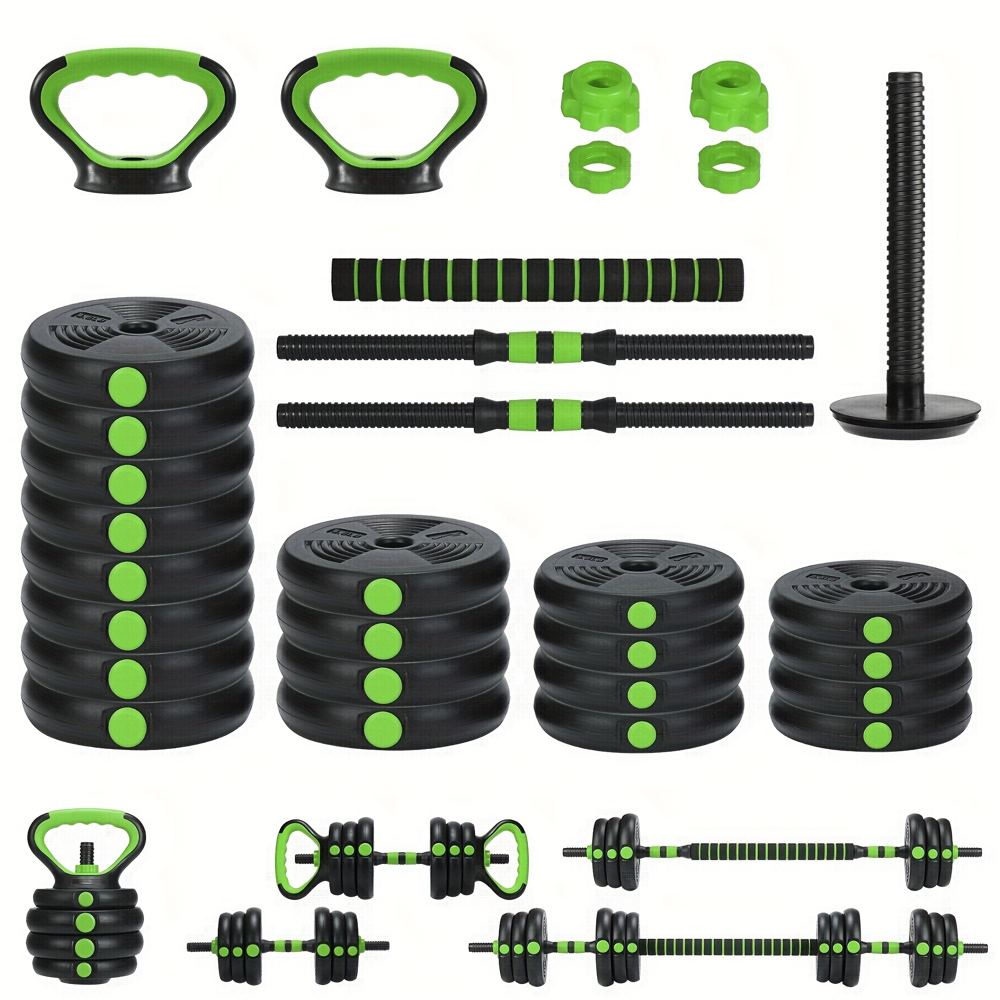
You still have four methods available: reps, sets, tempo, and rest. Many people train productively for months with a single pair using exactly these. When you outgrow them, an adjustable set like the Round Free-Weights Adjustable Dumbbell Set unlocks the fifth method — adding weight — without buying a rack.
Q: Is muscle soreness required for progressive overload to work?
No. Soreness mainly reflects novelty, not effectiveness. As your body adapts, you will feel less sore even while getting stronger. Judge progress by your training log — weights, reps, and sets going up over weeks — not by how sore you feel.
Conclusion
Progressive overload is less a secret technique than a patient habit: do a little more than last time, in one small way, with good form, and let your body adapt. Add weight when you can, add reps when you cannot, slow your tempo when equipment is limited, and respect deload weeks when your body asks for them. Train this way for a few months and the strength gains take care of themselves — no hype, no shortcuts, just the quiet compounding of small increases.