Progress comes from small, patient increases — not sudden jumps. Learn safe progression rules for weights, reps, and intensity that keep you injury-free.
How to Progress Exercise Safely: Small Steps, Steady Gains
Everyone wants the secret to getting stronger — but few ask what decides whether training works long-term: how do you move forward without getting hurt? Progress isn't about dramatic leaps. It's about small, patient increases, stacked week after week, in a way your body can adapt to. Here are the safe progression rules for weights, reps, and intensity that keep you gaining without breaking down.
This guide contains affiliate links. If you buy through them, VÉLORA may earn a commission at no extra cost to you.
What Progression Really Means
Most people picture a bigger number on the dumbbell. But load is only one dial — progression means asking your body to do slightly more than it's used to, and there are several levers:
- Load: a slightly heavier weight. The most obvious form, but far from the only one.
- Repetitions: more reps with the same weight — 8 clean squats becoming 12.
- Sets: an extra set once your current volume feels manageable.
- Range of motion: squatting deeper with control, lowering further in a push-up.
- Tempo: slowing the lowering phase to keep muscles working longer.
- Density: the same work in less time — shorter rests between sets.
Why does this matter? Because you won't always have a heavier dumbbell on hand — and you don't need one. A woman training at home can progress for months by adding reps, slowing tempo, and improving range of motion before ever needing more weight. The Adjustable Dumbbell with Wear-Resistant Grips is practical here precisely because it lets you raise load in small steps when the time comes, without buying a rack of fixed pairs.
The real skill is choosing the gentlest effective increase — enough to ask your body to adapt, small enough that form, joints, and recovery keep up.
The Small-Steps Rule
The single most protective guideline in strength training: increase one variable at a time, by a small amount.
- Load: roughly 2.5–10% per step — near the bottom for upper body (1–2.5 lbs), up to the top end for lower body (5–10 lbs). Small jumps are how experienced lifters train for years without injury.
- Reps: add 1–2 reps per set per week before touching the weight.
- Volume: add one set or one exercise at a time — not three new things in one week.
Equally important: only raise one variable at once. If you add weight and reps and cut rest periods in the same session, you won't know what caused the strain when your shoulder starts complaining. Change one thing, let your body settle in for a week or two, then change the next.
For the principle behind all of this, see progressive overload explained.
Add Reps Before Adding Weight
Here's the sequence that keeps beginners safest: first get stronger within a weight, then raise it.
- Pick a weight you can lift for about 8 clean reps with good form.
- Week by week, build the reps — 8 becomes 10, then 12 — over 2–4 sets.
- When you can do the top of your range (say 12) with form that still looks crisp on the last rep, then increase the weight by a small step.
- Reps drop back to the bottom of the range (8) with the new weight. Build them back up. Repeat.
This "rep ladder" means you only handle a new weight once you've proven you own the lighter one. If your form breaks down at rep 9, you don't get to rep 12 — you stay, practice, and let strength catch up.
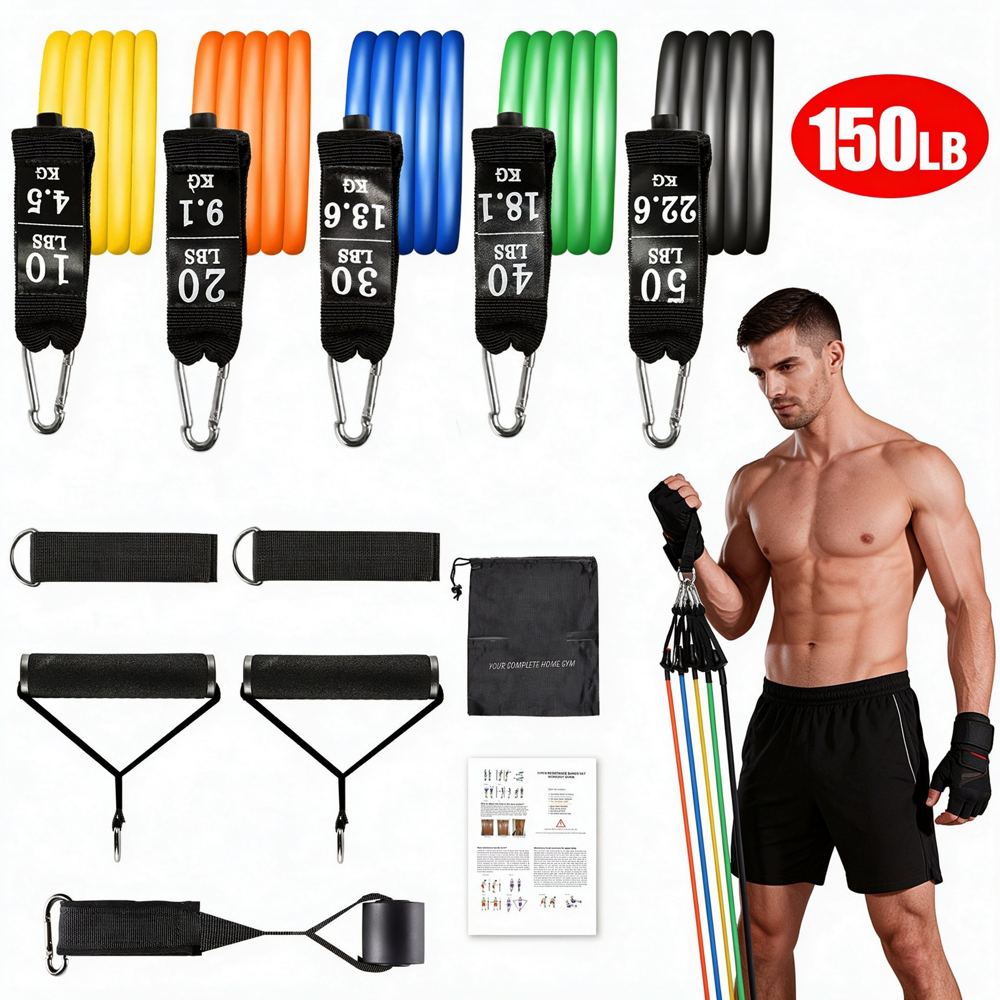
An 11-piece resistance band set with 5 levels, handles, and door anchor suits this style well, because the graded resistances let you move up one band at a time and accumulate reps safely before graduating.
The Two-Rep Rule: Knowing When to Go Up
How do you know when it's time for more weight, rather than just impatience? Use the two-rep rule:
If you can do two more reps than your target on the last set, with clean form, the weight is ready to go up.
Example: your plan calls for 3 sets of 10 goblet squats. If set three could honestly have been 12 smooth reps — same depth, same control — add a small amount of weight next session and restart at the bottom of your rep range. This guards against increasing from boredom or a fluke good day: two clean reps over target is evidence, not feeling.
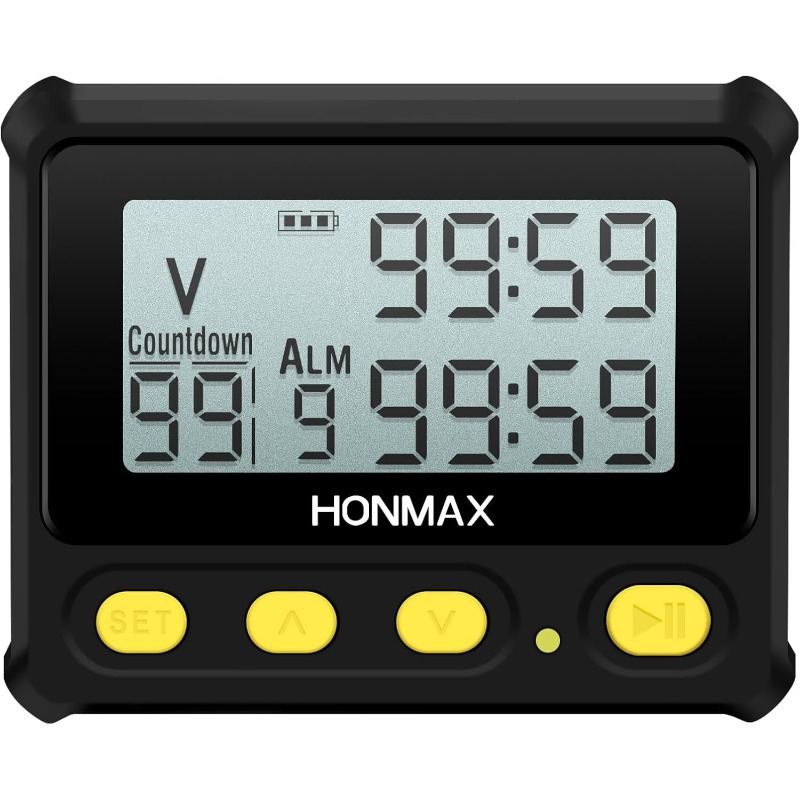
Consistent rest periods help too — an interval timer for timed progression makes sure a set that "felt easier" was actually easier, not just better rested.
Progressive Overload Basics for Beginners
"Progressive overload" just means gradually asking your body to do slightly more than it's used to. For the first few months, you need a simple rhythm, not a spreadsheet:
- Train each muscle group 2–3 times per week, with at least a rest day between hard sessions for the same muscles. Two full-body sessions weekly is plenty to start.
- Pick 4–6 exercises per session covering the main patterns: squat, hinge (like a deadlift), push, pull, and a core movement.
- Work in the 8–15 rep range — kind to joints while building real strength.
- Leave 1–3 reps "in the tank" on most sets. Training to absolute failure every set is a recipe for burnout, not progress.
- Write down what you did. Exercise, weight, sets, reps — a notebook entry is the cheapest progression tool in existence. You can't progress what you can't remember. See how to track your workouts for a method that takes under a minute.
Beginners progress fastest — which is a gift and a trap. Muscles adapt faster than tendons and ligaments, so the small-steps rule exists to let the slower tissues keep up.
Deload and Easy Weeks
Planned easy weeks are part of getting stronger. Every 4–8 weeks — or sooner if fatigue piles up — schedule a week where you cut training volume roughly in half (fewer sets, lighter loads, or both) while keeping the movements.
Adaptation happens during recovery — the session is the question, rest is the answer. Endless ramping without backing off leads to stalled lifts, achy joints, and burnout. A deload week isn't quitting: walks, easy mobility, and normal exercises at 50–60% effort. Most people return fresher and stronger. See deload week explained for the full structure.
Warning Signs You're Moving Too Fast
- Form breakdown: the weight goes up but your last reps look nothing like your first — squats turn wobbly, backs round on rows. Form is the gatekeeper; if it's gone, the weight is too much.
- Lingering joint pain: muscle soreness fades in days; pain in a joint that sticks around is a signal to back off, not push through.
- Worsening sleep: restless nights as training ramps up signal excess fatigue.
- Dreading every session: occasional low motivation is normal; consistent dread suggests overreaching.
- Performance going backward: weights that were manageable two weeks ago feeling impossible means your body wants rest, not more load.
The fix is the same for all of these: step the load back 10–20%, restore clean form, and rebuild. Professional athletes deload constantly — there's no shame in it.
Plateaus: What They Mean
At some point, progress slows — every long-term exerciser hits plateaus. It usually means one of three things: recovery isn't keeping up (sleep, food, stress); your body needs a different challenge rather than a bigger one; or you're past the beginner phase, where gains come in months, not weeks.
Sensible responses, in order:
- Check the basics: 7–9 hours of sleep? Enough protein and overall food? Manageable life stress? Most plateaus are recovery plateaus.
- Change the stimulus, not just the load: swap an exercise variation, change the rep range, or adjust tempo.
- Take a deload week, then return. Many "plateaus" dissolve after proper rest.
- Be patient. Post-beginner, meaningful gains are measured in months — the normal rhythm of a trained body, not failure.
Sample 8-Week Dumbbell Progression
Safe progression in practice, using goblet squats: reps climb first, weight rises in small steps, week 5 consolidates. Adjust the numbers — the pattern is what matters.
| Week | Weight | Sets × Reps | Notes | |---|---|---|---| | 1 | Light (e.g. 10 lbs) | 2 × 8 | Learn the movement; leave reps in the tank | | 2 | Same | 2 × 10 | Add reps, not weight | | 3 | Same | 3 × 10 | Add a set once 2 × 10 feels smooth | | 4 | +2.5–5 lbs | 3 × 8 | Small load jump; reps drop back down | | 5 | Same as week 4 | 2 × 8 | Lighter consolidation week | | 6 | Same as week 4 | 3 × 10 | Rebuild volume at the new weight | | 7 | Same as week 4 | 3 × 12 | Top of the range, form still clean | | 8 | +2.5–5 lbs again | 3 × 8 | New small jump; cycle repeats |
Results vary from person to person, and no timeline is guaranteed — this is a template for patience, not a promise.
Common Mistakes
- Adding weight every session. Endless linear increases aren't realistic past the beginner phase — and rushing them breaks form.
- Changing everything at once. New weight plus new exercises plus shorter rests in one week means you can't tell what's working or hurting.
- Copying someone else's jumps. A partner adding 10 lbs doesn't mean your body is ready for it.
- Skipping warm-ups as weights climb. Five easy minutes plus 1–2 light ramp-up sets matters more the heavier you go.
- Treating soreness as the goal. Soreness is a side effect, not a scoreboard — effective sessions often produce little of it once you're adapted.
- Never backing off. The people who progress for years deload regularly; the ones who never miss a max-effort day burn out.
FAQ
Q: How fast should I add weight?
Slower than your ego wants: 1–2.5 lbs on upper-body lifts, 2.5–5 lbs on lower-body, every 2–4 weeks — and only after building reps at your current weight.
Q: What if I can't progress one lift while others improve?
Completely normal — lifts stall at different times, usually smaller-muscle ones like overhead press. Keep progressing what moves; for the stalled lift, try a variation or hold steady. One stalled lift is not a failed program.
Q: Is it okay to stay at the same weight for a while?
Yes — maintenance is legitimate. Holding a weight while you refine form, add reps, or slow tempo still builds fitness; consistency at a comfortable load beats quitting after an aggressive push.
Q: How do I progress bodyweight moves when I can't add weight?
Use the other levers: more reps, more sets, harder variations (knee push-ups → full push-ups), slower tempo, longer holds, shorter rests, deeper range. Bodyweight progression is real progression.
Q: Should beginners use the two-rep rule too?
A gentler version: when your target reps feel smooth for two weeks in a row, a small increase is reasonable. Early on, the priority is learning movements — progress happens almost by itself.
Conclusion
Safe progression is beautifully boring: small increases, one variable at a time, reps before weight, regular easy weeks, honest attention to your body. The people still training happily years from now progressed patiently. Pick up a weight you can control, add a little when earned, back off when your body asks, and let the months compound. Steady wins this race.