A complete leg day workout for men: beginner-to-intermediate lower-body routine with goblet squats, hinges, lunges, and calves — full sets, reps, and form cues.
Leg Day for Men: A Complete Beginner-to-Intermediate Routine
Most men will happily train chest and arms three times a week, then "forget" legs for the fourth month running. Leg day suffers a bad reputation it does not deserve: the idea that it is miserable, pointless, or only for bodybuilders. The truth is simpler. Training your legs builds the largest muscles in your body — the quads, glutes, and hamstrings — which means it supports athletic movement, posture, and the kind of functional strength you use every day when you lift, carry, climb, and sprint.
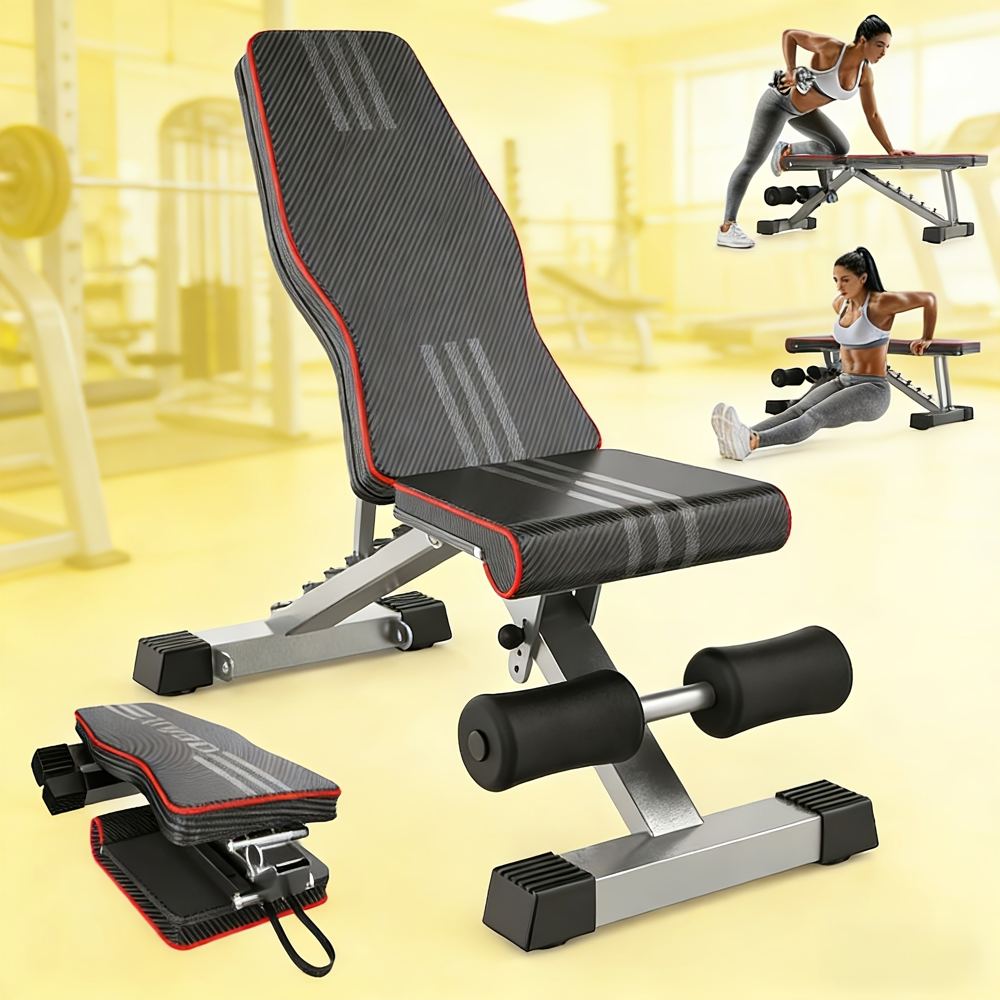
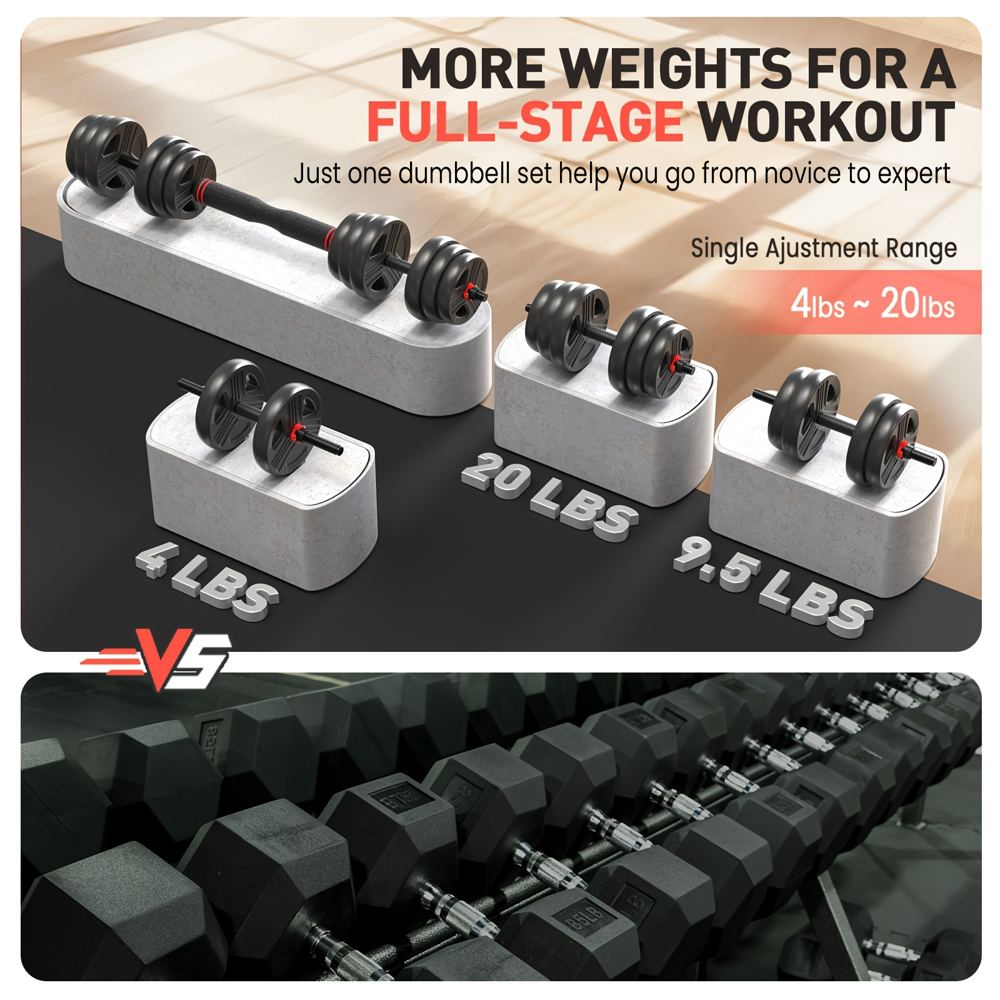
This guide gives you a complete leg day routine that works from your first week of training through your first year. It uses simple, repeatable movements, a clear warm-up, and sets and reps given as ranges so you can tune the difficulty to your level. You need a pair of dumbbells and, ideally, an adjustable bench — an Adjustable Weight Bench 660LBS Foldable Multi-Angle handles split squats and step-ups, and the Adjustable Dumbbells Convertible Barbell Kettlebells Set lets you progress your loading as you get stronger. Results vary between individuals — but a leg day you repeat consistently will steadily build strength.
This guide contains affiliate links. If you buy through them, VÉLORA may earn a commission at no extra cost to you.
Why Men Should Train Legs (And Why Many Don't)
The honest reasons men skip leg day: it is hard, it makes the next day's stairs miserable, and legs don't show in a mirror selfie. But skipping legs creates a slow problem. An undertrained lower body means weaker lifts everywhere else — your back and shoulders cannot push weight that your legs cannot stabilize. Knee and lower-back complaints are also more common in people with weak glutes and hamstrings, because the lower back ends up doing work it was not built for.
Leg training also deserves credit for something practical: the squat, hinge, and lunge patterns in this routine are the same patterns you use lifting boxes, moving furniture, playing pickup sports, and catching yourself when you trip.
Before You Start: The 5-Minute Leg-Day Warm-Up
Jumping into heavy squats cold is how men get hurt. Do this quick sequence every leg day: march in place 60 seconds, 10 leg swings per side (holding a wall), 10 slow bodyweight squats, 10 hip hinges, and 5 slow walking lunges per leg with no weight.
Your breathing rhythm for the workout itself: exhale on the effort (standing up from the squat, lifting the weight), inhale on the lowering phase. Never hold your breath through a rep.
The Complete Leg Day Routine
Do leg day once per week at first, twice when you are comfortable (at least 72 hours apart). Rest 60–120 seconds between sets of compound movements, 30–60 seconds between sets of smaller movements. Start each exercise lighter than you think for the first session, then add weight or reps the following week.
1. Goblet Squat — The Foundation Move
Purpose: Builds the quads, glutes, and core while teaching a deep, upright squat pattern safely.
Starting position: Stand with feet a little wider than shoulder-width, toes turned slightly out. Hold one dumbbell vertically at chest height, both hands cupping the top end, elbows tucked close to your body.
Technique: Push your knees out over your toes as you sit down between your heels. Keep your chest up and heels flat on the floor. Lower until your thighs are roughly parallel to the floor (or as deep as you can with a flat back). Drive through your whole foot to stand.
Sets/reps: 3–4 sets of 8–15 reps.
Beginner modification: Do bodyweight squats to a chair or bench — sit down fully, stand back up without using your hands.
Common mistakes: Heels lifting off the floor (move feet wider, check ankle mobility); knees collapsing inward (push them out over your toes); rounding the lower back at the bottom (stop an inch higher).
2. Dumbbell Romanian Deadlift — The Hinge
Purpose: Strengthens the hamstrings, glutes, and lower back — the posterior chain most men undertrain.
Starting position: Stand tall, feet hip-width apart, a dumbbell in each hand resting against your thighs, palms facing your body.
Technique: With a very slight bend in the knees, push your hips straight back like you are closing a door behind you. Keep the dumbbells close to your shins as they slide down. Lower until you feel a strong hamstring stretch (usually just below the knees), keeping your back flat. Squeeze your glutes to return to standing — don't lean back.
Sets/reps: 3–4 sets of 8–12 reps.
Beginner modification: Practice the hip hinge with a broomstick along your spine (it should touch your head, upper back, and tailbone the whole time), no weight.
Common mistakes: Rounding the lower back to get lower (stop when your back wants to round); shrugging the shoulders; turning it into a squat by bending the knees too much.
3. Bulgarian Split Squat — The Leg Builder
Purpose: Trains each leg independently, building quad and glute strength while correcting left-right imbalances.
Starting position: Stand about two feet in front of a bench (a sturdy adjustable weight bench set flat works perfectly). Rest the top of your back foot on the bench behind you. Hold a dumbbell in each hand at your sides.
Technique: Lower straight down until your front thigh is about parallel to the floor, letting your back knee hover just above the ground. Keep your torso upright and most of your weight in the front foot's heel. Push through the front heel to stand.
Sets/reps: 2–3 sets of 8–12 reps per leg.
Beginner modification: Do reverse lunges instead (step one foot back, lower, return) — same muscles, far less balance required. Or skip the weight entirely.
Common mistakes: Stance too short (you'll feel it cramp your hip flexor); leaning far forward over the front knee; resting between legs on the floor instead of going back-to-back on the same leg.
4. Glute Bridge (Weighted) — Hip Power
Purpose: Directly strengthens the glutes, the powerhouse muscles of sprinting, climbing, and deadlift lockout.
Starting position: Lie on your back, knees bent, feet flat and hip-width apart, a dumbbell resting across your hips (hold it in place with your hands).
Technique: Squeeze your glutes and drive your hips up until your body forms a straight line from knees to shoulders. Pause one second at the top. Lower slowly.
Sets/reps: 2–3 sets of 12–20 reps.
Beginner modification: Bodyweight bridges, focusing on the squeeze at the top. Progress to single-leg bridges before adding a dumbbell.
Common mistakes: Overarching the lower back at the top (keep ribs down); pushing through the toes instead of the heels; rushing the reps.
5. Standing Calf Raise — Finish Strong
Purpose: Strengthens the calves, which support the ankle and Achilles during running and jumping.
Starting position: Stand on the edge of a step or a sturdy low platform with your heels hanging off. Hold a dumbbell in one hand (other hand on a wall for balance).
Technique: Rise up onto your toes as high as possible, pause one second, lower until your heels drop below the step level for a full stretch.
Sets/reps: 2–3 sets of 12–20 reps.
Beginner modification: Flat-floor calf raises with bodyweight, both hands on the wall.
Common mistakes: Bouncing at the bottom; cutting the range of motion short; using momentum from the knees.
Beginner vs. Intermediate: How to Scale This Routine
| Variable | Beginner (weeks 1–8) | Intermediate (after 8+ consistent weeks) | | --- | --- | --- | | Frequency | 1 leg day per week | 2 leg days per week (72h+ apart) | | Sets per exercise | Lower end of ranges | Higher end of ranges | | Load | Bodyweight or light dumbbells; technique first | Progressively heavier; add 2–5 lbs when top of rep range feels easy | | Bulgarian split squat | Reverse lunges or bodyweight only | Weighted, full range | | Goblet squat depth | To parallel or chair-assisted | As deep as form allows | | Rest between sets | 90–120 seconds | 60–90 seconds |
The rule for progressing: when you can complete all sets at the top of the rep range with clean form and one or two reps still in reserve, increase the weight slightly or add a set. Do not chase both at once.
Common Leg Day Mistakes Men Make
- Training legs only once a month. Sporadic leg days just produce soreness. One session a week builds real strength; two builds it faster.
- Only squatting. Squats underwork hamstrings and calves. A complete leg day covers squat, hinge, single-leg, and calf patterns — which is exactly what this routine does.
- Going too heavy too soon. Form degrades first, and the lower back pays for it. Start lighter than your ego wants.
- Skipping the warm-up. Five minutes of movement prepares the knees and hips far better than a first "warm-up set" of heavy squats.
- Comparing your numbers to someone else's. Strength is relative to body size and training age. Track your own progression, week to week.
Safety Notes
- This guide is for healthy adults. If you have a heart condition, knee or hip injury, lower-back problems, or any medical concern, check with your doctor before starting a leg strength program.
- Stop and seek advice if you feel sharp joint pain (especially in the knees), chest pain, severe dizziness, or pain that worsens across sessions. Normal next-day muscle soreness is expected; joint pain is not.
- Knees tracking over toes is fine and normal — the old advice to never let knees pass the toes is outdated. What matters is keeping them aligned with your feet and not collapsing inward.
- If you are new to strength training, our guide to starting strength training covers the fundamentals of safe progression, and how often you should train helps you place leg day in your week.
FAQ
Q: How many times a week should men do leg day?
Once a week is enough for beginners to build strength, especially if you are also active in sports. Intermediate lifters progress faster with two sessions spaced at least 72 hours apart. More than twice a week rarely helps because recovery is the limiting factor.
Q: Is it okay if I can't squat deep yet?
Yes — squat to the depth your mobility allows with a flat back and flat heels. Ankle and hip mobility improve with consistent practice. Bodyweight squats, goblet squats, and the mobility drills in this guide's warm-up will gradually deepen your range over weeks and months.
Q: Will leg day make my legs huge and bulky?
Not by accident. Building substantial leg size takes years of progressive overload, deliberate nutrition, and high volume. One to two leg days a week in the rep ranges given here builds strength, shape, and athletic ability — and results vary widely based on genetics, nutrition, and consistency.
Q: My knees crack when I squat. Should I stop?
Painless clicking or cracking in the knees is extremely common and not, by itself, a sign of damage. But if there is pain, swelling, or a feeling of instability, stop the exercise and see a clinician before continuing.
The Bottom Line
A good leg day is not complicated: warm up, squat, hinge, train one leg at a time, hit the glutes and calves, and go home. Do it once a week, then twice, progress a little each month, and keep the sets and reps in the ranges that suit your level. Consistency on leg day is the whole secret.
