One kettlebell, six movements, real strength: a simple kettlebell workout circuit for men with form cues, weight guidance, and progression tips for every level.
Kettlebell Workout for Men: A Simple Strength Circuit
The kettlebell is the most honest piece of equipment a man can own. It does not need a rack, a spotter, or a dedicated room. One bell and a few square feet of floor give you swings, squats, presses, rows, and carries — a complete strength session that fits in 30 minutes. If you are deciding between bells and dumbbells, our kettlebell vs. dumbbell comparison lays out the trade-offs; this guide assumes you have chosen the bell (or already own one) and want a circuit that actually builds strength.
What follows is a simple six-movement circuit designed for men: hip power, leg strength, pressing, pulling, core, and loaded carries. Every movement includes starting position, technique, breathing, sets and rep ranges, beginner modifications, and the mistakes that cause most kettlebell injuries. Strength builds at its own pace and results vary, but this circuit, done 2–3 times a week, is a legitimate strength program.
This guide contains affiliate links. If you buy through them, VÉLORA may earn a commission at no extra cost to you.
Choosing Your Kettlebell Weight
The wrong weight ruins the circuit: too light and the swings are cardio; too heavy and your form collapses. Use this as a starting guide:
| Kettlebell weight | Good for | Avoid for | | --- | --- | --- | | 8–12 kg (18–26 lb) | Learning technique, overhead pressing, beginners new to strength training | Two-handed swings for experienced lifters (too light to teach the hip hinge) | | 14–16 kg (31–35 lb) | The all-rounder: swings, goblet squats, rows for most men | Heavy swing progression past the first few months | | 20–24 kg (44–53 lb) | Swings and carries for men with some lifting background | Overhead pressing until shoulder strength is established | | 28–32 kg (62–70 lb) | Advanced swing and carry work | Anything overhead or single-arm for most home lifters |
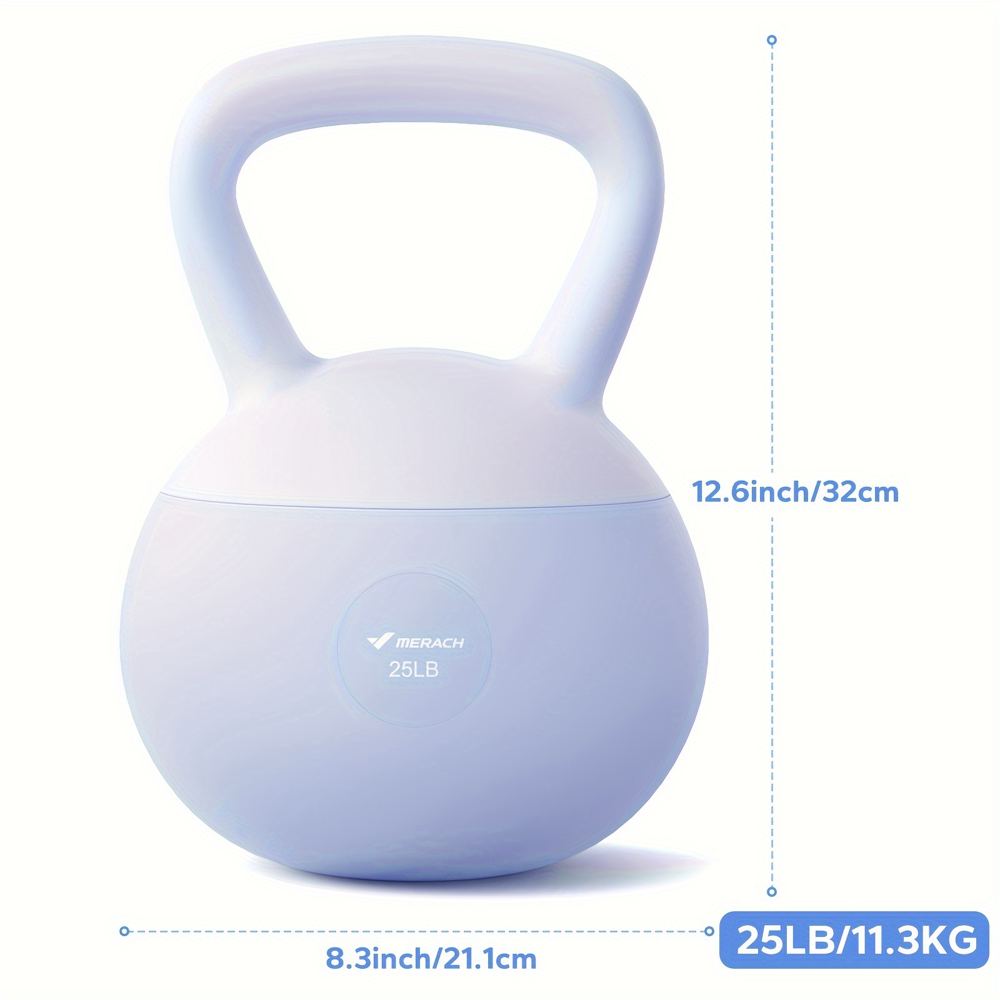
Rule of thumb: most men should start the circuit with one 16 kg bell. It is heavy enough to make swings meaningful and light enough to press safely. A soft-shell bell like the MERACH Soft Kettlebell with Non-Slip Wide Grip is forgiving on floors and forearms while you learn — the cushioned shell matters when a clean goes wrong in week one. Our guide to the best kettlebells covers more options across budgets.
Warm-Up (5 Minutes, Non-Negotiable)
- 1 minute each: hip circles and leg swings, then bodyweight hip hinges (hands on thighs, push hips back) to groove the swing pattern.
- 1 minute: arm circles and band pull-aparts or doorway chest stretches.
- 2 minutes: 2 rounds of 10 bodyweight squats + 10 glute bridges + 30 seconds of dead bugs.
The Six-Movement Circuit
Rest 60–90 seconds between movements and 2–3 minutes between rounds. Do 2–4 rounds depending on your level and available time. The whole session, with warm-up, runs 25–40 minutes.
1. Two-Handed Kettlebell Swing — Hip Power
Purpose: Explosive hip extension — the foundation of athletic power and the movement that makes kettlebells worth owning.
Starting position: Bell on the floor a foot in front of you. Hinge at the hips (knees soft, back flat, chest up), grip the handle with both hands, and hike the bell back between your legs like a football snap.
Technique: Drive your hips forward explosively, squeezing your glutes hard — the bell should float up to chest height from hip power alone, not from lifting with your arms. Let it fall back down, hinge to receive it, and repeat in a continuous rhythm. Your arms are ropes; your hips are the engine. Breathe with a sharp exhale at the top of each swing as the hips snap; inhale as the bell falls.
Sets/reps: 3–5 sets of 10–20 swings. Beginners: 3 × 10 with full rest; experienced: 5 × 20.
Beginner modifications: Practice the hip hinge with a dowel along your spine before adding the bell, and start with dead-stop swings (bell set down between reps) until the rhythm feels natural.
Common mistakes: Squatting the swing (bending the knees deeply instead of hinging), lifting with the arms, rounding the lower back at the bottom, and swinging the bell overhead — the two-handed swing ends at chest height.
2. Goblet Squat — Leg Strength
Purpose: Quad, glute, and core strength with a self-correcting upright torso.
Starting position: Hold the bell by the horns at chest height, elbows tucked, feet shoulder-width apart, toes slightly out.
Technique: Sit down between your heels, keeping your chest up and elbows inside your knees at the bottom. Drive through your whole foot to stand. The bell acts as a counterbalance — if you tip forward, you will feel it immediately.
Breathing: Inhale as you descend, exhale as you stand.
Sets/reps: 3–4 sets of 8–15 reps.
Beginner modifications: Squat to a box or bench to control depth; hold a lighter bell or none at all until the pattern is solid.
Common mistakes: Heels lifting (elevate them on a small plate or book), knees collapsing inward (think "spread the floor"), and rushing the descent.
3. Single-Arm Kettlebell Press — Shoulder Strength
Purpose: Overhead pressing strength with built-in core and stability demand.
Starting position: Clean the bell to the rack position: bell resting on the back of your forearm, wrist straight, elbow tucked to your ribs, fist under your chin.
Technique: Brace your abs and glutes, then press the bell straight overhead until your bicep is by your ear. Lower with control back to the rack. Do all reps on one side, then switch.
Breathing: Inhale at the rack, exhale as you press.
Sets/reps: 3–4 sets of 5–10 reps per arm.
Beginner modifications: Start with a lighter bell than your swing weight — pressing is the weakest link for most men. If the rack position bothers your wrist, a cushioned-base kettlebell like the LAVVON soft bell sits more comfortably on the forearm.
Common mistakes: Leaning away from the bell (keep ribs down), pressing with a bent wrist (stack the wrist under the bell), and flaring the elbow on the way down.
4. Bent-Over Kettlebell Row — Back Strength
Purpose: Upper-back and lat strength to balance all the pressing.
Starting position: Hinge forward with a flat back, one hand braced on a bench or your thigh, bell hanging in the other hand.
Technique: Pull the bell toward your hip pocket, squeezing your shoulder blade toward your spine at the top. Lower over 2 seconds. No twisting — your torso stays square.
Breathing: Exhale as you pull, inhale as you lower.
Sets/reps: 3–4 sets of 8–12 reps per arm.
Beginner modifications: Use both hands on a lighter bell in a two-arm hinge row, or do chest-supported rows lying face-down on a bench.
Common mistakes: Yanking with momentum, rotating the torso to "help," and shrugging the shoulder toward the ear instead of pulling the elbow back.
5. Kettlebell Deadlift — Hinge Strength
Purpose: Pure hip-hinge strength — the pattern behind deadlifts, and the safest way to load heavy with a bell.
Starting position: Bell on the floor between your feet, feet hip-width apart. Hinge down, grip the handle, chest up, back flat.
Technique: Drive the floor away, extending hips and knees together, and stand tall with glutes squeezed. Lower by hinging back — the bell travels straight down.
Breathing: Big inhale and brace before the lift, exhale at the top.
Sets/reps: 3–4 sets of 6–12 reps. This is your heavy movement — use your heaviest bell or two bells (one in each hand).
Beginner modifications: Elevate the bell on a low step or blocks to reduce the range of motion while you learn the hinge.
Common mistakes: Rounding the back to reach the bell (hinge deeper or elevate the bell), and treating it as a squat instead of a hinge.
6. Suitcase Carry — Grip and Core
Purpose: Grip strength, oblique and core stability, and real-world carrying power.
Starting position: Pick up a heavy bell in one hand, stand tall, shoulders level.
Technique: Walk 20–40 meters (or 30–45 seconds) keeping your torso perfectly upright — resist the urge to lean away from the weight. Switch hands and repeat.
Breathing: Steady, controlled breathing — never hold your breath on carries.
Sets/reps: 3–4 carries per side, resting 60–90 seconds between.
Beginner modifications: Lighter bell, shorter distance. The anti-lean is the exercise — if you are tipping, the bell is too heavy.
How to Progress the Circuit
- Weeks 1–2: 2 rounds, conservative weights, full rest. Learn the movements.
- Weeks 3–6: 3 rounds. Add 1–2 reps per set each week, or move to the next bell size for swings and deadlifts.
- Weeks 7+: 3–4 rounds. When you can finish every set at the top of the rep ranges with good form, go up in bell weight.
- Frequency: 2–3 times per week with at least one rest day between sessions.
Safety Notes
- Clear your training area: kettlebells travel when they slip. Train on a non-slip surface with nothing breakable nearby.
- Never chase a falling bell — step back and let it drop.
- Stop if you feel sharp pain in the lower back, shoulders, or wrists. Muscle fatigue is normal; joint pain is not.
- Keep fingernails trimmed and consider chalk or a textured non-slip handle — grip failure mid-swing is the most common cause of kettlebell accidents.
- Men with back issues, hernias, or cardiovascular conditions should get medical clearance before swing-heavy training.
FAQ
Q: Can I get a full workout with just one kettlebell?
Yes — that is the entire premise of this circuit. Swings, squats, presses, rows, deadlifts, and carries cover the major movement patterns with a single bell. Multiple bells become useful as you outgrow the first, typically after several months of consistent training.
Q: Are kettlebell swings bad for your back?
Done correctly, no — the swing strengthens the glutes, hamstrings, and spinal stabilizers. Done with a rounded back, yes, it can strain the lower back. The fix is technique: learn the hip hinge first (dowel drill, dead-stop swings), keep the back flat, and never swing through back pain. When in doubt, get a coach to check your form once — a single session prevents months of bad habits.
Q: How heavy a kettlebell should a man start with?
Most men should start with 16 kg (35 lb) for the circuit above — heavy enough for meaningful swings, manageable for pressing. Complete beginners to strength training may start at 12 kg. If you have a solid lifting background, 20–24 kg works for swings and carries, but keep pressing lighter until your shoulders adapt. See the weight table above for the full breakdown.
Q: How often should I do this kettlebell circuit?
Two to three times per week with at least one rest day between sessions. Kettlebell work — especially swings — is demanding on the grip, lower back, and nervous system. More is not better; consistent, well-recovered sessions are what build strength over time.
Q: Kettlebell or dumbbells — which is better for home workouts?
Neither is universally better; they are different tools. Kettlebells excel at ballistic hip-hinge work (swings), offset-loaded carries, and flowing circuits. Dumbbells excel at pressing, isolation work, and precise load increments. Many men eventually own both.
The Bottom Line
Six movements, one bell, thirty minutes: swing for power, squat and deadlift for leg and hinge strength, press and row for the upper body, carry for grip and core. Learn the hinge before you chase weight, progress one variable at a time, and give the circuit 8–12 weeks of consistent 2–3x weekly work. The kettlebell rewards patience more than any other tool in the gym — and the strength it builds shows up everywhere else you train.
