Stuck at the same push-up count? This progressive plan for men covers form fixes, smart programming, and plateau-breakers to steadily raise your numbers.
How to Increase Your Push-Ups: A Progressive Plan for Men
Almost every man hits the same wall: 15, 20, maybe 30 push-ups — and then the number refuses to move. More random push-ups do not fix this. What fixes it is treating push-ups like any other strength movement: with a plan, progressive overload, and technique that actually works the right muscles. This guide gives you exactly that — a progressive plan that takes you from wherever you are now to genuinely higher numbers, built on methods that have worked for decades.
No shortcuts are promised here, because there are none. Push-up numbers rise at different rates for different men depending on body weight, training history, and consistency — results vary, and anyone guaranteeing you "100 push-ups in 30 days" is selling something. What this plan guarantees is a sensible structure. Follow it for 8–12 weeks and your numbers will move. For a parallel progression written from a different starting point, see our push-up progression for women; the principles overlap, but this plan is built for men training for strength, endurance, and military or fitness-test performance.
This guide contains affiliate links. If you buy through them, VÉLORA may earn a commission at no extra cost to you.
First, Fix the Form — Bad Reps Do Not Count
Most push-up plateaus are actually form problems. Before adding volume, make every rep honest:
Starting position: Hands under or slightly outside the shoulders, fingers spread, body in a straight line from head to heels. Squeeze your glutes and brace your abs like someone is about to poke your stomach.
Technique: Lower your chest toward the floor over 2 seconds, keeping elbows at roughly 45 degrees from your torso (not flared to 90, not glued to your ribs). Touch your chest lightly to the floor — or stop 1–2 inches above it — then press back up in about 1 second without letting your hips sag or pike.
Breathing: Inhale as you lower, exhale as you press up.
Common mistakes:
- Hips sagging. Your lower back takes the load your chest and triceps should carry. Fix: squeeze glutes hard and shorten your sets until you can hold the line.
- Half reps. Stopping 6 inches above the floor and calling it a push-up. Fix: chest to floor (or a consistent, honest depth) every rep.
- Flaring elbows. Puts the shoulders in a vulnerable position under load. Fix: think "screw your hands into the floor" to naturally tuck the elbows.
- Craning the neck. Looking forward drops the head out of alignment. Fix: keep your gaze on the floor a few inches ahead of your hands.
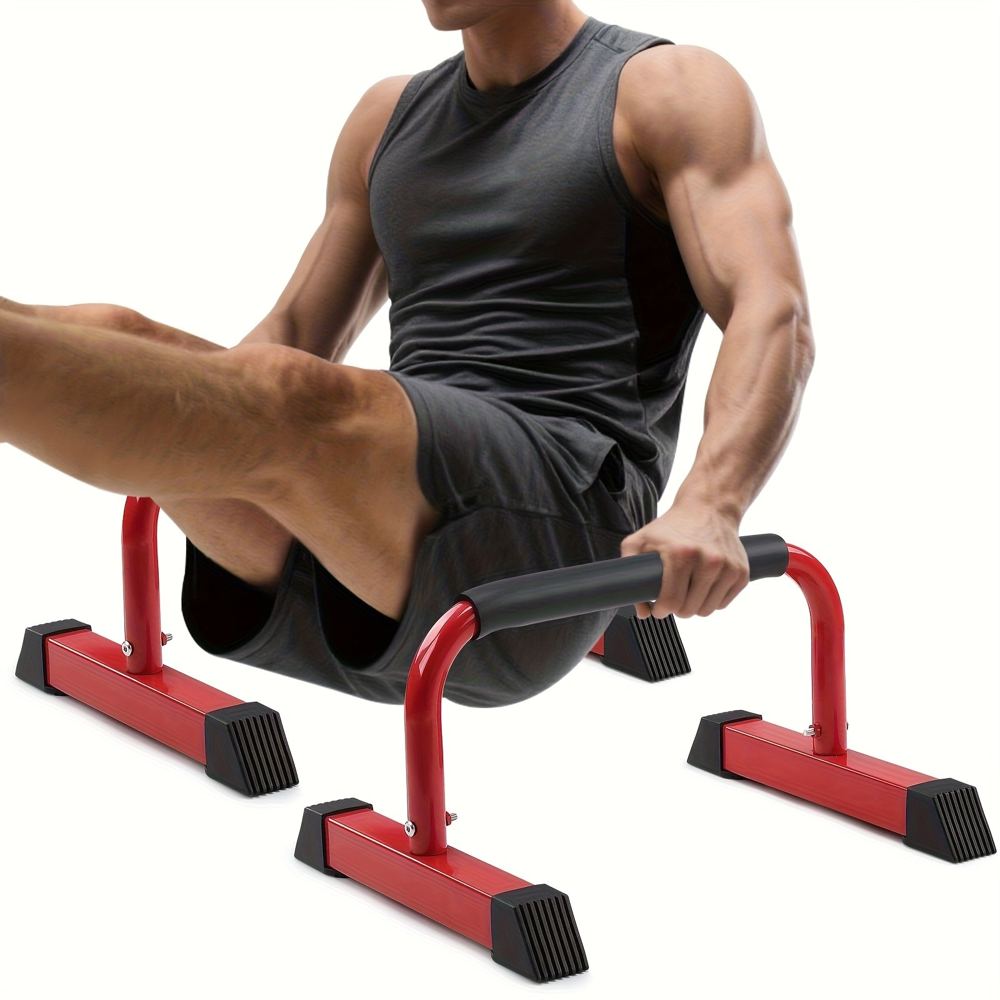
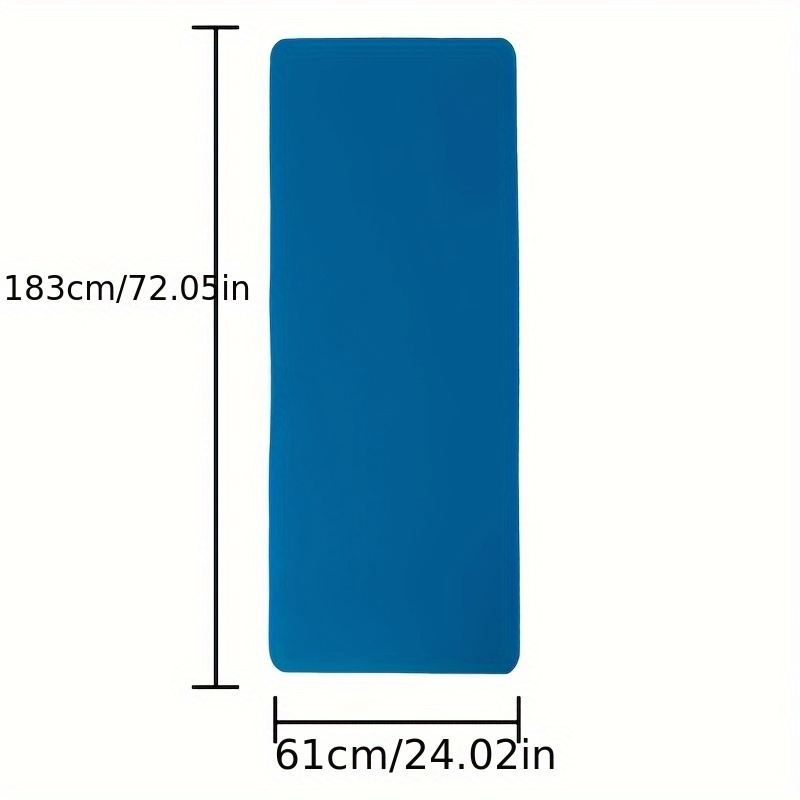
Equipment note: If wrist pain limits you, push-up bars or parallettes let the wrists stay neutral. The 700LBS Dip Bar Push Up Bar with EVA Handle doubles as a dip station and push-up handles — the padded grips are easier on the wrists than the floor, and the extra range of motion (hands elevated) increases chest and shoulder recruitment. Training on a cushioned surface like the 8mm Thick Yoga Mat also takes pressure off the wrists and knees during high-volume sessions.
Find Your Starting Level
Do one honest max set, resting fully first, with the form above. Use the result to pick your level:
| Level | Honest max set | Starting point | | --- | --- | --- | | Level 1 — Building | Fewer than 10 full push-ups | Incline/elevated push-ups and knee push-ups | | Level 2 — Developing | 10–25 push-ups | Full push-ups, volume building | | Level 3 — Advancing | 25–50 push-ups | Weighted and variation work | | Level 4 — High performance | 50+ push-ups | Endurance programming and test prep |
The 8–12 Week Progressive Plan
Weeks 1–2: Build the Base
Train push-ups 3 days per week (e.g., Monday, Wednesday, Friday), with at least one rest day between sessions.
- Level 1: 4–5 sets of incline push-ups (hands on a bench, sturdy table, or stairs) for 8–15 reps, resting 90 seconds. Lower the incline as reps get easier. Finish each session with 1 set of knee push-ups to near-fatigue.
- Level 2: 4–5 sets of full push-ups at 50–70% of your max (if your max is 20, do sets of 10–14), resting 90–120 seconds. Leave 2–3 reps in reserve on every set — grinding to failure in week one is how shoulders get angry.
- Levels 3–4: 5–6 sets at 50–60% of max, plus one variation day (see variations below).
Beginner modifications: If even incline push-ups are hard, start with wall push-ups — 3–4 sets of 12–20 — and progress to lower surfaces over 2–3 weeks. There is no shame in the progression; there is only progress.
Weeks 3–6: Add Volume
Keep 3 sessions per week, but add one set per session each week, and shorten rest periods to 60–90 seconds. The key method here is submaximal volume: many sets at a comfortable fraction of your max.
- The 50%-rule method: Take your max, halve it, and do 6–8 sets of that number with 60 seconds rest. If your max is 24, do 8 sets of 12. When that feels easy, retest your max and recalculate.
- Grease the groove (optional, for Levels 2–4): On top of your 3 sessions, do 3–5 easy sets of 40–50% of your max spread through the day, never near failure. This builds the neural pattern without fatigue. Do this only on non-consecutive weeks if your shoulders feel irritated.
Weeks 7–10: Add Intensity
Now you make the reps harder, not just more numerous. Pick 2 of these per week:
- Tempo push-ups: 3-second lowering phase, 1-second pause at the bottom, explosive press. 3–4 sets of 6–12. Brutal at any level.
- Close-grip push-ups: Hands directly under the shoulders — shifts load to the triceps. 3–4 sets of 8–15.
- Decline push-ups: Feet elevated 12–24 inches — shifts load to the upper chest and shoulders. 3–4 sets of 8–15.
- Weighted push-ups: A backpack with books or a plate on your upper back. 3–4 sets of 6–10 with a weight that leaves 1–2 reps in reserve. This is the fastest way for Level 3–4 men to keep progressing.
Weeks 11–12: Test and Consolidate
Reduce volume by about 40% (fewer sets, same movements) — this is a deload that lets accumulated fatigue fade. At the end of week 12, rest 2 full days, warm up thoroughly, and test your honest max. Most men who followed the plan see a meaningful jump. Whatever the number, that is your new baseline: repeat the cycle with the new max.
Breaking Plateaus: When the Number Stalls
If your max has not moved for 3+ weeks, one of these is usually the cause:
- Too much intensity, too often. If every session ends in failure, you are accumulating fatigue, not fitness. Back off to 70% effort for two weeks.
- No variation. The body adapts to the exact movement it practices. Rotate in close-grip, decline, tempo, or weighted work for 3–4 weeks, then retest standard push-ups.
- Weak link muscles. Stalling halfway down often means triceps; stalling at the bottom often means chest; hips sagging means core. Add dips for triceps (a dip stand station is ideal for home training), and planks for the midline.
- Body weight changes. Gaining 10 lbs of body weight makes every push-up heavier. That is not failure — it is physics.
- Poor recovery. Sleep, protein, and rest days matter as much for push-ups as for any lift. Our women's workout schedule guide — principles apply equally to men — explains how to balance training days and recovery.
Safety Notes
- Stop if you feel sharp pain in the shoulders, wrists, or elbows. Muscle fatigue and mild soreness are normal; joint pain is a signal to rest and reassess form.
- Warm up before max tests and hard sessions: 2–3 minutes of arm circles, band pull-aparts, and easy incline push-ups.
- Do not train through shoulder impingement symptoms (pinching pain at the front of the shoulder when pressing). See a physical therapist if it persists beyond a week of rest.
- Men with high blood pressure should avoid maximal breath-holding efforts; breathe continuously through every rep.
- If you are returning from injury or have a medical condition, get clearance from your doctor before starting a high-volume push-up program.
FAQ
Q: How many push-ups should a man be able to do?
There is no universal standard — it depends on age, body weight, and training background. As rough, non-medical context: many fitness assessments consider 20–30 continuous honest push-ups a solid baseline for a healthy adult man, and 40+ a strong number. Treat these as loose reference points, not requirements. Your only meaningful comparison is your own previous max.
Q: Is it better to do push-ups every day or rest between sessions?
Rest between hard sessions. Muscles and connective tissue adapt during recovery, not during the workout itself. Three focused sessions per week beat seven tired ones. Light, easy "grease the groove" sets can be done more often, but they must stay well away from failure — and even those should be cycled, not permanent.
Q: Why do my wrists hurt during push-ups?
Usually it is the extended wrist position under load, especially with high volume or extra body weight. Fixes: use push-up bars or dumbbells as handles to keep wrists neutral, do a wrist warm-up (circles and gentle stretches) before sessions, and build volume gradually. Persistent pain deserves a professional assessment, not more reps.
Q: Will push-ups build my chest, or do I need weights?
Push-ups build real chest, shoulder, and triceps strength — especially when progressed with tempo, decline, close-grip, and weighted variations as this plan describes. They will not build maximal strength the way heavy bench pressing does, because the load is limited to your body weight. For general strength, athleticism, and endurance, a well-progressed push-up program is genuinely effective. For foundational strength principles, see our guide on how to start strength training.
Q: How fast will my push-up numbers increase?
Early on, progress is often quick — adding several reps per week is common in the first month as technique and neural efficiency improve. Later gains slow down, which is normal, not failure. Individual rates vary enormously with body weight, consistency, sleep, and nutrition. Judge the plan over 8–12 weeks, not day to day.
The Bottom Line
Fix your form, find your honest max, and run the cycle: submaximal volume for weeks, intensity variations next, then test. Three sessions a week, real rest between them, and patience through the slow weeks. Push-ups reward the same thing every strength movement rewards — consistent, progressive, well-recovered work. Your number will move. Just give it the 8–12 weeks it deserves.
