Home workout motivation that actually lasts: habit systems, environment design, realistic scheduling, and backup plans for low-energy days — no willpower myths.
Home Workout Motivation: Systems That Keep You Consistent

Almost everyone who starts working out at home begins with motivation. It usually lasts about two weeks. Then a late night happens, the mat stays rolled in the corner, and within a month the whole project has quietly dissolved. This is not a character flaw — it is what motivation does. It is an emotion, and emotions are unreliable by nature.
The people who exercise consistently for years do not have more willpower. They have better systems: environments, habits, and plans that make working out the easy default instead of a daily negotiation. This guide is about building those systems for your home, so that showing up stops depending on how you feel.
This guide contains affiliate links. If you buy through them, VÉLORA may earn a commission at no extra cost to you.
Why Motivation Fails (and What Works Instead)
Motivation follows a predictable cycle: excitement at the start, a dip when novelty fades, and — for most people — a quiet exit. Relying on it means your training schedule is only as reliable as your mood on any given day. Systems, by contrast, are decisions you make once that keep working without daily effort.
Think about brushing your teeth. You do not motivate yourself to do it; you just do it, because it is anchored to a time, a place, and a set of tools that are always visible. Your workouts can work the same way. Every strategy below is designed to reduce the number of decisions between you and your workout, because every decision is a chance to talk yourself out of it.
Environment Design: Make It Easy, Make It Visible
The most powerful motivation system is not in your head — it is in your room. You are far more likely to work out when the setup takes seconds rather than minutes.
- Keep equipment visible and accessible. A mat folded in a closet is an obstacle; a mat unrolled or leaning by the wall is an invitation. The Black Folding Gym Mat folds flat and unfolds in seconds, so it can live in a corner and be ready instantly. If you live in a small space, our guide to quiet home gym equipment for apartments covers space-friendly setups.
- Lay out your workout clothes the night before. This sounds trivial, and that is exactly why it works. Changing into gym clothes is a psychological commitment; pajamas are a psychological escape route.
- Create a dedicated corner. It does not need to be a room — a clear patch of floor where your mat, dumbbells, and bands live becomes your training space. Your brain learns the association quickly: corner equals workout.
- Remove friction from the workout itself. Have a plan written down before you start (a saved routine or a printout), keep water nearby, and queue any video you follow in advance. Scrolling for ten minutes to find a routine burns the exact energy the workout needed.
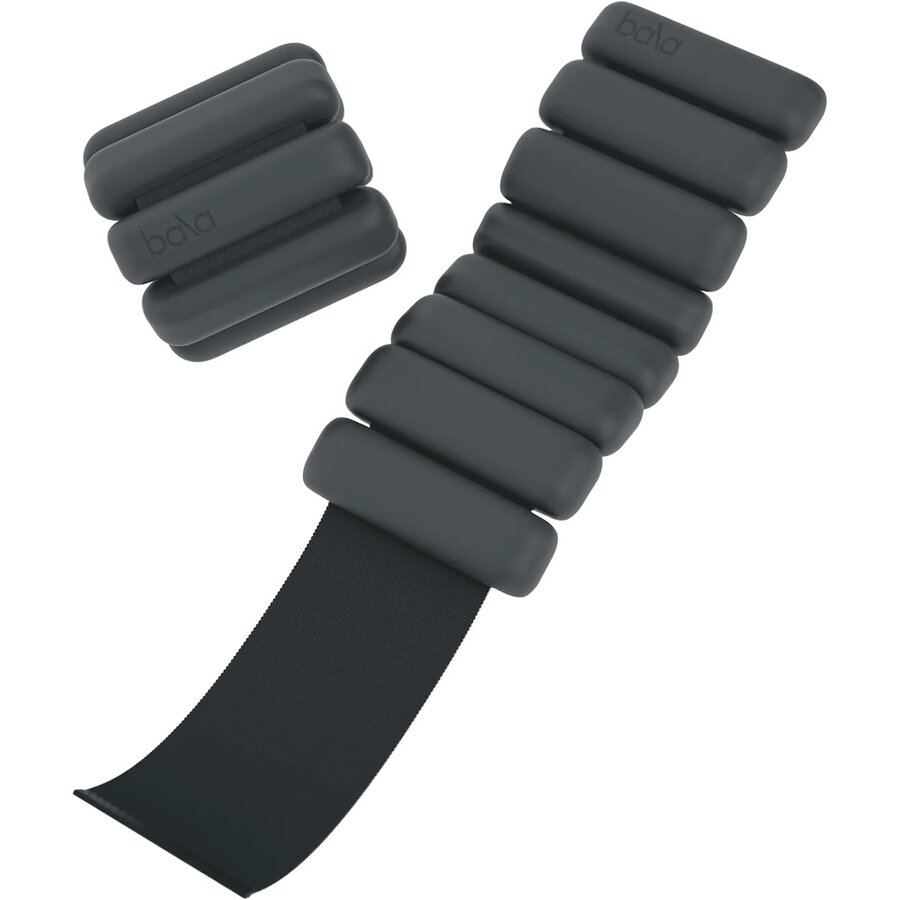
Light, accessible equipment makes a real difference here. A 3 lb set of Bala Bangles can sit by your desk for quick arm and leg work between tasks, and a compact hex dumbbell set on a rack keeps weights tidy and grabbable instead of scattered.
Habit Stacking and the 2-Minute Rule
Habit stacking means attaching your workout to something you already do every day. The formula is: "After I [existing habit], I will [workout behavior]." Examples: after I finish my morning coffee, I unroll my mat; after I change out of work clothes, I do my ten-minute routine. The existing habit carries the new one along with it.
The 2-minute rule handles the days when even starting feels impossible. Tell yourself you only have to do two minutes — unroll the mat, do one set of squats. Once you start, you will almost always keep going. And on the rare days you genuinely stop after two minutes, that is still a win: you showed up, and the habit streak survives.
Both techniques work because they lower the bar to step over. Consistency is built from showing up often, not from heroic single sessions.
Realistic Scheduling
Most home workout plans fail at the scheduling stage, not the exercise stage. The fixes are practical:
- Pick a consistent time. Training at the same time each day turns exercise into a rhythm rather than a decision. Morning works well for many people because nothing has had a chance to interfere yet — but the best time is the one you will actually repeat.
- Put it on the calendar. A scheduled workout is an appointment with yourself. Unscheduled workouts are wishes.
- Start with 2–3 sessions a week. Ambitious five-day plans are the leading cause of abandoned programs. Our beginner home workout plan for women shows how three short sessions a week build a lasting foundation.
- Match the session length to your life. A honest 15-minute routine you do beats a 60-minute routine you skip. As the habit solidifies, you can expand.
Accountability That Actually Helps
Accountability works when it is specific and low-pressure:
- Tell one person your plan. A friend, partner, or family member who knows you train on Monday, Wednesday, Friday can ask a gentle "did you get your session in?" — that social expectation is surprisingly powerful.
- Track your workouts simply. A paper calendar with an X on training days, a phone note, or a habit-tracking app all work. The growing chain of X's becomes its own motivation — and seeing a missed day is information, not a verdict.
- Track wins, not just workouts. Note how you felt after sessions, energy levels, sleep quality. On low-motivation days, reading back through those notes reminds you why you started.
- Consider a workout buddy — even a remote one. Texting a friend before and after sessions creates real accountability without needing the same schedule or location.
Avoid accountability that relies on shame or public posting pressure; it tends to collapse at the first missed week. The goal is support, not surveillance.
Your Backup Plan for Low-Energy Days
This is the system most people skip, and it is arguably the most important one. You will have days when you are tired, busy, or just not feeling it. Without a backup plan, those days become skipped days, which become skipped weeks.
Define your minimum viable workout now, while motivation is high: a 10-minute version of your routine. For example — 10 squats, 10 push-ups (on knees or a wall), a 20-second plank, 10 glute bridges, and a short stretch. It will not transform your fitness, but it preserves the habit, which is what actually matters. A short session also usually turns into a longer one once you start moving.
Other backup options: a 10-minute walk, a gentle mobility flow, or simply doing your warm-up. The rule is simple — something beats nothing, every time.
Strategies for Common Situations
| Situation | Strategy | | --- | --- | | "I don't have time today" | Do the 10-minute minimum version; schedule tomorrow's session now | | "I'm too tired to work out" | Start with the 2-minute rule — unroll the mat and do one set; quit after two minutes if you truly need to | | "I missed a whole week" | Use the restart protocol: no guilt, repeat last successful week, shrink the next session if needed | | "I'm bored of my routine" | Change the exercises, not the habit — swap movements, try a new plan, or add variety like balance exercises | | "My space is too small" | One mat's worth of floor is enough; keep equipment visible and compact | | "I keep forgetting" | Habit-stack onto an existing daily action; lay out clothes the night before; set a phone reminder |

The Restart Protocol: After a Missed Week
You will miss a week eventually. Travel, illness, a chaotic stretch at work — life happens. The difference between people who stay consistent and people who quit is not whether they miss weeks. It is what they do next.
The restart protocol has three steps:
- No guilt, no "making up for it." You do not owe your body extra punishment. Guilt is the emotion most likely to turn one missed week into a missed month.
- Repeat your last successful week. Do not try to jump back in where you "should" be. Start where you were, at the volume that felt comfortable.
- Shrink the first session back. If even that feels daunting, do your minimum viable workout. The goal of the first session back is simply to re-establish the pattern.
One skipped session is a blip. Two in a row is a pattern worth noticing. Three is the moment to deliberately restart — with the protocol, not with self-criticism.
A Note of Honesty
No system guarantees results, and no article can promise you will stick with exercise — results vary, and anyone who claims otherwise is selling something. What systems do is shift the odds. Every friction you remove, every habit you stack, every backup plan you define makes the consistent choice slightly easier and the skipped choice slightly harder. Over months and years, those small tilts compound into the difference between someone who "used to work out" and someone who just does.
FAQ
Q: How long does it take to build an exercise habit?
It varies a lot between people — some research suggests averages around two months, but individual experiences range widely. Rather than counting days, focus on the systems: consistent time, visible equipment, habit stacking. The habit forms as a side effect of the system, not by willpower alone.
Q: Is it okay to work out only 10 minutes some days?
Yes. Short sessions maintain the habit, keep your body moving, and often turn into longer ones once you start. On genuinely low-energy days, a 10-minute session protects your consistency streak, which matters more over time than any single workout's length.
Q: What should I do if I hate every workout I've tried?
Keep experimenting — dislike usually means you have not found your format yet. Try different styles: bodyweight circuits, dumbbell routines, dance-based cardio, yoga, walking programs. Also examine the setup: many people hate workouts they do at inconvenient times in uncomfortable spaces. Change the conditions before concluding exercise is not for you.
Q: Does working out at the same time every day really matter?
It helps more than most people expect. A consistent time removes the daily "when should I do it?" negotiation and lets your body and schedule adapt. That said, a workout at an inconsistent time still counts — consistency of showing up matters more than consistency of timing.
Q: How do I stay motivated when I'm not seeing results?
First, check your expectations and timeline — visible changes take longer than most people hope, and results vary. Second, track non-appearance wins: energy, sleep, strength, mood, the fact that you showed up. Third, review your program: if you have been consistent for months with no progress, the plan may need adjusting, not your motivation.
Conclusion
Motivation will get you started, but it will not keep you going — and that is fine, because it was never supposed to. Systems keep you going: a visible mat, clothes laid out the night before, a workout stacked onto your coffee routine, a 10-minute backup plan for tired days, and a restart protocol for the weeks life interrupts. Build those once, and your home workouts stop depending on how inspired you feel and start depending on how well your environment is arranged. Set up the system this week, and let consistency do what motivation never could.