Exercise bike vs treadmill for home cardio: impact, space, cost, noise and workout variety compared honestly — with a clear verdict for your situation.
Exercise Bike vs Treadmill: Which Is Better for Home Cardio?
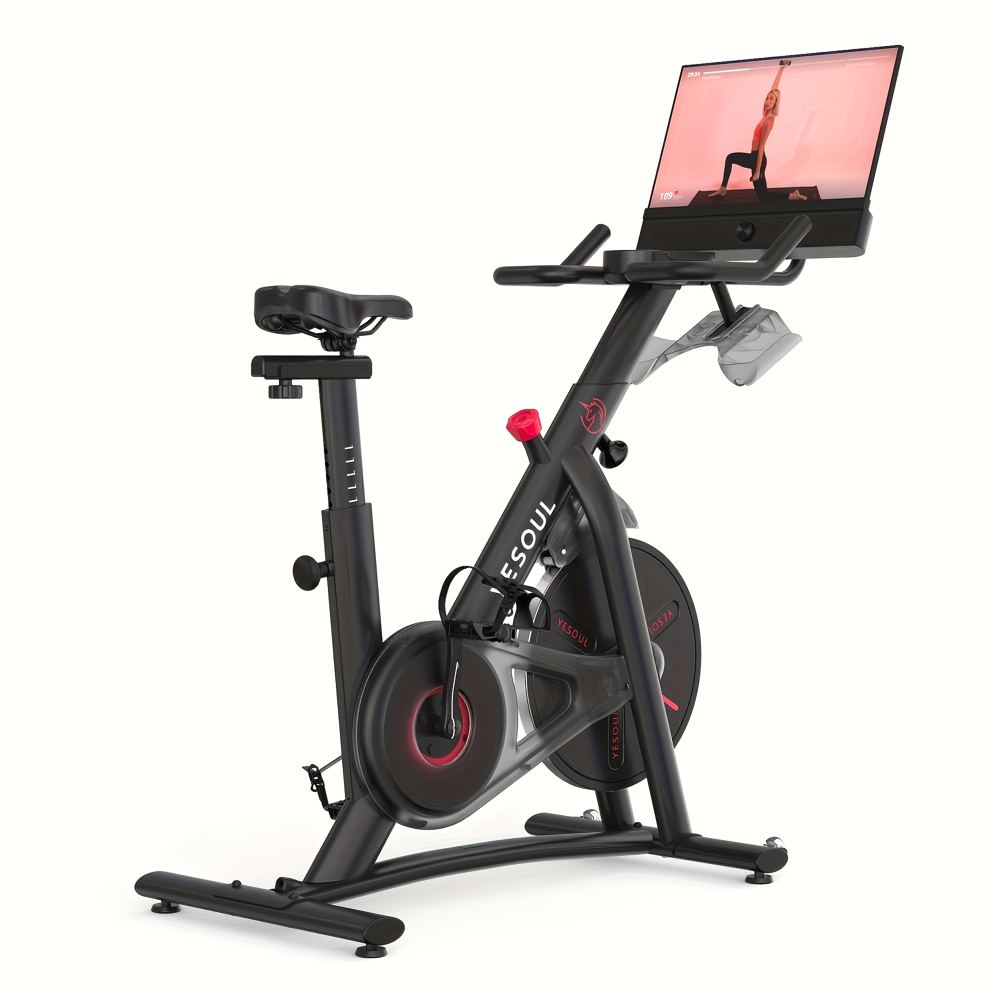
It is the biggest decision in home cardio: the exercise bike or the treadmill? Both burn calories, both strengthen your heart, and both end up either the most-used object in your home or an expensive clothes rack. The difference between those two outcomes is rarely the machine's specs — it is whether the machine fits your joints, your floor space, your neighbours, and the kind of exercise you will actually do on a Tuesday evening.
This comparison breaks down the honest differences — impact, effort, space, noise, cost, variety — and then gives verdicts for specific situations: bad knees, small apartments, runner training, and households where one machine must suit everyone. Treadmills are covered here from general, well-known product knowledge so the comparison is fair; the specific picks link to bikes, which are the lower-risk home choice in most cases.
This guide contains affiliate links. If you buy through them, VÉLORA may earn a commission at no extra cost to you.
Joint Impact: The Decisive Difference
Cycling is one of the kindest cardio movements available. Your body weight rests on the saddle, your feet never leave the pedals, and the joints cycle through a smooth, supported range of motion. For knees, hips, and ankles with some history — arthritis, old injuries, general wear — the bike is almost always the safer starting point. Many physiotherapists recommend stationary cycling precisely because the impact is near zero.
Running on a treadmill loads each step at roughly two to three times your body weight through the landing leg. A good deck with cushioning takes the edge off compared with pavement, and walking on an incline is gentler than running — but there is no version of running that is as low-impact as pedalling. If joint concerns are part of your story, the bike wins this category outright, and it is not close.
Effort and Calories at Equal Exertion
Here the treadmill has an honest advantage. Running uses more muscle mass — legs, core, arms all contribute — so at the same perceived effort, a run typically burns more energy than a moderate pedal. Weight-bearing exercise also supports bone density, which cycling does not meaningfully do; for women thinking about long-term bone health, this is worth knowing.
That said, intensity is a choice, not a machine trait. A hard interval session on a bike — standing climbs, sprint pedals — can be every bit as demanding as a run, and perceived exertion is the dial that matters for cardio fitness. The treadmill's calorie edge is real but modest, and it only counts if you actually run rather than hold the rails and stroll.
Space and Storage
A treadmill is a large, heavy piece of furniture — most need roughly 2 metres long by 1 metre wide of floor, plus clearance behind the belt for safety. Many fold up, but "folds" does not mean "light": you are still parking a 50–80 kg machine somewhere.
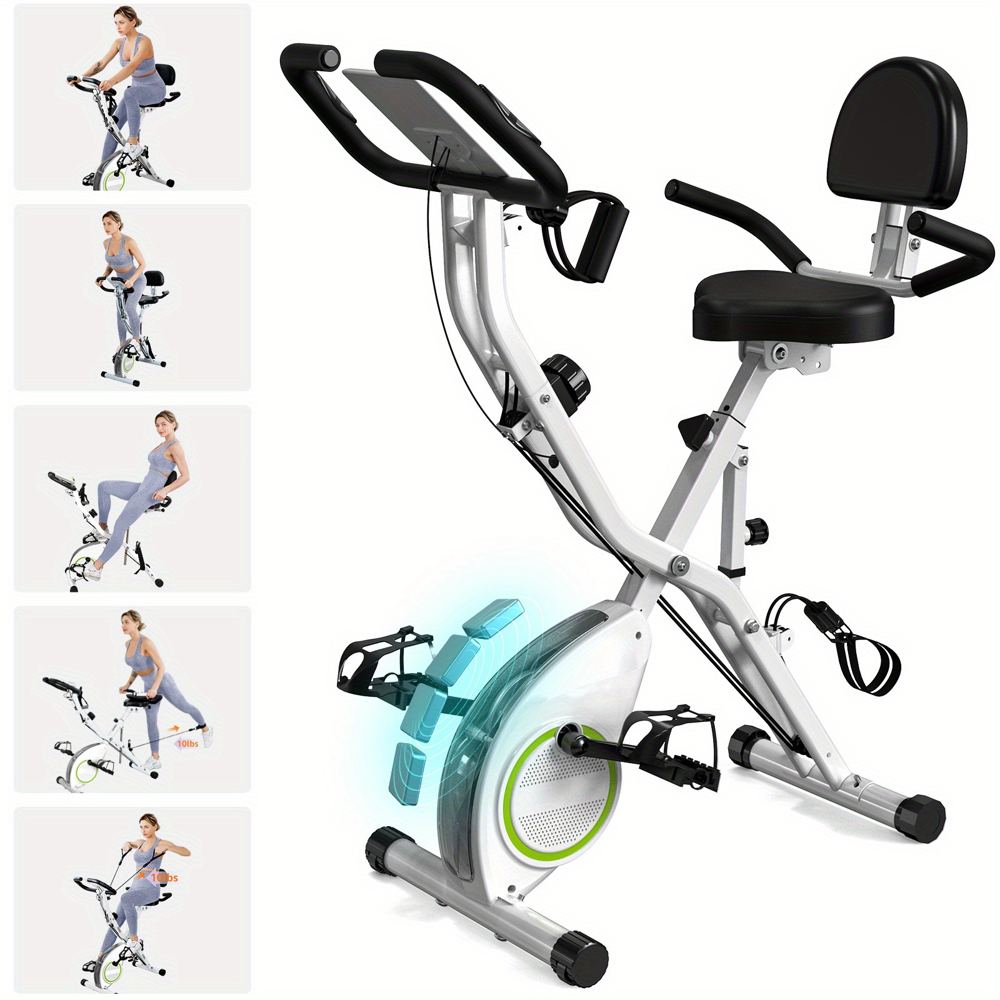
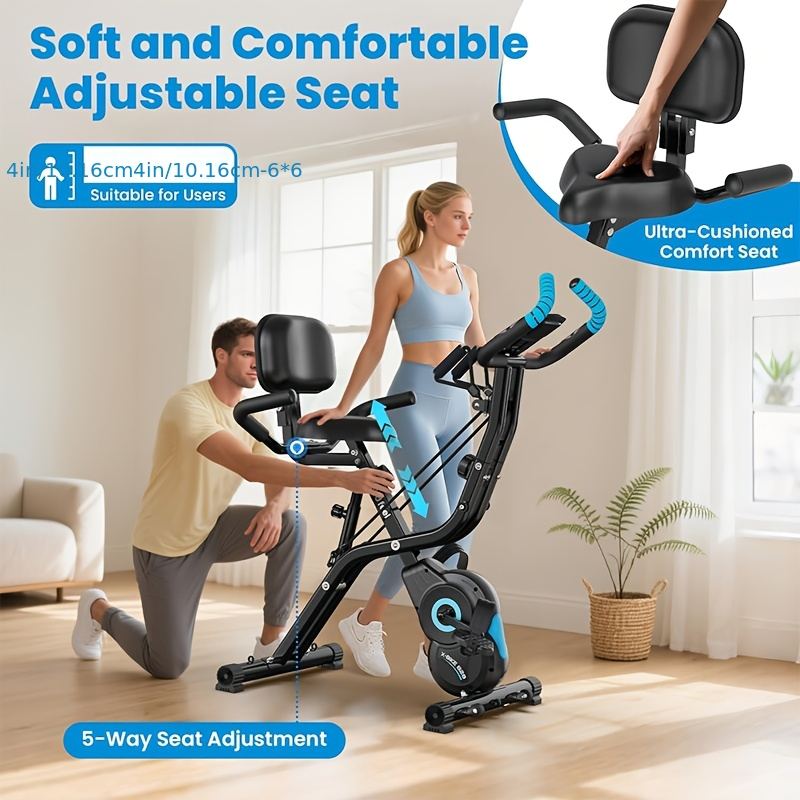
Exercise bikes are simply smaller and more foldable. A bike like the foldable 5-in-1 stationary indoor exercise bike collapses to a fraction of its footprint, and even upright bikes tuck into corners that no treadmill can occupy. In apartments and shared rooms, the bike's size is often the deciding factor. If space is your binding constraint, read our guide to compact treadmills and under-desk exercise for the treadmill side of the story — some walking pads are genuinely compact.
Noise: What Your Neighbours Will Hear
Bikes win here decisively. A magnetic-resistance bike — like the quiet YESOUL G1m Plus stationary exercise bike — produces little more than a soft whir and pedal motion. Most can be used in an apartment at any hour without anyone noticing.
Treadmills make belt hum, motor whine, and — crucially — footfall thump that travels through floors. Downstairs neighbours hear every run. If you live above someone, a treadmill is a social decision as much as a fitness one; a thick mat helps, but it does not eliminate impact noise. For quiet-home priorities, see our quiet home gym equipment guide.
Cost and Maintenance
Entry prices overlap, but the curves differ. A decent basic exercise bike costs less than a decent basic treadmill, and the bike has fewer parts to fail: no motor, no belt, no deck lubrication. Magnetic bikes are nearly maintenance-free beyond occasional bolt checks.
Treadmills ask more of you and your wallet — belt lubrication, deck checks, and eventually motor or belt replacement. Running at high speeds stresses components more than pedalling ever does. Over five years of regular use, a treadmill typically costs more to keep alive than a bike. Our home gym vs gym membership cost breakdown puts these trade-offs in context.
Workout Variety and Enjoyment
Treadmills offer walking, jogging, running, hill programs, and interval routines — and walking while watching a show or taking a call is genuinely pleasant. Bikes offer seated rides, standing climbs, sprints, and virtual-route apps; upright bikes also let you do gentle upper-body movement or read comfortably during easy spins. Neither machine is inherently boring; boredom comes from doing the same session the same way.
The honest tiebreaker is preference. People who have always enjoyed walking or running usually stay consistent on a treadmill. People who hate running rarely learn to love it because the machine was expensive. Choose the movement you dislike least — consistency beats optimal equipment every time.
Head-to-Head Table
| Factor | Exercise bike | Treadmill | | --- | --- | --- | | Joint impact | Very low — weight supported, smooth motion | High — each step loads 2–3× body weight; deck cushioning helps | | Calories at equal effort | Slightly lower for steady pedalling; intervals close the gap | Typically higher; more muscle mass involved, plus bone-loading benefit | | Space footprint | Compact; many fold nearly flat | Large; even folding models need ~2 m and are heavy to move | | Noise | Very quiet, especially magnetic resistance | Belt hum plus footfall thump — a real concern in apartments | | Upfront cost | Lower for a solid machine | Higher for a durable machine | | Maintenance | Minimal — occasional bolt checks | Regular — belt lubrication, deck and motor wear | | Injury friendliness | Excellent for knees, hips, ankles | Walking is moderate; running carries overuse-injury risk | | Skill floor | Sit and pedal — near zero | Walking is easy; safe running form takes some learning |
Verdicts by Situation
Bad knees or joint concerns → bike. This is the clearest call in the guide. Low impact, supported posture, and easy intensity control make cycling the responsible first machine. Start with easy resistance and short sessions, and stop if anything hurts beyond normal muscle effort.
Small apartment → bike. The footprint, the foldability, and the near-silence make the bike the apartment machine. A compact pick like the Hasiman foldable multifunctional indoor stationary bike fits corners and closets that rule treadmills out entirely.
Training for running events → treadmill. Specificity matters: if you want to run better, you need to run. Nothing else trains the stride, pacing, and impact tolerance a runner needs. Walk-jog programs on an incline are also the gentlest way to begin.
One machine for the whole family → bike. A bike suits the widest range of ages, fitness levels, and joint conditions. Grandparents can pedal gently while teenagers do intervals — the same machine, dialled differently. If someone in the household is a committed runner, that argues the other way, but for general family cardio, the bike covers more people.
Variety seekers and boredom-prone exercisers → consider a rower. Honestly, if both options bore you, the machine that adds full-body pulling may hold your attention better — our rowing machine guide covers the low-impact alternative that works upper and lower body together.
FAQ
Q: Which burns more calories, a bike or a treadmill?
At the same perceived effort and duration, treadmill running generally burns somewhat more than steady cycling, because running recruits more muscle and is weight-bearing. But intensity closes the gap: hard bike intervals can match or exceed an easy jog. The bigger factor is which machine you will use consistently — the one you skip burns nothing.
Q: Is an exercise bike bad for your knees?
For most people, stationary cycling is kind to knees — smooth, low-impact, and adjustable. Set the saddle height so your knee has a slight bend at the bottom of the pedal stroke, start with light resistance, and increase gradually. Sharp knee pain is a stop signal, not something to push through; get it checked if it persists.
Q: Can I get a good workout on a bike if I hate cycling?
You can, but be honest with yourself about the "hate" part. If you merely find gym cycling dull, interval programs, music, and shows fix that. If you genuinely dislike the motion, no app will save it — choose the machine whose movement you tolerate best. A walking pad might be your answer.
Q: Do folding exercise bikes actually work well?
Yes, for general home cardio. They support a real workout — steady rides and moderate intervals — and their honest limitation is stability under very heavy standing efforts, not basic function. For apartments, a folding bike that gets used beats a studio bike that does not fit.
Q: How much space do I really need for a treadmill?
Plan for the machine's footprint plus at least a metre of clear space behind the belt and room to step on and off safely. Measure your room before ordering — this is the purchase where a tape measure saves more grief than any review.
Conclusion
For most home gyms — especially apartments, shared households, and anyone with joint history — the exercise bike is the better buy: quieter, smaller, cheaper to maintain, and kinder to knees. The treadmill earns its place for runners and dedicated walkers who will use the impact and variety it offers. Match the machine to your joints, your space, and your honest preferences, not to the fancier specification sheet. Whichever you choose, start with short sessions a few times a week, raise intensity gradually, and let consistency — not the machine — do the work.
