Looking for the best rowing machines for home? We compared magnetic, water and foldable rowers on price, noise and size — here are the five worth your money.
Best Rowing Machines for Home: Quiet, Compact Picks for Every Budget
If you want one machine that works your legs, back, arms and core in a single low-impact workout, a rower is hard to beat — and finding the best rowing machines for home use has gotten a lot easier than it used to be. You no longer need a gym-sized budget or a spare room the size of a garage. Today's home rowers fold up, roll into corners, and run quietly enough that you can train while someone sleeps in the next room.
Here's the thing, though: the market is flooded with near-identical machines, and the spec sheets don't tell you what actually matters. Noise. Rail length. Whether the resistance still feels smooth six months in. We compared specs and buyer feedback across dozens of models to narrow it down to five picks at five very different price points, from under $100 to just under $300.
This guide contains affiliate links. If you buy through them, VÉLORA may earn a commission at no extra cost to you.
What to Look for in a Home Rowing Machine
Before you fall for a sleek product photo, run through these criteria. They separate the machines people love from the ones that end up as expensive laundry racks.
- Resistance type. Magnetic resistance is smooth, quiet and adjustable with a dial — ideal for apartments. Water resistance feels the most like real rowing and gives a satisfying whoosh, but it's louder and the resistance depends on how hard you pull. Some machines combine both.
- Rail length and your height. Taller rowers need a longer rail. If you're over 6 feet, look for rails around 72 inches or check the stated inseam limit, or your knees will run out of track.
- Weight capacity. Budget machines often cap out at 265 lbs. If you're anywhere near the limit, step up to a 350 lb rated frame — it'll feel sturdier and last longer.
- Footprint and storage. Measure your space honestly. Foldable models and machines that stand upright can cut the stored footprint in half.
- Monitor and app support. A basic LCD showing strokes, time and calories is fine. Bluetooth app compatibility is a genuine bonus if you like tracking progress or following along with workouts.
- Seat and handle comfort. You'll spend 20-40 minutes on this thing. A contoured seat and a padded, non-slip handle matter more than another resistance level you'll never use.
Magnetic vs Water Rowing Machines: Which Is Right for You?
This is the question almost everyone asks first, so let's settle it. Magnetic rowers are the practical choice for most homes: they're quieter, cheaper, and the resistance is consistent and easy to adjust mid-workout. Water rowers feel more organic — the harder you pull, the harder it resists — and many people find the sound genuinely pleasant. But they cost more, weigh more, and that water tank needs occasional tablets to stay clean.
If you train early in the morning or share walls with neighbors, go magnetic. If the feel of the stroke is what keeps you coming back, water is worth it. Two of our picks below are hybrids that try to give you both.
Our Top Picks
Utryup Magnetic/Water Rowing Machine, 350 lbs — $96.88
Honestly, the fact that a usable full-size rower exists under $100 still surprises us. The Utryup pairs magnetic resistance with a water tank for a stroke that feels smoother than pure budget magnetic machines, and the 350 lb weight capacity is unusually generous at this price — most competitors quietly cap out much lower. It's the pick we'd hand to a beginner who wants to find out whether rowing sticks before spending real money.
Pros:
- Lowest price on this list by a wide margin
- 350 lb capacity — sturdier than typical budget frames
- Hybrid resistance feels smoother than entry-level magnetic-only rowers
Cons:
- Basic monitor with no app support
- Rail may feel short for very tall rowers
- Assembly instructions are minimal
View on VÉLORA
SHYUJAJIE Foldable Rowing Machine — $126.58
Small apartment? This is your rower. The SHYUJAJIE folds down for storage, which sounds like a minor feature until you've tried to live around a seven-foot machine in a studio. The full-body training design keeps the stroke geometry sensible even in the compact frame, and at this price you're not paying a big premium for the folding mechanism.
Pros:
- Folds away — the best pick here for tight spaces
- Reasonable price for a foldable frame
- Easy to move between rooms
Cons:
- Folding frames always flex a touch more than fixed ones
- Not the best choice for very tall or heavy rowers
- Resistance range suits beginners and intermediates, not athletes
View on VÉLORA
UTRYUP Magnetic Rowing Machine, 16 Levels, App Compatible — $182.83
This is the one for people who know data keeps them honest. Sixteen magnetic resistance levels give you fine-grained control — far better than the vague "easy/hard" dial on cheap machines — and Bluetooth app compatibility means your workouts actually get recorded instead of evaporating. The magnetic-only design keeps it quiet, too, which makes it a strong pick for early-morning sessions before work.
Pros:
- 16 distinct resistance levels for real progression
- App compatible for tracking and guided sessions
- Quiet magnetic drive suits apartments and early workouts
Cons:
- Magnetic-only stroke feels less "alive" than water resistance
- Costs nearly double the budget Utryup
- App experience depends on your phone and the companion app's quality
View on VÉLORA
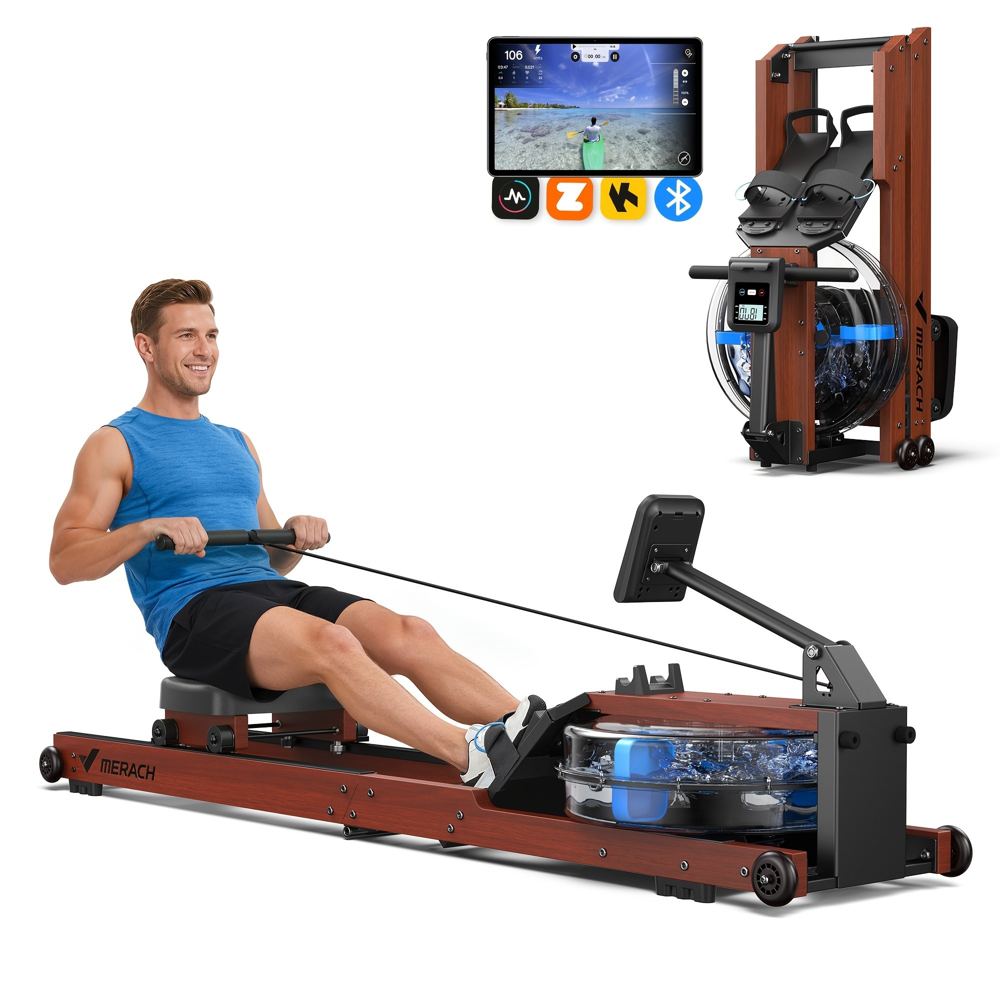
MERACH Water Resistance Rowing Machine, Long Rail — $203.75
MERACH has built a solid reputation in the home-rower world, and this model shows why. The headline is the long rail (the model name references its extended 72/44-inch rail dimensions), which makes it the most comfortable pick here for taller rowers. The water resistance delivers that dynamic, pull-harder-get-more feel, and the build quality is a clear step above the budget tier.
Pros:
- Long rail suits taller users who feel cramped on standard machines
- Genuine water-rowing feel with smooth, dynamic resistance
- Reputable brand with better fit and finish
Cons:
- Water tank needs basic maintenance (purification tablets)
- Louder than magnetic models — the whoosh is real
- Bigger footprint, doesn't fold as neatly
View on VÉLORA
YOSUDA Magnetic/Water Rowing Machine — $284.90
The premium pick, and the one we'd call the "buy it once" option. YOSUDA combines magnetic and water resistance in one machine, so you get the adjustable, app-friendly control of magnetic plus the organic stroke feel of water. The "360 leakproof" tank design addresses the number-one worry people have about water rowers sitting on their floors. Everything about it — frame, seat, monitor — is a tier above the rest of this list.
Pros:
- Hybrid resistance: water feel plus magnetic adjustability
- Leakproof tank design for peace of mind on wood floors
- Sturdiest build and best overall component quality here
Cons:
- Highest price on the list
- Heavier to move around
- Overkill if you're not sure rowing is your thing yet
View on VÉLORA
How Much Space Does a Rowing Machine Actually Need?
Budget roughly 9 feet by 4 feet of clear floor to row comfortably — the machine itself is around 7 feet long, and you need room behind it for the stroke. The good news: most of these store upright or fold, dropping the storage footprint to something like 2 feet by 3 feet. If space is your main constraint, our guide to quiet home gym equipment for apartments goes deeper on small-space setups. You can also browse the full cardio range in our cardio equipment collection.
Frequently Asked Questions
Are rowing machines good for weight loss?
Yes — rowing is one of the most efficient calorie-burning workouts you can do at home because it recruits your legs, back and arms at once. The catch is consistency. A rower you actually use four times a week beats a treadmill you avoid, and most people find rowing easier to stick with because it's low-impact and varied.
Is a rowing machine loud?
Magnetic rowers are genuinely quiet — mostly you'll hear the seat rolling and your own breathing. Water rowers make a swooshing sound with each stroke; it's pleasant to most people but audible through thin walls. Air rowers (none on this list) are the loud ones.
How often should I row as a beginner?
Start with 15-20 minutes, three times a week, focusing on form: legs first, then hips, then arms — and reverse the order coming back. Add a few minutes each week rather than adding resistance. Most beginners see real changes in stamina within a month.
Do I need a mat under my rowing machine?
It's a good idea. A mat protects floors from sweat and minor scuffs, dampens vibration, and keeps the machine from creeping during hard efforts. It's essential on hardwood or tile, optional on carpet.
What's the difference between cheap and expensive rowers?
Mostly rail length, frame rigidity, resistance smoothness and the monitor. A $100 rower will get a beginner fit. A $280 rower feels better, fits taller bodies, tracks more, and — honestly — is simply more pleasant to use, which is what determines whether you're still rowing in a year.
The Bottom Line
For most people, the sweet spot on this list is the UTRYUP 16-level magnetic rower — quiet, trackable, and priced fairly. On a budget, the sub-$100 Utryup hybrid is a genuinely sensible way to start. And if you're tall or you already know you'll row for years, the MERACH and YOSUDA reward the extra spend every single session. Pick the one that fits your space and your mornings, and the fitness part mostly takes care of itself.