What weight dumbbells should a beginner start with? Practical starting ranges by exercise, the two-dumbbell test, and when to move up — no guesswork.
What Weight Dumbbells Should a Beginner Start With?
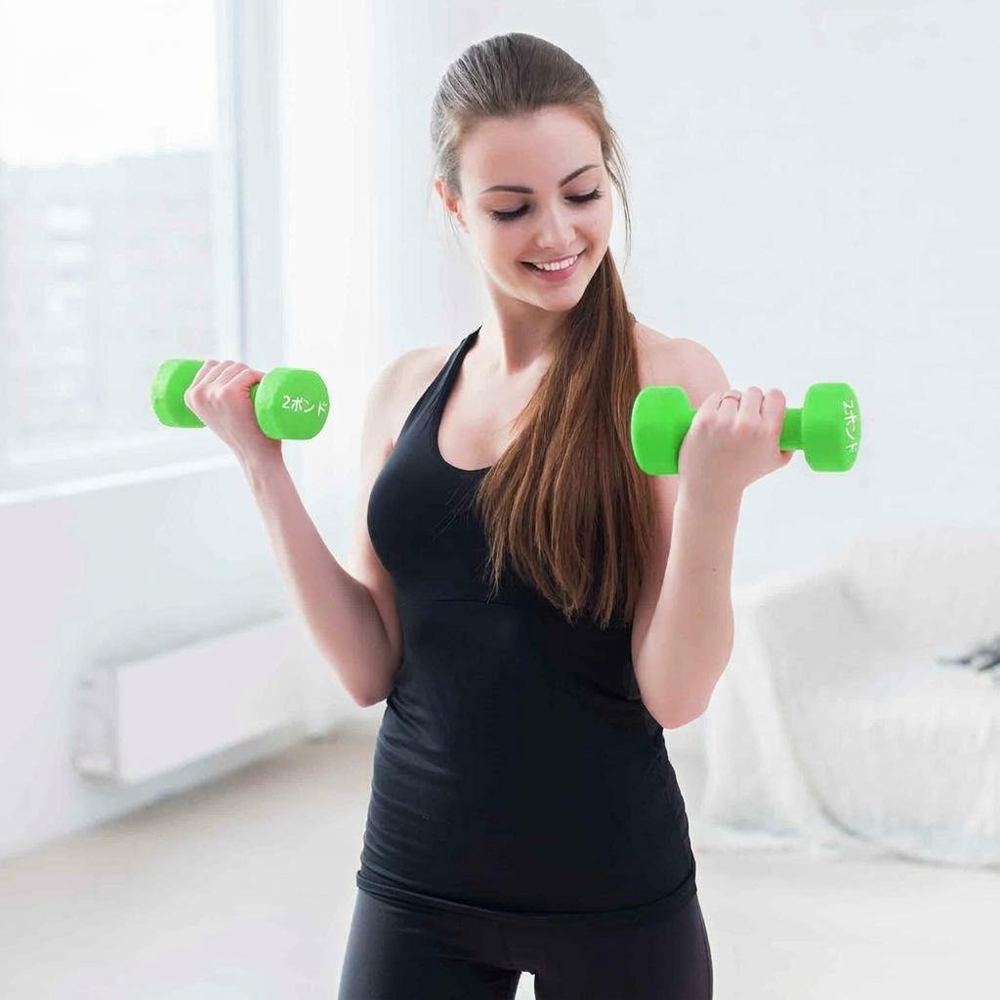
Standing in front of a rack of dumbbells for the first time is a strange kind of confusion. The 2-pound pink ones look like toys, the 15-pounders look like they belong to someone else, and nobody tells you where a beginner actually starts. The honest answer is simpler than the fitness industry makes it sound: your upper body and lower body need different weights, and the right starting weight is the one you can lift with good form for the repetitions you planned — with the last two or three reps feeling challenging but not sloppy.
There is no single magic number, and anyone who gives you one without asking about your body, your exercises, and your experience is guessing. This guide replaces guesswork with starting ranges by exercise group, a simple self-test you can do in the store or your living room, and clear rules for when to move up. Results vary from person to person — strength builds at its own pace — but the method below works for almost everyone.
This guide contains affiliate links. If you buy through them, VÉLORA may earn a commission at no extra cost to you.
The Core Idea: Your Legs Are Stronger Than Your Shoulders
The most important thing to understand is that "beginner weight" is not one number. Your lower body carries you around all day — your legs and glutes are large, powerful muscles that can handle real resistance. Your shoulders, arms, and upper back are smaller muscle groups with more delicate joints, and they fatigue faster.
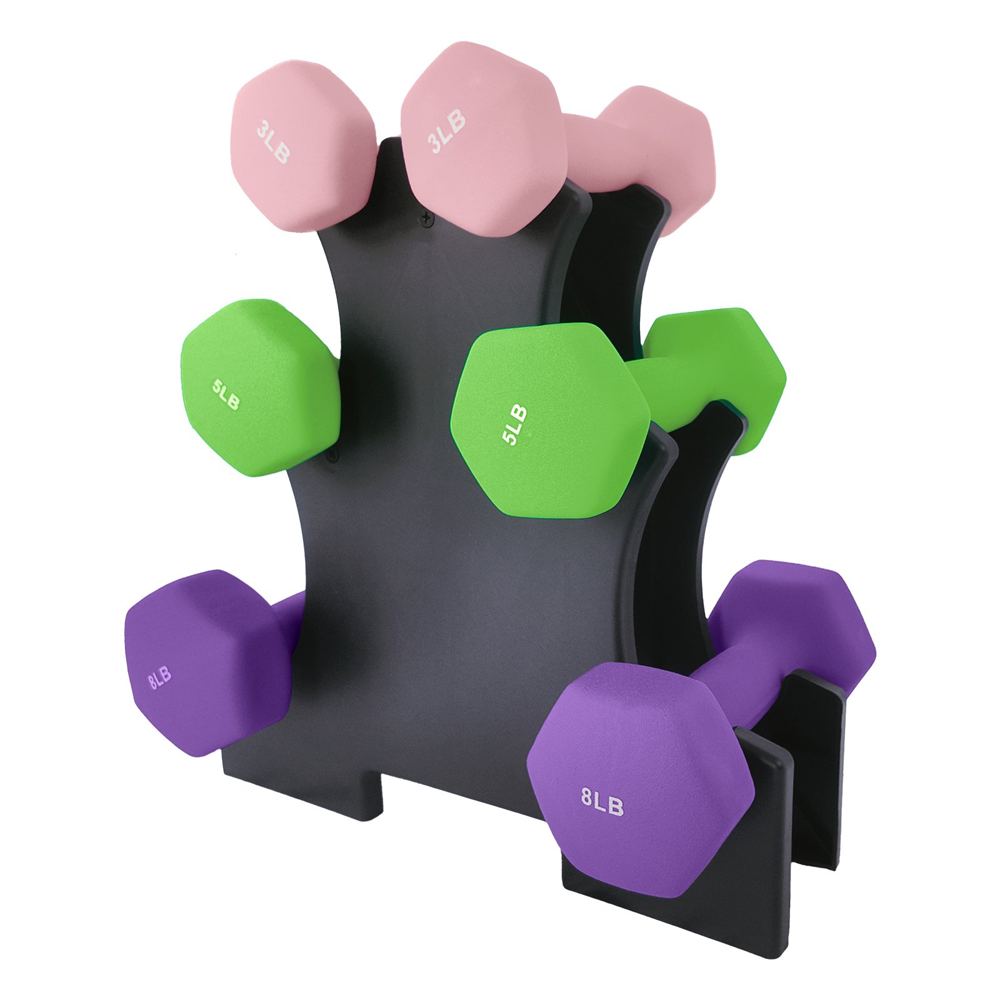
This is why a single pair of dumbbells is often frustrating: the weight that challenges your legs will be far too heavy for your shoulder press, and the weight that suits your bicep curls will barely register on a squat. A workable starter setup covers a range, not a single number. The 3 Pair PVC Dumbbell Set with Case is popular exactly because three pairs give you that light-to-medium spread in one tidy package. Our guide to the best dumbbells for women goes deeper on shapes, coatings, and what fits smaller hands.
Practical Starting Ranges by Exercise Group
The table below gives suggested starting ranges. These are ranges to begin experimenting within — not prescriptions, and not promises about what you "should" be lifting. Start at or below the bottom of the range, and let form decide.
| Exercise group | Examples | Suggested starting range (women) | Suggested starting range (men) | | --- | --- | --- | --- | | Shoulders and arms | Overhead press, lateral raise, bicep curl, triceps extension | 2–5 lb | 5–10 lb | | Chest and upper back | Floor press, one-arm row, chest fly | 5–10 lb | 10–20 lb | | Lower body | Goblet squat, Romanian deadlift, lunges, step-up | 5–15 lb | 15–30 lb | | Core | Weighted dead bug, Russian twist | 2–8 lb | 5–12 lb |
A few things to notice in this table. First, lateral raises sit at the very bottom: the shoulder's small stabilizing muscles tire quickly, and going too heavy here invites shrugging and neck strain. Second, lower-body ranges are wide on purpose — many women find that a goblet squat with 10 lb feels almost easy while an overhead press with 5 lb feels hard, and both impressions are correct. Third, these are starting points for healthy adults; if you are returning from injury, managing a health condition, or pregnant, follow your healthcare provider's guidance over any chart.
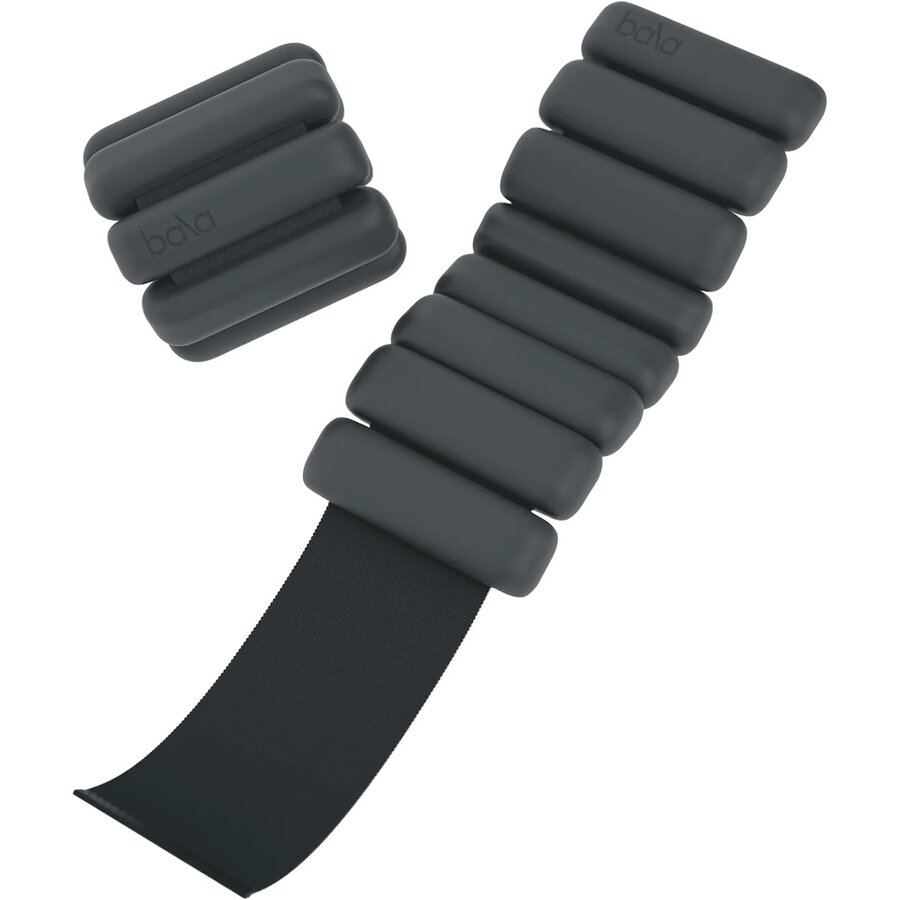
The Women's Home Gym Dumbbell Kit with Hex Weights and Stand spans a useful range for growing past the very first weeks, while a 3 lb set of Bala Bangles wrist and ankle weights works beautifully for the smallest muscles and for adding gentle load to walking or bodyweight work.
The Two-Dumbbell Self-Test
When you are choosing between two sizes — in a shop, or deciding which pair to grab from your set — use this simple test instead of guessing.
- Pick the heavier of the two dumbbells you are considering.
- Perform 12 repetitions of the exercise you plan to do, at a controlled tempo (about two seconds up, two seconds down).
- Watch your form honestly, or film yourself from the side.
If the last 2–3 reps felt challenging but your form stayed clean, that weight is right. If you could do 15 or more with perfect ease, go one step up. If your form broke down before rep 10 — shoulders shrugging, back arching, wrists bending, momentum taking over — put it down and take the lighter one. There is no shame in the lighter bell; there is only training and ego-training, and only one of them builds strength safely.
Repeat the test per exercise group. You will likely end up with different answers for your shoulders and your legs, which is exactly the point. Write your choices down somewhere you will see them — a note on your phone works — because week-one-you is smarter than week-three-you about what felt right.
Why Legs Need More Than Shoulders (and How to Buy for That)
Because the gap between upper-body and lower-body strength is so large, one pair of dumbbells almost never works for a full-body routine. Practical small-space solutions:
- Two pairs minimum. A light pair (2–5 lb) for shoulders and arms, and a medium pair (8–15 lb) for legs and rows. This covers the basics for most beginners.
- Three pairs if you can. Light, medium, and something in between removes the jumps and gives your chest and back work a natural home.
- Adjustable dumbbells. One handle that dials between weights saves space and money over time. They are excellent for growing strength without accumulating a rack — our guide to starting strength training explains how to progress with a single adjustable set.
If budget or space allows only one purchase, choose the medium-light pair that fits your hardest muscle group (usually shoulders). You can always double up — hold two dumbbells, one per hand — or slow the tempo and add reps for your legs while your strength catches up.
When to Move Up: The Top-of-the-Range Rule
Knowing when to increase weight is where most beginners stall — they either jump too early and get sloppy, or stay with the same bells for months. Use this rule:
When you can complete the top of your rep range with good form on all sets, and you could probably do 2–3 more, it is time to go up one step.
For example, if your plan calls for 8–12 repetitions and you finish 12 clean reps on every set, two workouts in a row, move to the next size. The increase should be small — typically 1–3 lb for upper-body exercises and 5 lb or so for lower-body work. Big jumps skip the strength you have not built yet.
A few progression habits that make this work:
- Change one thing at a time. Add weight, or add reps, or add a set — never all three at once.
- Keep a tiny log. Exercise, weight, reps. It takes ten seconds and removes all doubt about whether you are progressing.
- Respect the plateau. If the next size up feels wrong after two sessions, drop back and add reps or slow your tempo instead. Strength sometimes arrives in the week after you stop chasing it.
Beginner Modifications and Common Mistakes
Start too light rather than too heavy. The first two weeks of strength training are largely your nervous system learning the movements. Lighter weights let you learn the pattern; your muscles catch up quickly.
Common mistakes to watch for:
- Gripping too tightly or letting wrists bend. Keep wrists straight and stacked over your forearm; if a bell is too big for your hands, that is a real problem, not a weakness.
- Rushing the lowering phase. The eccentric (lowering) portion builds a lot of strength. Two seconds down, always.
- Holding your breath. Breathe out on the effort (pressing up, standing up) and in on the return. Never hold your breath through an entire set.
- Choosing weights to impress the room. Nobody's strength was built by the number on the bell; it was built by the reps done well.
- Skipping the warm-up. Five minutes of marching, arm circles, and bodyweight squats prepares joints and tells you how your body feels today.
Safety Notes
Dumbbell training is one of the safest forms of exercise when the basics are respected — but the basics are not optional. Keep a clear floor around you so a dropped bell lands on nothing and nobody. Roll dumbbells to the side rather than dropping them from height. Never exercise through sharp joint pain; muscle effort and mild next-day soreness are normal, but pain in the shoulder joint, wrist, or lower back is a signal to stop and reassess. If you are pregnant, postpartum, or managing a condition like osteoporosis or a heart issue, talk to your provider about appropriate resistance levels before starting. And remember the golden order: technique first, then weight — every session.
FAQ
Q: Should a beginner buy one pair of dumbbells or a set?
If you can manage it, a set or at least two pairs is far better than one. Your shoulders and your legs need different weights, and one pair means one muscle group is always under-loaded or over-loaded. A small set like the 3 Pair PVC Dumbbell Set with Case solves this from day one.
Q: Is 2 lb too light to be useful?
Not at all. Two to three pounds is exactly right for lateral raises, external rotations, and other small-muscle work — and for learning new movements safely. "Too light" is a weight you can lift 20+ times without effort; below that, it is serving a purpose.
Q: How quickly should I increase dumbbell weight?
When you hit the top of your rep range with clean form across all sets, two sessions in a row, go up one small step. For most beginners that means a small increase every 2–4 weeks on upper-body moves and a little faster on lower-body moves. There is no fixed timeline — your body sets the schedule.
Q: Do men and women really need different starting weights?
On average, yes as a starting range — men typically carry more upper-body muscle mass. But these are just ranges to experiment within. Your own two-dumbbell test matters far more than any chart, and plenty of strong beginners sit outside the average on both sides. Start where your form is clean.
Q: What if I only have one dumbbell at home?
You can still train well. Use it for goblet squats, single-arm rows, single-leg deadlifts, and floor presses (one side at a time). Slow the tempo and add reps for extra challenge, and consider adding a second or a set when you can. Our dumbbell exercises for women includes plenty of single-dumbbell options.
Conclusion
Choosing your first dumbbell weight comes down to three habits: respect the gap between your upper and lower body, test honestly with the two-dumbbell method, and move up only when the top of your rep range feels clean. Buy for the range — light for shoulders, heavier for legs — and let small, consistent increases do the work. The right weight is not the heaviest you can lift; it is the heaviest you can lift well. Start there, and strength follows.
