Dumbbells on the floor are a tripping hazard and an eyesore. Discover space-smart storage ideas — vertical racks, under-bed, wall-mounted, and compact solutions for small homes.
Dumbbell Storage Ideas for Small Homes
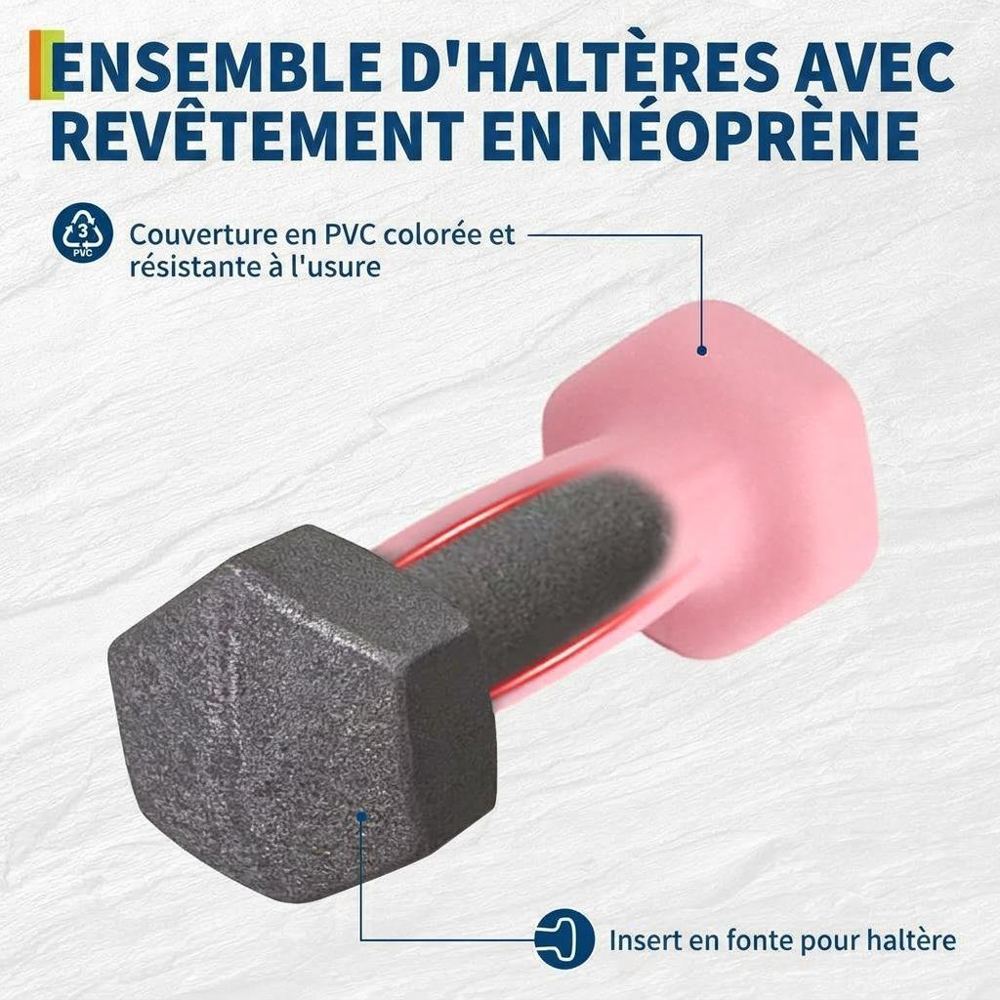
Dumbbells are the backbone of home strength training — and the hardest thing to store gracefully in a small home. Left on the floor, they're a tripping hazard, a toe-stubbing menace, and a fast way to damage flooring. Stacked in a closet, they become the chore you dread before every workout. But with the right storage approach, even a full set of dumbbells can live tidily in an apartment corner, under a bed, or against a single wall.
This guide covers space-smart dumbbell storage for small homes: vertical and horizontal racks, under-bed and closet solutions, wall-mounted options, and the compact alternatives that eliminate the storage problem entirely. Plus the safety rules that matter most when heavy iron lives where kids and pets roam.
This guide contains affiliate links. If you buy through them, VÉLORA may earn a commission at no extra cost to you.
Why Proper Storage Matters (Beyond Tidiness)
This isn't just about looks. Bad dumbbell storage causes real problems:
- Safety. A dumbbell on the floor in a walkway is a fall hazard — for you mid-workout when you're fatigued, and for anyone else in the home. Rolling dumbbells (round heads are the worst offenders) can travel surprisingly far.
- Floor damage. Dropped or dragged dumbbells dent hardwood, crack tile, and tear carpet. Concentrated weight on small contact points is brutal on floors.
- Equipment damage. Dumbbells banging into each other chip coatings and damage adjustable mechanisms. Proper spacing on a rack prevents it.
- Your motivation. If getting your weights out is a 5-minute excavation, you'll skip workouts. Accessible storage removes friction — the weights are just there, ready.
Storage Options Compared
| Option | Footprint | Best for | Watch out for | |---|---|---|---| | Vertical A-frame rack | ~2 sq ft | 3–6 pairs of hex dumbbells in a corner | Top-heavy if loaded unevenly; needs level floor | | Horizontal 2–3 tier rack | ~4–6 sq ft | Larger sets, 5–15+ pairs | Biggest footprint; measure your space first | | Under-bed / flat trays | 0 (hidden) | 1–3 pairs in a bedroom | Weight limits of the tray; dust | | Wall-mounted holders | Wall space only | 1–2 pairs, light weights | Must anchor into studs; not for heavy pairs | | Closet / cabinet | Existing furniture | Out-of-sight storage | Ventilation; door clearance with weights inside | | Adjustable dumbbells | ~2 sq ft (one pair) | Replacing a whole set in tiny spaces | Higher upfront cost; mechanism care |
Vertical Racks: Maximum Weights, Minimum Floor
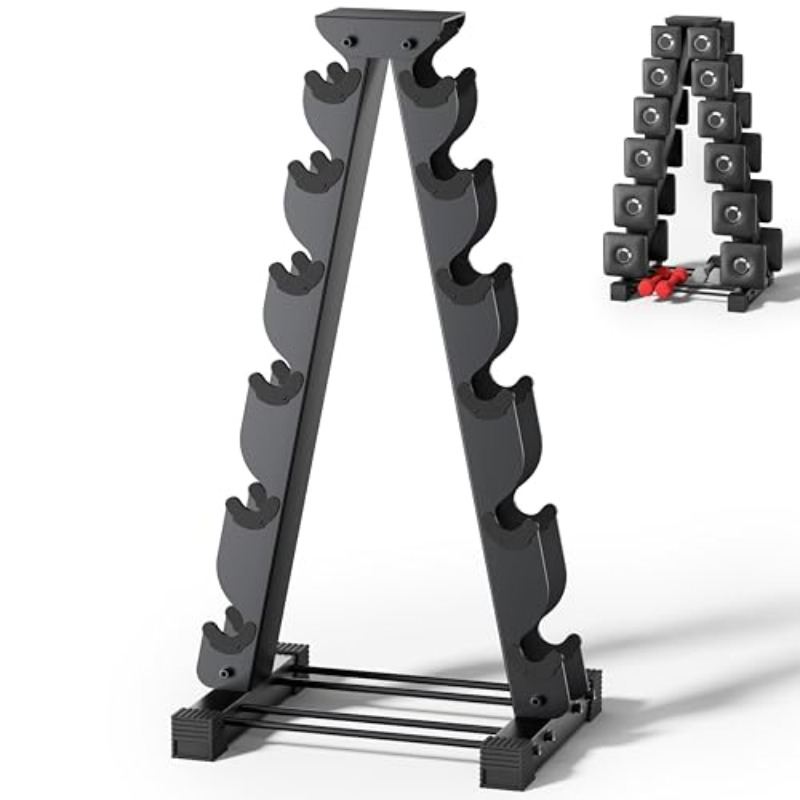
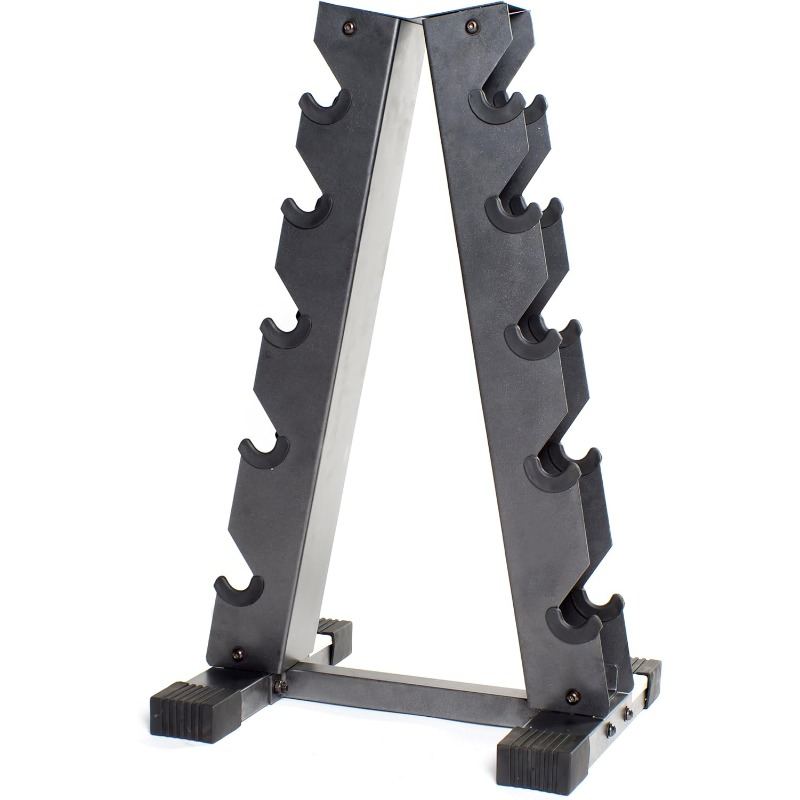
The vertical A-frame rack is the small-home champion. It holds pairs on angled tiers going upward, fitting 3–6 pairs of dumbbells into about two square feet of floor — roughly the footprint of a laundry basket. Tucked into a corner, it practically disappears.
A 6-tier space-saving dumbbell rack stand is built exactly for this: multiple tiers in a vertical tower that keeps every pair visible and grabbable. Check the weight capacity per tier — cheap racks sag or wobble under real weight. Tighten every bolt during setup and re-check monthly, since a rack takes dynamic loads each time you rack and unrack weights.
Placement tips for vertical racks:
- Put the heaviest pairs on the bottom tier and lighter pairs up top — low center of gravity keeps the rack stable.
- Position against a wall or in a corner so it can't tip backward.
- Keep it on a hard, level floor — or on a rubber mat that protects the floor and stops the feet from sliding.
If aesthetics matter in a shared living space, a dumbbell rack with multiple color options lets you match the rack to your room rather than living with industrial black.
Horizontal Racks: The Classic, When You Have the Wall
The traditional 2- or 3-tier horizontal rack holds more pairs and shows the whole set like a menu. The trade-off is footprint: 4–6 square feet along a wall.
It works best when you have one clear wall in a spare room, garage corner, or large closet — and when you own 8+ pairs that a vertical rack can't hold. Weight changes are fastest here: everything at grab height, no reaching up.
Sets that come with their own rack solve the matching problem — a home gym hex dumbbell set with storage rack arrives with tiers sized for the included weights.
Space-saving trick: a horizontal rack doubles as a room divider in a studio apartment — weights on one side, living space on the other — as long as it's stable and the weights face away from foot traffic.
Hidden Storage: Under-Bed, Closet, and Furniture
Sometimes the best storage is invisible. If you train in a bedroom or living room and want the weights gone between sessions:
Under-bed trays: low-profile rolling trays slide 1–3 pairs under most beds. Best for lighter pairs (up to ~15 lbs each) — heavier than that and you're wrestling weight at an awkward angle twice a day. Line the tray with rubber shelf liner so weights don't slide or clank.
Closet storage: a closet floor shelf or the closet floor itself keeps weights out of sight. Put a rubber mat down first, and arrange pairs so you can reach the most-used ones without moving the rest. Don't store dumbbells on high closet shelves — retrieving heavy weight overhead is asking for a dropped dumbbell.
Storage ottomans and benches: can hide a pair or two while serving as seating — but check the furniture's weight rating first. Most ottomans aren't built for 50+ lbs of iron, so this is a light-weights-only solution.
Behind furniture: the gap behind a sofa or beside a wardrobe fits a vertical tower in many rooms. Just make sure it's retrievable without moving furniture every workout — friction kills consistency.
Wall-Mounted Storage
Wall-mounted holders free up floor space entirely — but with strict limits: anchor into studs, always (drywall anchors can't handle the dynamic load of racking and unracking), light weights only (most mounts suit pairs up to 10–15 lbs), and check the mount monthly for loosening or wall cracking. Wall storage suits one or two light pairs for high-rep work — not a full strength set.
The Nuclear Option: Adjustable Dumbbells
If storage space is truly minimal — a studio apartment, a single closet — consider eliminating the multi-pair problem entirely. A pair of adjustable dumbbells replaces a whole rack of fixed weights in about two square feet: one pair on a small stand, dial to your working weight, done.
The trade-offs: higher upfront cost, a mechanism that needs occasional care, and slightly slower weight changes. But for small homes the space math is unbeatable. Our adjustable vs fixed dumbbells guide walks through the decision, and best adjustable dumbbells for small spaces covers the options.
Vertical vs Horizontal: Which Suits Your Space?
Still deciding? Run through this:
- Under ~30 sq ft of gym space? Go vertical — dramatic footprint savings, and 3–6 pairs cover most home programs.
- A dedicated wall in a spare room? Go horizontal — faster weight changes, higher capacity, everything visible.
- Training in a shared living space? Go vertical in a corner, or hidden (under-bed/closet) if the room must look weight-free between sessions.
- More than 10 pairs? Go horizontal — vertical racks top out, and you likely have room for a full rack anyway.
Either way, put a rubber mat under the rack. It protects the floor, deadens the clank of re-racking, and stops the rack from migrating across the room over time.
Safety Rules for Dumbbells in Small Homes
When heavy weights share space with daily life, these are non-negotiable:
- Level floors only. Racks on uneven or sloped floors can tip or let dumbbells roll. Shim or relocate — never trust a wobbling rack.
- Heaviest weights lowest. On any tiered rack, heavy pairs go on the bottom tier. Top-heavy racks tip.
- Kids and pets. Store weights where kids can't reach or pull them down — a locked closet or closed room beats an open corner with toddlers around. Never leave dumbbells on the floor where a child or pet could trip on them.
- No overhead retrieval. Don't store dumbbells on high shelves. Dropped from height, even a 10-lb dumbbell can break a foot.
- Clear the drop zone. Leave enough clear floor around your rack to set weights down safely — plan your workout layout, not just storage.
- Check rack hardware monthly. A wobbling rack with 200 lbs on it is a collapse waiting to happen.
- Mind the rolling. Round-head dumbbells roll, even on barely-noticeable slopes. Hex heads or cradled racks solve this.
FAQ
Q: What's the best dumbbell storage for a small apartment?
A vertical A-frame rack in a corner — it holds 3–6 pairs in about two square feet. If even that is too much, a pair of adjustable dumbbells on a small stand replaces the whole set. Under-bed trays work for 1–3 light pairs you want hidden.
Q: Can I store dumbbells on carpet?
Yes, with a rubber mat underneath. The mat distributes the concentrated weight, protects the carpet from indentations and sweat, and stops the rack from shifting. Without a mat, heavy racks will permanently compress carpet and padding.
Q: How do I stop my dumbbells from damaging the floor?
Three layers of defense: a rubber mat under the storage area, controlled (not dropped) re-racking, and hex-head or cradled dumbbells that can't roll into walls or furniture. For drops during heavy sets, thicker dedicated flooring or crash pads are worth it — standard thin mats won't save hardwood from a dropped 40-pounder.
Q: Is it safe to store dumbbells in a closet?
Yes, if the closet floor is level, you put a protective mat down, and you can reach your most-used pairs without climbing or overhead lifting. Keep heavy pairs low, don't stack weights precariously, and make sure the door opens fully with the weights inside.
Q: Vertical or horizontal dumbbell rack — which is better?
Neither is universally better — it depends on your space and set size. Vertical racks win on footprint (great for apartments, 3–6 pairs). Horizontal racks win on capacity and speed of weight changes (better for larger sets and dedicated gym rooms). Match the rack to your room first, your set second.
Q: How do I childproof dumbbell storage?
Store weights in a lockable closet or a room children don't access unsupervised. Never leave dumbbells on the floor where kids play. Teach older children that weights are not toys and never to pull on a rack. If a rack is in a shared space, position it where a climbing child can't topple it — against a wall, heaviest weights on the bottom tier.
Conclusion
Small-home dumbbell storage is a solved problem — it just needs a deliberate choice. A vertical rack in a corner handles most sets in two square feet; hidden options like under-bed trays or closets keep shared spaces clean; and adjustable dumbbells erase the problem entirely for the truly space-starved. Whatever you choose, anchor it to the safety basics: level floor, heaviest weights lowest, hardware checked monthly, and nothing left where it can trip, roll, or fall on someone. Do that, and your weights stay out of the way, off the floor, and ready the moment you are. If you're planning the rest of your compact setup, our women's home gym essentials guide covers the full layout.
