Adjustable vs fixed dumbbells: cost, space, durability and training feel compared honestly — with a clear verdict for beginners, small spaces and serious lifters.
Adjustable vs Fixed Dumbbells: Which Should You Buy?
It is the classic home-gym dilemma. On one side: a pair of adjustable dumbbells that replaces an entire rack of weights, saving space and money. On the other: fixed dumbbells — simple, indestructible, with the satisfying feel that adjustable mechanisms cannot quite replicate. Both build muscle equally well. The right choice depends on your space, your budget, how you train, and how much you care about the small details of training feel.
This guide compares adjustable and fixed dumbbells honestly across every dimension that matters — cost, space, durability, training feel, and weight-change speed — and gives clear verdicts for different kinds of buyers. No hype, no affiliate-driven winner; just the trade-offs laid out so you can decide.
This guide contains affiliate links. If you buy through them, VÉLORA may earn a commission at no extra cost to you.
How Each Type Works
Fixed dumbbells are exactly what they sound like: a handle with a set weight permanently attached, from light neoprene pairs up to heavy rubber-coated hex dumbbells. You pick up the 10s, you put down the 10s, you pick up the 15s. A full set lives on a rack in graduated order. Simple, fast, and bombproof.
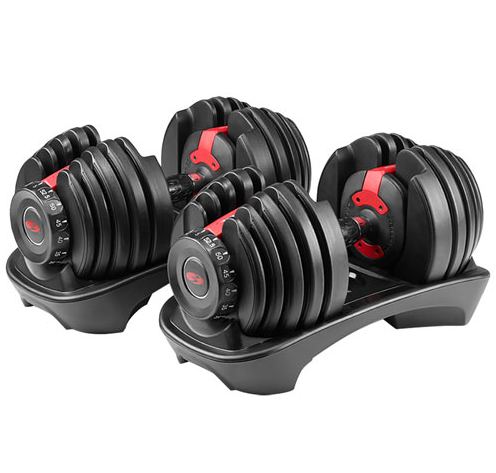
Adjustable dumbbells pack many weights into one handle. The most common design — the dial type, like the Bowflex SelectTech 552 — sits in a cradle; you twist a dial, lift, and the handle carries only the plates you selected. Other designs use pins, twist-locks, or convertible systems like the adjustable set that converts into barbells and kettlebells. For a broader look at whether adjustables are worth the investment, see our guide on are adjustable dumbbells worth it.
Head-to-Head Comparison
| Feature | Adjustable dumbbells | Fixed dumbbells | | --- | --- | --- | | Cost per pound of range | Lower — one purchase covers 5–52.5 lb | Higher — each weight is a separate purchase | | Upfront cost | Higher ($150–$350+ for a quality pair) | Lower to start (buy pairs as needed) | | Space needed | One pair + cradle (about 2 sq ft) | A rack plus floor space for every pair | | Weight-change speed | Fast (dial) to moderate (pin) | Instant — just grab the next pair | | Durability | Good, but mechanisms can jam if dropped or mishandled | Excellent — nearly indestructible | | Training feel | Bulkier, longer handle; plates can shift slightly | Compact, balanced, solid | | Max weight | Usually 50–90 lb per dumbbell | As heavy as you want to buy | | Sharing between users | Excellent — dial to each person's weight in seconds | Requires a wide range on the rack | | Noise | Moderate (plates in cradle) | Low with rubber coating |
Cost: The Full Picture
Adjustables win on total cost of range. A quality adjustable pair covering 5 to 52.5 lb costs roughly what five to seven pairs of fixed hex dumbbells cost — and you would need about ten pairs to match the full range. If you know you will eventually want weights from light to heavy, buying adjustables once is cheaper than building a fixed set pair by pair.
Fixed dumbbells win on entry cost and flexibility. You can start with two pairs for the price of a dinner out, add pairs as you get stronger, and spread the spending over years. There is no big upfront commitment, and you never pay for weight range you might never use.
The honest math: if you will use weights across a wide range, adjustables are cheaper overall. If you only ever need light-to-medium weights — common for many home trainees — a small fixed set costs less in total.
Space: The Deciding Factor for Many
This is where adjustables dominate. One pair in a cradle occupies about two square feet. A comparable fixed set needs a two-tier rack and roughly six to ten square feet of floor, plus clearance to walk around it. In an apartment, a bedroom corner, or a shared living space, that difference is decisive — and it is why our guide to adjustable dumbbells for small spaces exists.
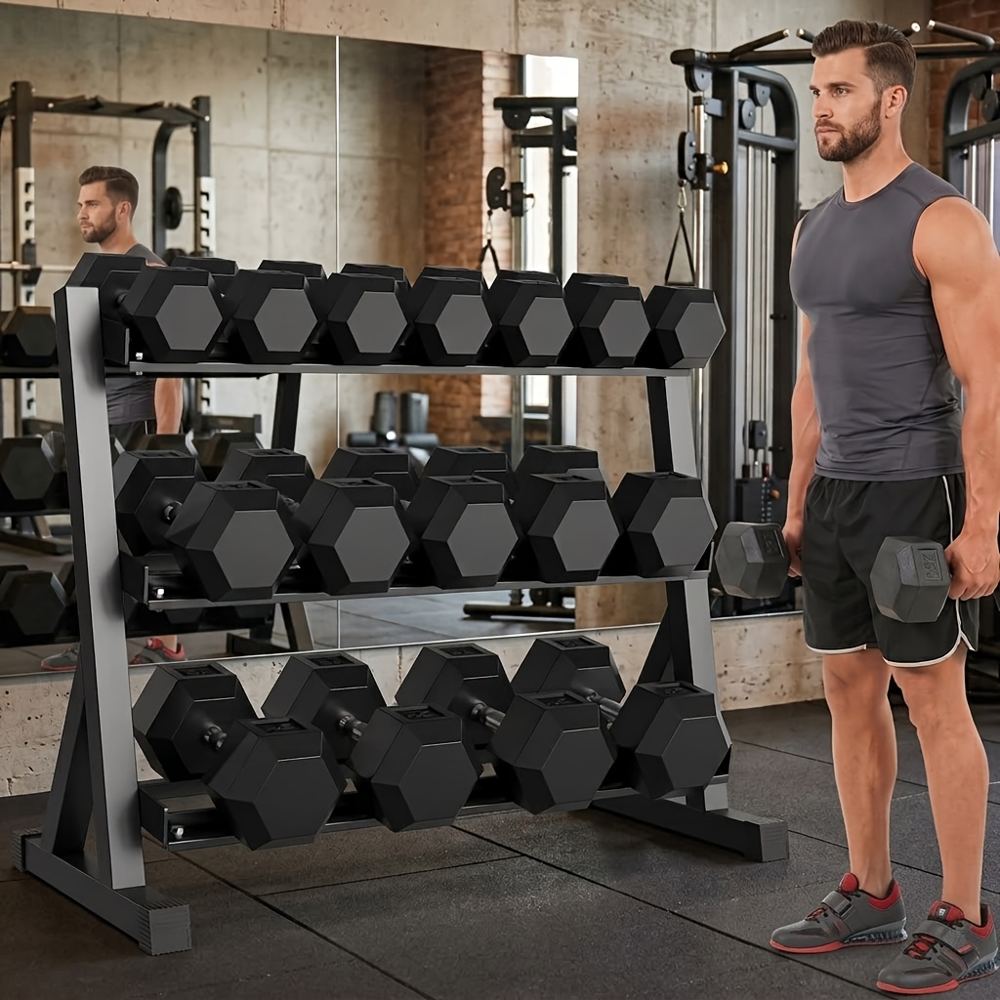
Fixed sets can work in small spaces if you keep the range narrow — three to five pairs on a compact stand, like a rubber-coated hex dumbbell set with rack, fits many home setups. But the moment you want weights from 5 to 50 lb, the rack gets big.
Durability and Maintenance
Fixed dumbbells are the tanks of the fitness world. A rubber-coated hex dumbbell has no moving parts; it can be dropped, kicked, stored in a garage, and handed down to your children. Maintenance is essentially zero.
Adjustable dumbbells are durable but not indestructible. Dial mechanisms contain small plastic and metal parts that align the plates. The rules are simple: do not drop them, do not slam them into the cradle, and check the mechanism clicks cleanly before lifting. Treated with normal care, quality adjustables last many years — but they will not survive the abuse a fixed dumbbell shrugs off.
If you train in a garage gym, drop weights regularly, or share equipment with teenagers, fixed dumbbells are the safer long-term bet.
Training Feel: The Subjective Part
Ask experienced lifters and many will tell you fixed dumbbells simply feel better. They are compact, balanced, and quiet in the hand. Adjustable dumbbells are longer — the handle has to accommodate all the plates — which can feel unwieldy for exercises like overhead triceps extensions or when the weights rest against your legs during lunges. Some users also notice a slight rattle or shift of plates during dynamic movements.
Does it matter for results? No. Muscle fibers do not know what kind of dumbbell you are holding. But training feel affects enjoyment, and enjoyment affects consistency — so it is worth weighing honestly, especially if you have used fixed dumbbells before and know you prefer them.
Weight-Change Speed in Real Workouts
In circuits and supersets, speed matters. Fixed dumbbells are unbeatable: set down one pair, grab the next, zero seconds lost. Dial adjustables are nearly as fast — twist, lift, go — taking maybe five seconds. Pin-type and spin-lock adjustables are noticeably slower, which can break the flow of a timed circuit.
If your training style is heavy on supersets, drop sets, or fast-paced circuits, this is a genuine point in favor of fixed dumbbells (or dial-type adjustables specifically).
Honest Caveats About Adjustables
- Do not drop them. This is the number-one rule. A drop that a hex dumbbell would survive can jam or crack a dial mechanism.
- The bulky feel is real. The long handle and plate stack feel different from a compact fixed dumbbell, especially at light settings where most of the length is empty cradle-side hardware.
- Weight increments vary. Many adjustables jump in 2.5 lb steps at light weights and 5 lb steps higher up — fine for most, but less granular than a full fixed rack.
- Warranty matters. Buy from established brands with real warranties; a bargain adjustable with no support is a risk.
Honest Caveats About Fixed Dumbbells
- The cost creeps up. Each new pair is another purchase, and a full range adds up to more than most people expect.
- They multiply. What starts as two pairs becomes eight, then a rack, then a dedicated corner of the room.
- Gaps in the range. Most people buy 5s, 10s, 15s… and then discover they need 12.5s. Adjustables never have this problem.
Verdicts by Persona
The apartment beginner. Adjustable dumbbells, without hesitation. Space is your scarcest resource, and a dial-adjustable pair gives you room to grow from your first workout to genuinely strong without buying anything else. The SelectTech 552 is the classic pick — if you are still deciding on dumbbells generally, our dumbbells for women guide covers weight selection too.
The couple sharing weights. Adjustables again. When two people of different strengths share equipment, the dial beats owning two overlapping fixed sets. Five seconds to switch from her 12 lb to his 35 lb, no extra purchases.
The serious lifter with a dedicated space. Fixed hex dumbbells on a rack. You will appreciate the compact feel, the instant weight changes during heavy supersets, and the ability to drop a weight without a second thought. A rubber-coated hex set on a rack is built for exactly this use.
The budget starter. Fixed, bought gradually. Start with the pairs you need now, add as you progress. No big upfront spend, no mechanism to worry about.
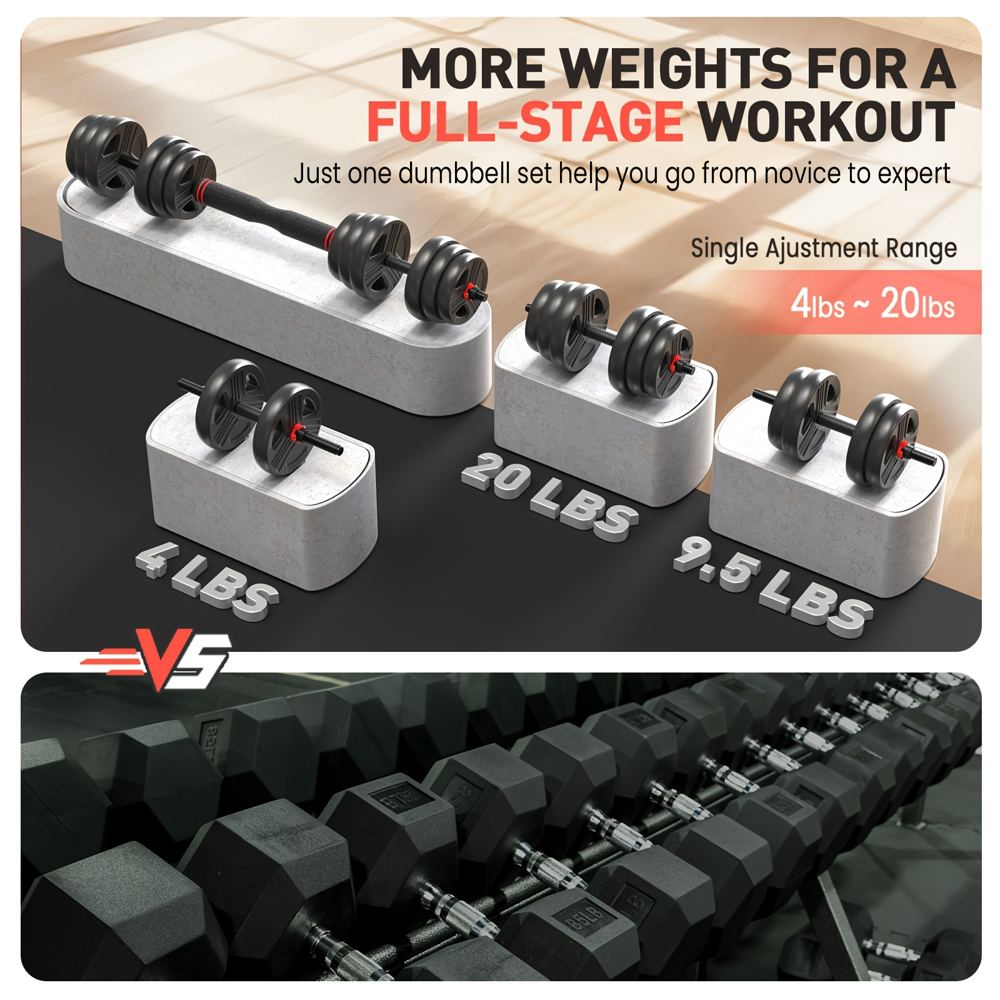
The versatility seeker. Consider a convertible adjustable set that turns into barbells and kettlebells — one purchase covering multiple equipment types, ideal if you want variety without a room full of gear.
FAQ
Q: Are adjustable dumbbells good for beginners?
Yes — they are arguably ideal for beginners, because your strength will change fastest in the first year and adjustables grow with you without new purchases. Just learn the weight-change mechanism before your first workout and treat the pair with reasonable care.
Q: Can adjustable dumbbells replace a full dumbbell set?
For most home training, yes. A 5–52.5 lb adjustable pair covers the range most people use for years. Only lifters who regularly need weights above 50 lb per hand, or who compete, will outgrow them — and those lifters usually know it in advance.
Q: Do adjustable dumbbells break easily?
Quality adjustables from established brands are sturdy under normal use — the key phrase being normal use. Do not drop them, do not throw them into the cradle, and they will last years. Cheap no-name adjustables are a different story; the mechanism is the part you are paying for.
Q: Which is better for small apartments?
Adjustable dumbbells, by a wide margin. One pair plus a cradle replaces a rack of fixed weights and fits in about two square feet. If even that is too much, a couple of light fixed pairs in a case is the most compact option of all.
Q: Is the training feel of adjustables really worse?
"Worse" is strong — "different" is fairer. They are longer and can feel bulky, especially at light settings. Many people stop noticing after a week. If you have trained with fixed dumbbells for years, you will notice the difference most; if you are starting fresh, you will likely never think about it.
Q: Should I buy used adjustable dumbbells?
Carefully. Test the mechanism through every weight setting before paying — it should click cleanly with no sticking or grinding, and all plates should seat firmly. Fixed dumbbells are much safer second-hand buys since there is nothing to break.
Conclusion
Adjustable and fixed dumbbells both build strength; the choice is about your constraints, not about quality. Short on space, sharing with a partner, or wanting one purchase that grows with you — go adjustable, and treat the mechanism kindly. Dedicated training space, love the classic feel, or drop your weights without thinking — go fixed, and buy the range gradually. Either way, the dumbbells gathering dust are the ones that were bought for someone else's situation. Buy for yours, and then do the enjoyable part: pick them up three times a week.
