A complete chest workout for men at home: dumbbell and bodyweight exercises with form cues, set and rep ranges, and a smart weekly structure for growth.
Chest Workout at Home for Men: Dumbbells and Bodyweight
The chest is one of the most satisfying muscle groups to train — you can feel it working, see it develop, and it plays a role in every pushing movement you do in life. The good news: you do not need a gym full of machines to build it. A pair of dumbbells, your own bodyweight, and optionally a bench cover everything — pressing strength, stretch under load, and the upper and lower chest angles.
This guide is a complete chest workout for men at home: six exercises with detailed form cues — purpose, starting position, technique, breathing, set and rep ranges, beginner modifications, and the common mistakes that hold most men back — plus a weekly structure that trains chest without overdoing it. Expect honest guidance, not hype: muscle growth is slow, results vary widely, and no single workout transforms a chest in weeks.
This guide contains affiliate links. If you buy through them, VÉLORA may earn a commission at no extra cost to you.
The Six Exercises at a Glance
| Exercise | Main target | Difficulty | Equipment | | --- | --- | --- | --- | | Dumbbell floor press | Overall chest, triceps | Beginner | 2 dumbbells | | Standard push-up | Overall chest, core | Beginner | None | | Incline dumbbell press | Upper chest, front shoulders | Beginner–intermediate | 2 dumbbells, bench | | Dumbbell fly | Chest stretch, inner chest | Intermediate | 2 dumbbells | | Dips | Lower chest, triceps | Intermediate | Dip bar or sturdy chairs | | Diamond push-up | Inner chest, triceps | Intermediate | None |
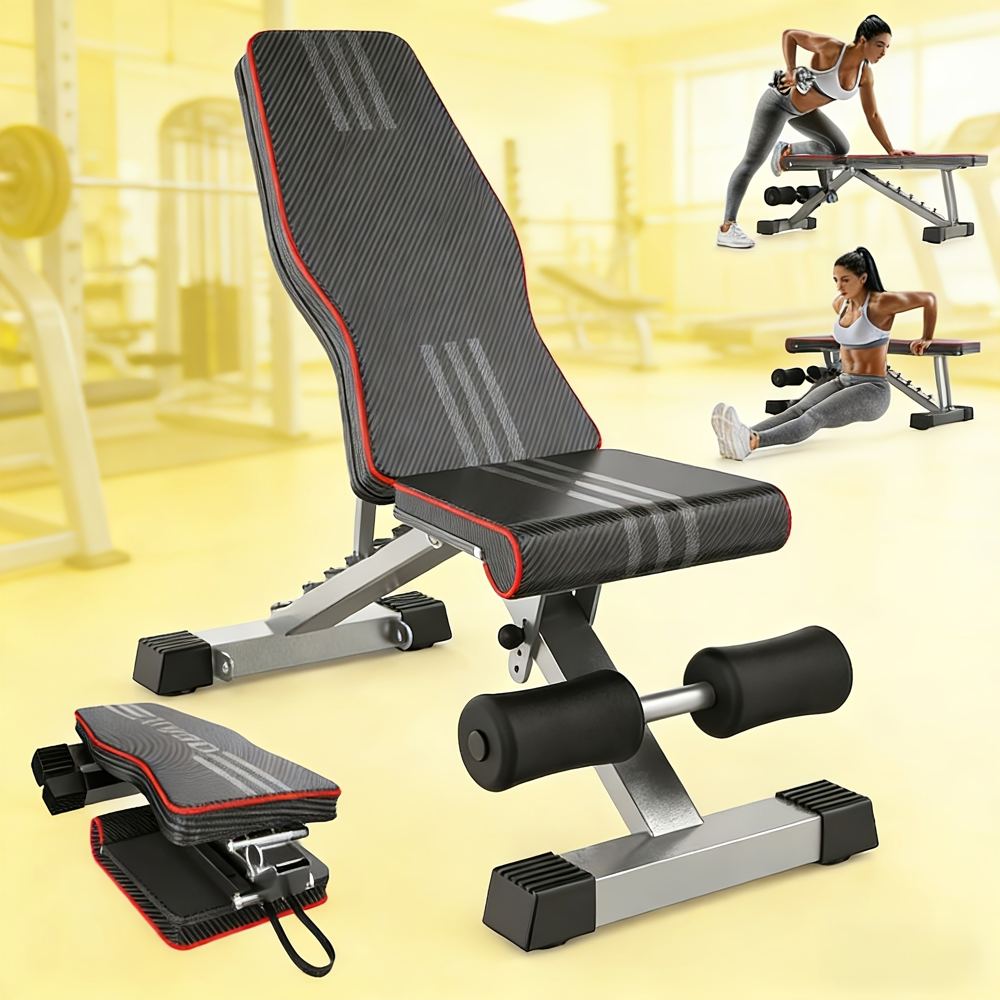
A multi-angle bench expands what you can do at home: an adjustable weight bench with multiple back positions covers incline, flat, and decline pressing from one foldable piece of equipment.
The Workout
How to use it: do this workout 1–2 times per week, with at least 48–72 hours between chest sessions (e.g. Monday and Thursday). Warm up for 5 minutes — arm circles, band pull-aparts if you have bands, and 10–15 easy knee push-ups. Do 2–4 sets of each exercise, 8–15 reps, resting 60–90 seconds between sets. Pick exercises 1–4 if you are new, or all six as you get stronger.
1. Dumbbell Floor Press
Purpose: the foundation chest movement at home — heavy, safe, and shoulder-friendly.
Starting position: lie on your back on the floor, knees bent, feet flat. Hold a dumbbell in each hand at chest height, elbows at roughly 45 degrees from your torso, wrists straight.
Technique: press the dumbbells straight up until your arms are extended, then lower slowly until your upper arms touch the floor, keeping your lower back pressed gently into the floor and your shoulder blades slightly squeezed together.
Breathing: exhale on the press, inhale on the lower.
Sets/reps: 3–4 sets of 8–12 reps.
Beginner modifications: lighter dumbbells; one arm at a time.
Common mistakes: flaring elbows to 90 degrees; bouncing the upper arms off the floor; holding your breath; pressing the weights toward your feet instead of straight up.
2. Standard Push-Up
Purpose: builds the chest, shoulders, triceps, and core together — the single best bodyweight upper-body exercise.
Starting position: hands under shoulders, body in a straight line from head to heels, glutes and abs braced, neck neutral.
Technique: lower your chest toward the floor with elbows at roughly 45 degrees, keeping your body rigid like a plank. Touch your chest lightly to the floor (or stop an inch above it), then press back up. Move through the full range — half-reps build half-strength.
Breathing: inhale on the way down, exhale pushing up.
Sets/reps: 2–4 sets of as many clean reps as you can do (most men land between 8 and 25).
Beginner modifications: knee push-ups; hands elevated on a sturdy table or counter; shorter ranges that you can control.
Common mistakes: sagging hips (brace the abs harder); flared elbows; shrugging shoulders toward ears; rushing reps with no control. Our push-up progression guide walks through the step-by-step ladder from wall push-ups to full push-ups.
3. Incline Dumbbell Press
Purpose: emphasizes the upper chest and front shoulders, giving the chest its full, complete look.
Starting position: set your bench to a 30–45 degree incline (no steeper — too steep turns it into a shoulder exercise). Sit back with feet flat, dumbbells resting on your thighs, then kick them up to shoulder height as you lean back.
Technique: press the dumbbells up and slightly together over your upper chest. Lower slowly until you feel a comfortable stretch across your chest, elbows at roughly 45 degrees. Keep your back against the bench and feet planted.
Breathing: exhale on the press, inhale on the lower.
Sets/reps: 3 sets of 8–12 reps.
Beginner modifications: use the floor press until the incline feels stable; lighter weight with a slower tempo.
Common mistakes: setting the bench too steep; bouncing the dumbbells off the chest; arching the back excessively off the bench.
4. Dumbbell Fly
Purpose: stretches and contracts the chest through a wide arc — excellent for the mind-muscle connection.
Starting position: lie flat on the floor or bench, dumbbells above your chest with a slight bend in the elbows, palms facing each other.
Technique: open your arms in a wide arc as if hugging a barrel, lowering until you feel a deep but comfortable stretch across your chest. Reverse the arc to bring the weights back together, squeezing the chest at the top, elbows bent at the same angle throughout.
Breathing: inhale opening, exhale closing.
Sets/reps: 2–3 sets of 10–15 reps with lighter weights than your presses.
Beginner modifications: floor flyes (safer range); very light dumbbells; shorter arc.
Common mistakes: using press-weight dumbbells (flyes need much less); straightening the arms into a press; dropping too deep and stressing the shoulders.
5. Dips
Purpose: a heavy compound movement for the lower chest, front shoulders, and triceps.
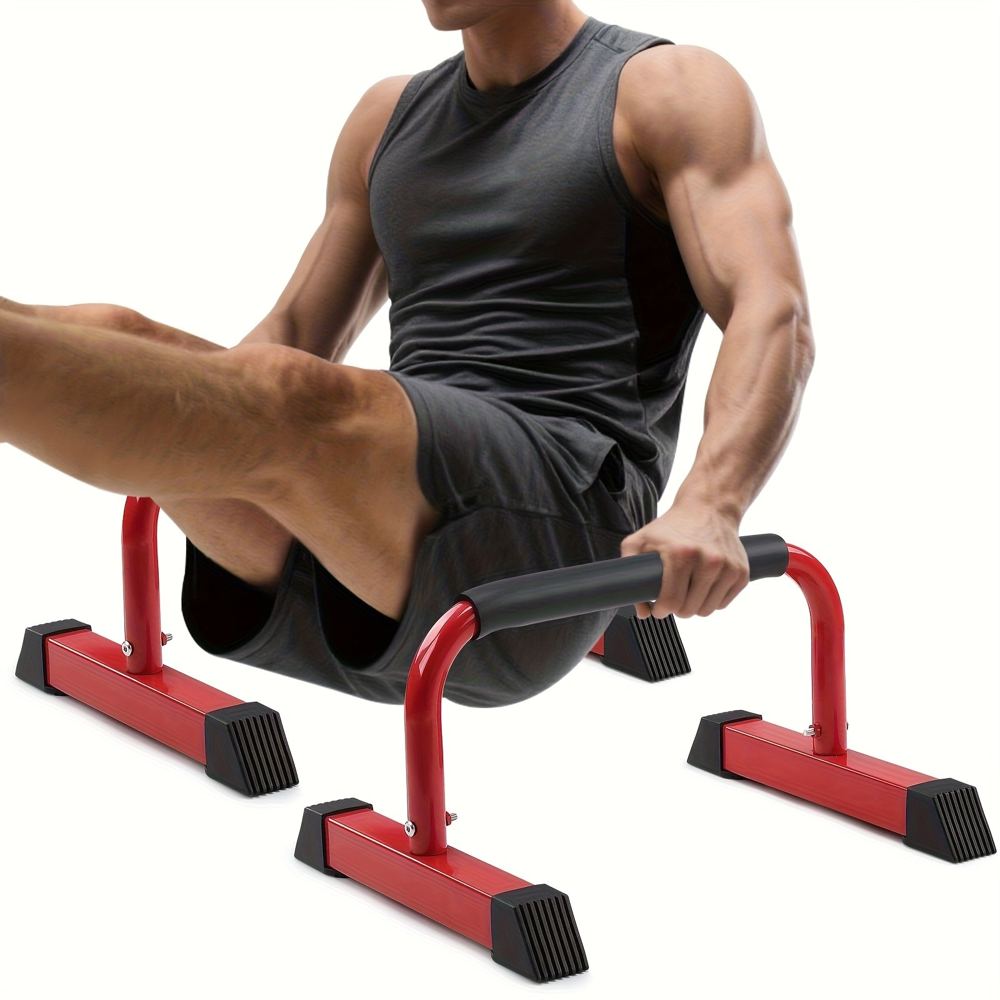
Starting position: grip a dip bar or two sturdy, equal-height chairs, arms extended, body hanging with a slight forward lean.
Technique: lower your body by bending the elbows until your upper arms are roughly parallel to the floor, leaning slightly forward to emphasize the chest. Press back up to full extension without locking the elbows hard.
Breathing: inhale lowering, exhale pressing up.
Sets/reps: 2–3 sets of 8–15 reps.
Beginner modifications: feet on the floor with knees bent (assisted dips between chairs); negative-only dips (jump up, lower slowly); diamond push-ups if dips bother the shoulders. A dedicated dip and push-up bar with EVA handles is far more stable than chairs and protects your wrists.
Common mistakes: staying too upright (shifts work to triceps — lean forward for chest); going too deep and straining the shoulders; shrugging at the top.
6. Diamond Push-Up
Purpose: targets the inner chest and triceps with zero equipment.
Starting position: standard push-up position, but place your hands together under your chest so your thumbs and index fingers form a diamond shape.
Technique: lower your chest toward your hands, elbows tucked close to your ribs. Press back up. Keep the body rigid.
Breathing: inhale down, exhale up.
Sets/reps: 2–3 sets of 8–20 reps, usually as a finisher.
Beginner modifications: knees on the floor; hands in a narrower-than-shoulder (not full diamond) position.
Common mistakes: elbows flaring out (defeats the purpose); incomplete range; rushing.
Weekly Structure
Chest responds well to being trained once or twice per week:
- Once a week (beginner): do the full workout on one day, e.g. Monday, alongside the rest of your full-body training.
- Twice a week (intermediate): Monday (heavy: presses, dips, 8–12 reps) and Thursday (lighter: flyes, push-up variations, 12–20 reps). This heavy/light split lets you train hard without accumulating fatigue.
Never train chest on consecutive days — muscles grow during recovery, not during the workout. If your shoulders feel sore or achy, add an extra rest day; pushing through shoulder irritation turns minor issues into real injuries.
If you want equipment that grows with you, a convertible dumbbell set that also works as barbells and kettlebells covers pressing, flyes, and dozens of other movements.
Common Chest Training Mistakes
- Only pressing, never stretching. Presses build strength; flyes and deep push-ups add the stretch that completes chest development.
- Chasing weight with bad form. Half-rep heavy presses build ego, not chest. Full range, controlled tempo, honest reps.
- Ignoring the upper chest. If you only do flat pressing, add incline work — the upper chest is what fills out a shirt.
- Training chest every day. The chest is involved in every push movement; it needs the same 48+ hours of recovery as any muscle.
- Neglecting the back. A strong chest on a weak back pulls your shoulders forward. Balance every push day with pulling work — our upper-body training guide covers the pull side.
Safety Notes
- Warm up your shoulders and chest before pressing heavy. Stop immediately if you feel pinching in the front of the shoulder — that is not normal muscle fatigue.
- Use collars or secure-adjustment dumbbells so plates cannot slide. Clear the floor around your bench.
- This guide is for healthy adult men. If you have a shoulder, chest, or heart condition, check with your doctor before starting.
FAQ
Q: How many chest exercises should I do per workout?
Three to five exercises is plenty for one session. Beginners do well with 3 (a press, a push-up variation, and a fly); intermediates can use 4–5 by adding an incline angle and dips. More exercises do not mean more growth — total hard sets with good form are what count, and that usually means 6–12 sets of chest work per session.
Q: Can I build a bigger chest without a bench?
Yes. The floor press, push-up variations, dips between chairs, and dumbbell flyes on the floor cover pressing and stretching movements. A bench adds the incline angle and a deeper press range, which helps over time, but it is not required for the first months of training.
Q: How long does it take to build chest muscle?
Noticeable strength gains often come within weeks, but visible muscle growth is measured in months and varies widely. No workout can promise a specific result or timeline. Judge your program by whether your reps and weights are steadily climbing, not by week-to-week mirror checks.
Q: Should I train chest and triceps on the same day?
It is a popular pairing because presses already work the triceps, so adding 2–3 triceps exercises after chest is efficient. Just keep total volume sensible: after 6–12 sets of chest work, 4–6 sets of direct triceps work is enough. If your elbows ache, split them to different days.
Q: Are push-ups enough for chest development?
Push-ups are a genuinely effective chest builder when progressed — elevating the feet, adding a weighted backpack, slowing the tempo, or moving to harder variations like diamond and archer push-ups. They have a ceiling eventually, which is why dumbbell pressing extends progress further, but many men build impressive chests on push-up progressions alone for a long time.
The Bottom Line
A strong chest at home comes down to a simple formula: press heavy (floor press, incline press, dips), stretch under load (flyes, deep push-ups), train once or twice a week with real recovery, and progress patiently. Dumbbells and bodyweight are genuinely enough for years of productive training — the bench and the extra gear just widen the road. Keep your reps honest, balance your pushing with pulling, and give the program months, not weeks, to show what it can do.
