Eight running-free cardio options for men who hate running — jump rope, cycling, kettlebell swings, rucking and more, with how-tos and a sample weekly plan.
Cardio for Men Who Hate Running: 8 Alternatives
If every run feels like punishment, here is the good news: your heart does not care whether you ran, rowed, cycled, or climbed stairs. It cares that you raised your heart rate, kept it elevated for a while, and did it again next week. Running is only one delivery system for cardiovascular conditioning, and for plenty of men it is the least enjoyable one — hard on the knees, boring on the treadmill, miserable in bad weather.
This guide shows you how to build a cardio week that respects your lifting and your schedule. There are no extreme promises here. Results vary from person to person, but conditioning built this way supports everything else you do: stronger lifts, better recovery, and a body that handles effort without falling apart.
This guide contains affiliate links. If you buy through them, VÉLORA may earn a commission at no extra cost to you.
Why Running Isn't Mandatory for Good Cardio
Cardiovascular adaptation — a stronger heart muscle, better blood flow, improved stamina — responds to sustained elevated effort, not to a specific movement pattern. That is why cyclists, rowers, and swimmers all develop excellent cardio without logging a single run. What matters is finding a mode you will actually repeat. The best cardio exercise is the one you stop skipping.
Men in particular tend to drop cardio because it feels like it competes with strength training. Done sensibly, 2–4 cardio sessions per week improve recovery between heavy lifting days rather than undermining them.
The 8 Best Running Alternatives
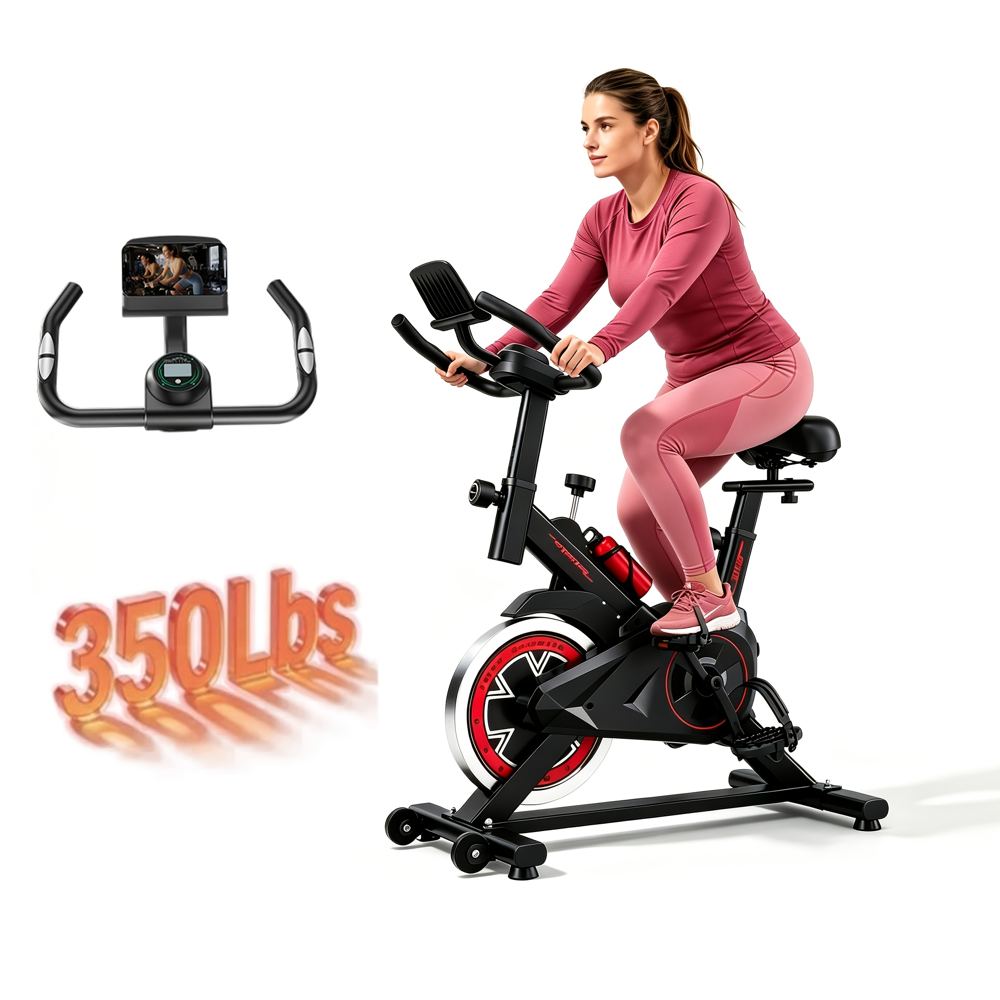
1. Cycling — Stationary or Outdoor
Cycling is arguably the most joint-friendly cardio there is. A heavy-duty magnetic exercise bike lets you train in any weather with adjustable resistance.
- Starting position: Seat height so your knee has a slight bend at the bottom of the pedal stroke. Hands light on the bars — white knuckles mean your bike fit is off.
- Technique: Push the pedals in smooth circles rather than stomping. Keep your cadence (pedal speed) in the 70–90 rpm range for steady sessions.
- How much: 2–3 sessions per week, 20–45 minutes each. Mix one longer easy ride with one shorter session of harder intervals (e.g., 1 minute hard / 2 minutes easy, repeated 6–10 times).
- Beginner modification: Start with 15–20 minutes at conversational pace; add 5 minutes per week.
- Common mistake: Cranking the resistance sky-high and grinding slowly — that taxes the knees without extra cardio benefit.
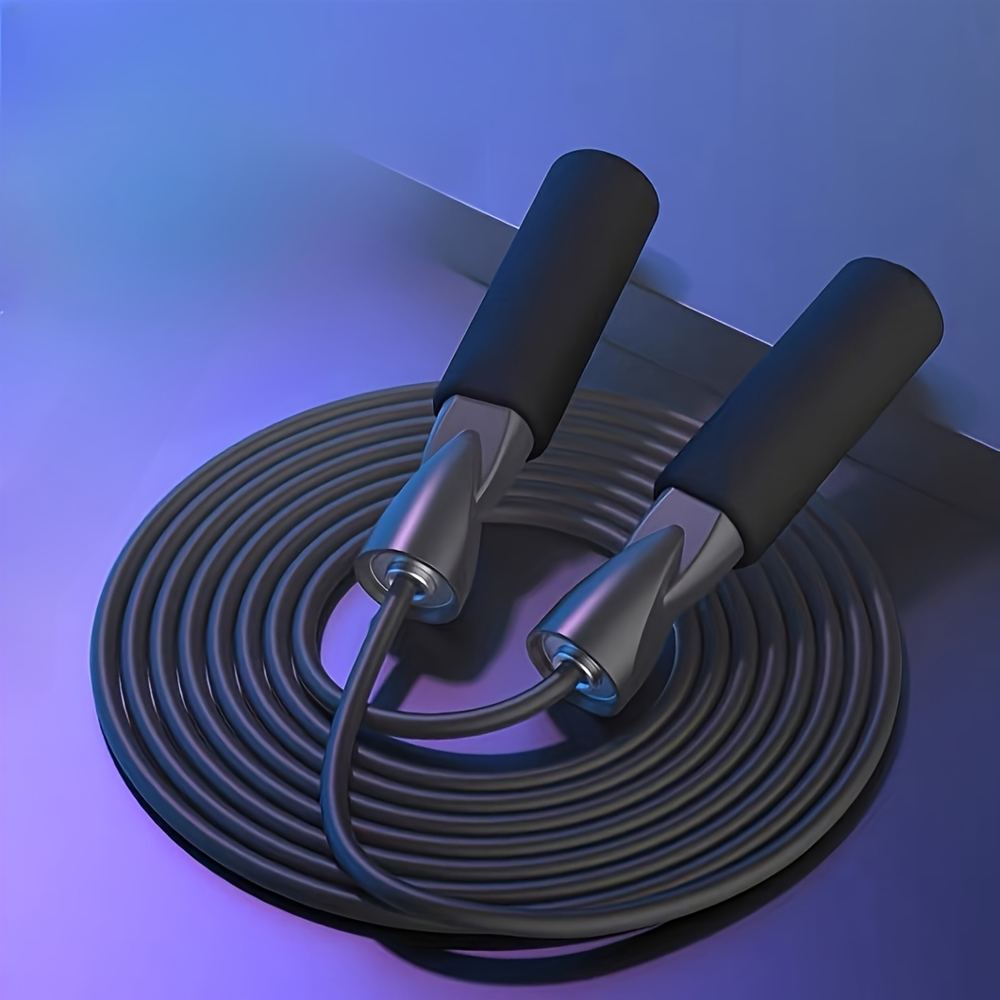
2. Jump Rope
A jump rope costs little, packs into a drawer, and torches calories in short sessions. It also trains coordination and calf/foot strength — useful for every sport.
- Starting position: Stand tall, rope handles at your hips, elbows tucked near your ribs.
- Technique: Jump low — just enough for the rope to pass — landing softly on the balls of your feet. Rotate the rope from your wrists, not your shoulders. Keep breathing steady; most people hold their breath at first.
- How much: 5–15 minutes total, in rounds of 1–2 minutes with 30–60 seconds of rest between rounds.
- Beginner modification: Alternate 30 seconds of jumping with 30 seconds of rest, stopping when form breaks down.
- Common mistake: Jumping too high and swinging the whole arm — wasted energy that kills your session early.
3. Rowing
A rowing machine works legs, back, arms, and lungs in one rhythmic movement. Technique matters more here than in most alternatives, so go light on the resistance setting (usually 3–5 on a 1–10 scale) until your form is solid.
- Starting position: Strap your feet in, slide forward with knees bent, arms reaching forward to grip the handle.
- Technique: Drive with the legs first, then swing the back open, then pull the handle to your lower ribs. Reverse the order on the return: arms out, body forward, knees bend. Breathe out on the drive, in on the return.
- How much: 15–30 minutes at steady effort, or interval sessions like 250-meter repeats with equal rest.
- Beginner modification: Practice the leg-drive-only phase for a few minutes before adding the arm pull.
- Common mistake: Leading with the arms and yanking the handle — all the power comes from the legs.
4. Stair Climbing
Stairs are everywhere and brutal in the best way. Take them two at a time for a strength emphasis, one at a time for pure cardio.
- Technique: Land on your whole foot, push through the heel, and keep your torso tall — no hunching over the rail. Pump your arms naturally.
- How much: 10–25 minutes of continuous climbing, or repeats: climb 3–5 flights, walk back down, repeat 4–8 times.
- Beginner modification: Ride the elevator back down on repeats — descents are hard on the knees.
- Common mistake: Leaning heavily on the handrail, which offloads the work your legs should be doing.
5. Kettlebell Swings
The swing trains hip power and doubles as cardio when you keep the reps moving. A swing is a hinge, not a squat.
- Starting position: Feet wider than hips, kettlebell on the floor a foot in front of you. Hinge at the hips, grip the bell, and hike it back between your legs.
- Technique: Snap your hips forward to drive the bell to chest height; your arms are just ropes. Stand tall at the top with glutes squeezed, then hinge back down. Inhale at the bottom, sharp exhale at the top.
- How much: 8–15 sets of 10–20 swings with 30–60 seconds of rest, or 5–10-minute continuous blocks of 10 swings + 30 seconds rest.
- Beginner modification: Start with dead-stop swings (set the bell down between reps) until the hinge feels automatic.
- Common mistake: Squatting the swing or muscling the bell up with the shoulders — both miss the hip-drive pattern.
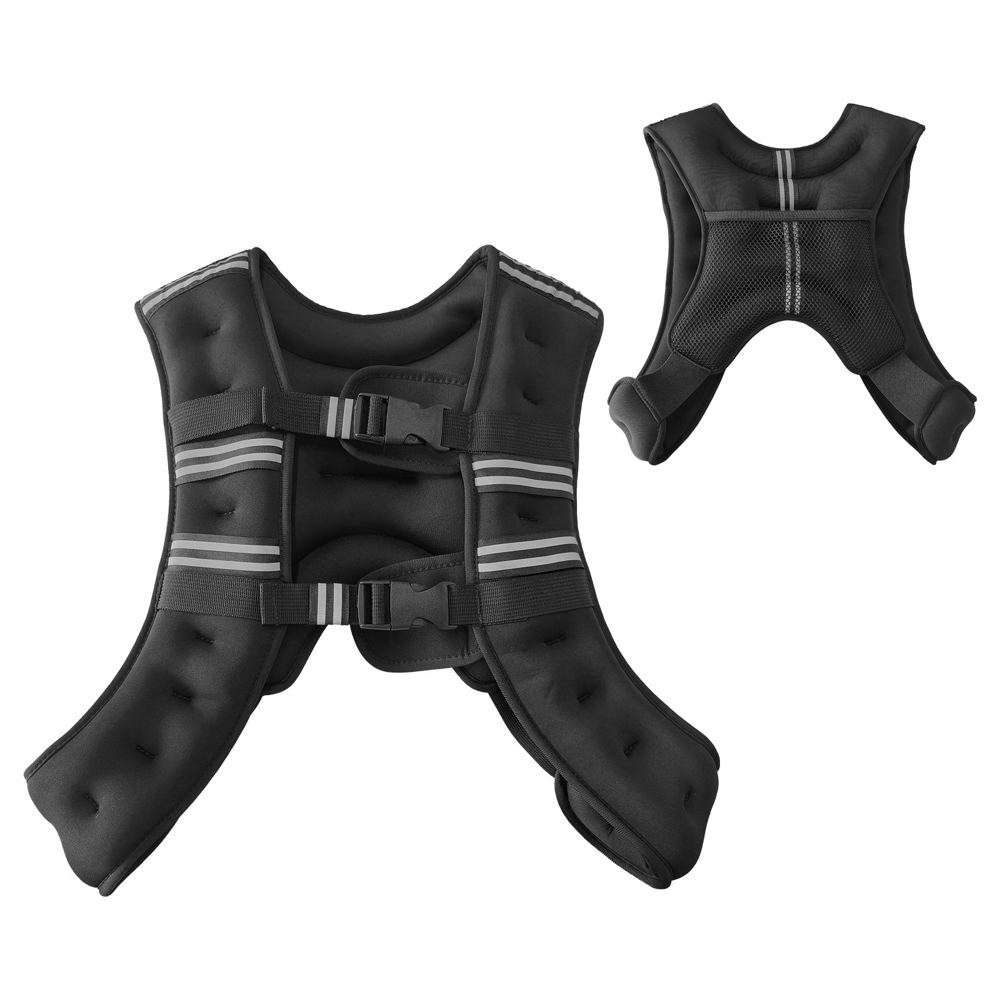
6. Weighted Walking (Rucking)
Walking gets dismissed as "too easy" — until you add load. An adjustable weighted vest turns an ordinary walk into serious conditioning while training posture and bone density.
- Technique: Walk briskly with normal stride and upright posture; the vest should sit high on the torso, not hang from the shoulders. Swing your arms.
- How much: 30–60 minutes, 1–3 times per week, with 5–10% of your body weight to start.
- Beginner modification: Begin with unloaded brisk walks, then add 2–3 kg at a time — never more than 10% of body weight in total. Our walking workout guide covers pacing.
- Common mistake: Loading up too fast. Joints need weeks to adapt to extra weight.
7. Boxing Rounds
Shadowboxing or heavy-bag rounds deliver intense cardio plus shoulder endurance and stress relief.
- Starting position: Athletic stance, feet staggered, hands up, chin tucked.
- Technique: Throw combinations (jab-cross-hook) while staying light on your feet. Breathe out on every punch; breathe in as you reset.
- How much: 3-minute rounds with 1 minute of rest, 4–8 rounds per session.
- Beginner modification: Punch at 50–60% effort until round three — beginners always sprint round one and collapse.
- Common mistake: Holding your breath and punching at full power from the first bell.
8. Elliptical Trainer
Purpose: Running motion without the impact — a solid gym-floor option for men whose knees veto treadmills.
Technique: Stand tall, drive through the whole foot, and let the handles follow your legs rather than muscling them. Keep the incline moderate and resistance honest.
How much: 20–35 minutes steady, or 10 rounds of 1 minute hard / 1 minute easy.
Beginner modification: Start with arms-only or legs-only movement until the coordination clicks.
Compare the Alternatives at a Glance
| Option | Space / Gear Needed | Joint Impact | Time Efficiency | Best For | | --- | --- | --- | --- | --- | | Cycling | Stationary bike or road bike | Very low | Medium | Knee-sensitive men, long steady sessions | | Jump rope | One rope, small floor space | Moderate | Very high | Busy schedules, coordination | | Rowing | Rowing machine | Low | High | Full-body conditioning | | Elliptical | Elliptical trainer | Low | Medium | Gym-goers whose knees veto treadmills | | Stair climbing | Any staircase | Moderate-high | High | Outdoor lovers, leg power | | Kettlebell swings | One kettlebell | Low-moderate | Very high | Lifters wanting cardio that respects the hinge | | Rucking | Weighted vest or backpack | Low-moderate | Medium | Walking fans, posture and bone health | | Boxing rounds | Bag or open space | Moderate | Very high | Stress relief, upper-body endurance |
Building Your Cardio Week
A simple weekly template for a man who lifts 2–3 days:
| Day | Session | | --- | --- | | Monday | Strength | | Tuesday | Jump rope intervals, 12–15 min | | Wednesday | Strength | | Thursday | Ruck walk or easy cycling, 30–45 min | | Friday | Strength | | Saturday | Optional: swim, stairs, or boxing, 20–30 min | | Sunday | Full rest |
If strength is your priority, keep the two on different days — the question disappears entirely.
Common Mistakes to Avoid
- Going too hard too soon. Cardio fitness builds fast in the first 4–6 weeks. Starting at a moderate intensity prevents burnout and injury.
- Ignoring the warm-up. Five minutes of easy movement before intervals saves your calves, Achilles, and shoulders a lot of grief — our at-home cardio guide has more warm-up-friendly options.
- Counting only "official" sessions. A brisk 20-minute walk on a rest day counts. Conditioning accumulates.
- Doing cardio right before heavy lifting. If strength is your priority, separate the sessions by at least a few hours, or keep cardio on non-lifting days.
Safety Notes
- Check with your doctor before starting intense cardio if you have a heart condition, high blood pressure, asthma, or any medical concern.
- Stop and seek advice if you feel chest pain, severe dizziness, or unusual shortness of breath. Muscular burn is normal; joint pain is a signal to change something.
- Increase weekly cardio volume gradually — roughly 10% per week is a safe guideline.
FAQ
Q: I hate running because of my knees. Which option is kindest to them?
Cycling and swimming are the gentlest — both remove impact almost entirely. Rucking and rowing are also low-impact with moderate loads.
Q: How many days of cardio does a man actually need?
General guidance is 2–5 sessions per week totaling 75–150 minutes of moderate-to-vigorous activity. Two solid sessions plus daily walking gets most men most of the benefit.
Q: Will cardio hurt my muscle gains?
Not if you keep it reasonable. Problems only arise at extremes — very long sessions, very frequent training, or not eating enough to support both. Most lifters do well with 2–3 cardio sessions per week.
Q: Is walking really enough cardio?
Brisk walking is legitimate moderate-intensity cardio, especially uphill or with a weighted vest — one of the most underrated options for heart health and daily energy.
Q: Should I do cardio on an empty stomach?
Fasted or fed both work. If you feel weak or dizzy training fasted, eat a small snack first. Consistency matters far more than stomach timing.
The Bottom Line
Running is a sport, not a prerequisite. The heart you build from the rope, the bike, or the stairs is the same one — and the option you stop dreading is the one you will keep training. Pick two, start with two sessions a week, and let consistency do the heavy lifting.
