A complete arm workout for men using dumbbells: biceps curls, triceps extensions, dips and grip work with proper form, sets, reps, and progressions.
Arm Workout for Men: Biceps and Triceps With Dumbbells
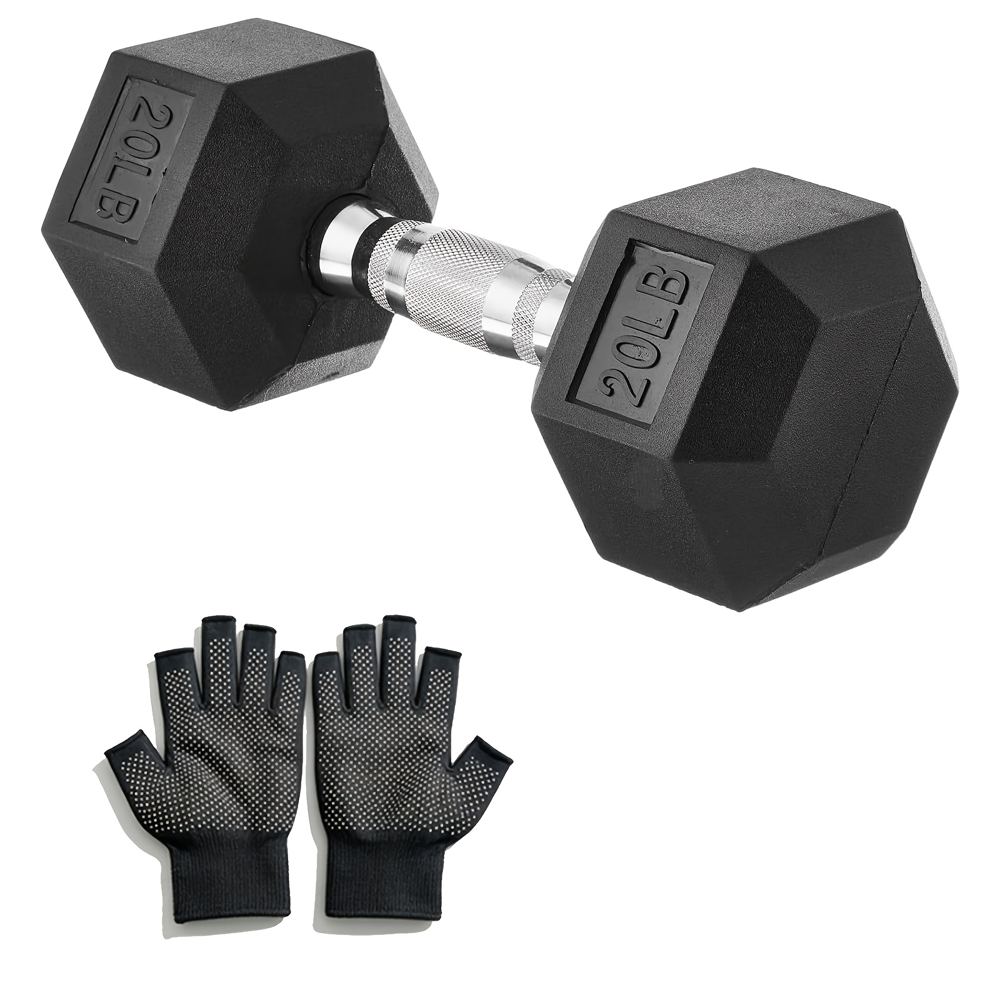
There is a reason arms are the first thing most men think of when they think of "working out": strong, well-shaped arms look good and do real work — lifting, carrying, pushing, pulling. But most arm routines men actually follow are a mess: the same curls with the same weight for months, triceps barely trained, and a lot of momentum doing the lifting that the muscle should be doing.
This guide gives you a complete dumbbell arm workout that actually works, because it follows the one rule most routines ignore: train both sides of the arm. The triceps make up roughly two-thirds of your upper-arm mass, so if you only curl, you are leaving most of your arm's growth potential on the table. You'll find biceps exercises, triceps exercises, a bodyweight finisher, and grip work — with purpose, form, breathing, sets/reps ranges, and beginner progressions for every move. Results vary between individuals, and no program promises a specific outcome.
This guide contains affiliate links. If you buy through them, VÉLORA may earn a commission at no extra cost to you.
Biceps vs. Triceps: Why You Must Train Both
A balanced arm session gives roughly equal attention to both. Most men dramatically over-train the biceps because curls feel good in the mirror, while the triceps — the bigger muscle — get neglected.
Warm Up First: 3 Minutes for Elbows and Shoulders
Elbow and wrist joints do fine with light movement before loading: 30 seconds of arm circles, 15 light band pull-aparts or wall push-ups, then one light set of curls at half your working weight.
Breathing for every exercise below: exhale on the effort (curling up, extending out), inhale on the return. Keep your wrists straight — a bent wrist hands the load to your tendons instead of your muscles.
Biceps Exercises
1. Standing Dumbbell Curl — The Classic, Done Right
Purpose: Builds the biceps brachii, the main muscle of the front of the arm.
Starting position: Stand tall with a dumbbell in each hand at your sides, palms facing forward, elbows pinned close to your ribs.
Technique: Curl one or both dumbbells up toward your shoulders by bending only at the elbow — your upper arms should not move. Squeeze at the top for one second, then lower slowly over 2–3 seconds. The lowering phase is where much of the benefit happens, so don't drop the weight.
Sets/reps: 3–4 sets of 8–15 reps.
Beginner modification: Alternate arms (curl one side, then the other) which feels more controlled, or do seated curls with your back supported.
Common mistakes: Swinging the torso to heave the weight up (drop the weight and do it strict); elbows drifting forward past the ribs; shortening the range at the top and bottom.
2. Hammer Curl — Thickness and Forearms
Purpose: Targets the brachialis (the muscle under the biceps) and the brachioradialis (upper forearm), adding thickness to the arm and strengthening the grip.
Starting position: Same as the standard curl, but with palms facing your body (thumbs up, like holding a hammer).
Technique: Curl the dumbbells straight up with the neutral grip, keeping elbows tucked. Squeeze at the top, lower slowly.
Sets/reps: 3 sets of 8–12 reps.
Beginner modification: Use the lightest dumbbell you have and focus on feeling the forearm and outer arm work.
Common mistakes: Turning the wrist during the curl (keep the neutral grip the whole time); using shoulder swing for the last reps.
3. Incline Dumbbell Curl — The Stretch Position
Purpose: Stretches the biceps under load in their lengthened position, a potent and often-missed growth stimulus.
Starting position: Sit on a bench set to roughly 45 degrees (or lean back against a sturdy surface), dumbbells in hand, arms hanging straight down behind your torso line.
Technique: With palms facing forward, curl the weights up without letting your elbows swing forward. Lower all the way to a full stretch — this is the whole point of the exercise.
Sets/reps: 2–3 sets of 8–12 reps.
Beginner modification: Use very light weight; the stretch can feel intense. If you have no bench, do these lying on the floor with your head toward a wall.
Common mistakes: Going too heavy (the stretched position is vulnerable — respect it); bouncing out of the bottom; arching the lower back off the bench.
Triceps Exercises
4. Overhead Dumbbell Extension — Long Head Focus
Purpose: Targets the long head of the triceps (the biggest section), which is undertrained by pressing movements alone.
Starting position: Stand or sit tall, holding one dumbbell with both hands overhead, arms straight, core braced.
Technique: Bend only at the elbows to lower the dumbbell slowly behind your head until your forearms are roughly horizontal. Keep your upper arms close to your head and still. Extend back up to straight — do not lock out aggressively.
Sets/reps: 3 sets of 8–12 reps.
Beginner modification: One dumbbell overhead can feel unstable at first — do it seated with back support, or do single-arm extensions with a lighter dumbbell.
Common mistakes: Elbows flaring wide (keep them tucked); arching the back to get the weight up; dropping the weight behind the head too fast.
5. Dumbbell Kickback — The Contraction
Purpose: Works the triceps in their shortened, fully-contracted position — a great pairing with the stretch-position overhead extension.
Starting position: Hinge forward about 45 degrees (back flat), one dumbbell in each hand, elbows bent and pinned at your sides with upper arms parallel to the floor.
Technique: Extend your forearms straight back until the arms are fully straight behind you. Squeeze the triceps hard for one second, then return slowly. The upper arm must not move — only the forearm swings.
Sets/reps: 2–3 sets of 10–15 reps.
Beginner modification: Do one arm at a time with the free hand braced on a bench or your knee — much easier to keep form clean.
Common mistakes: Using weight so heavy the upper arm starts pumping up and down (this becomes a different exercise entirely); rushing the squeeze.
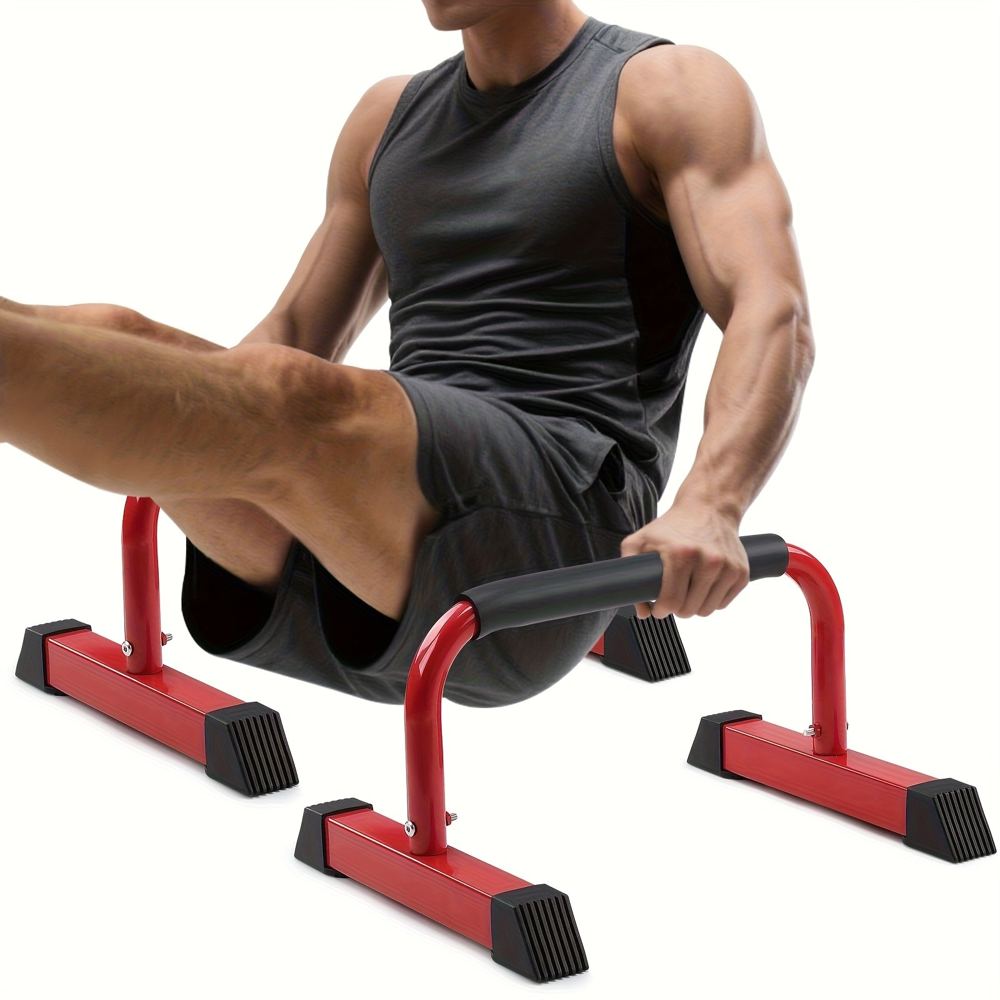
6. Bench Dips (with the Dip Bar) — The Finisher
Purpose: A heavy compound bodyweight movement for the triceps, chest, and shoulders — the best arm-builder that uses no dumbbells at all.
Starting position: Grip a 700LBS Dip Bar with EVA handles (or two sturdy chairs), arms straight, body upright, legs extended or bent in front of you.
Technique: Lower your body by bending the elbows until your upper arms are roughly parallel to the floor. Keep elbows tucked and close to your body. Press back up. Lean slightly forward if you feel it too much in the shoulders; stay upright to keep it on the triceps.
Sets/reps: 2–3 sets of as many clean reps as you can (usually 8–20 for most men).
Beginner modification: Bend your knees and keep feet on the floor, taking some bodyweight off. Progress to straight legs as you strengthen.
Common mistakes: Shrugging the shoulders up to the ears; dipping too deep past comfortable shoulder range; letting elbows flare wide.
Don't Forget Grip Strength
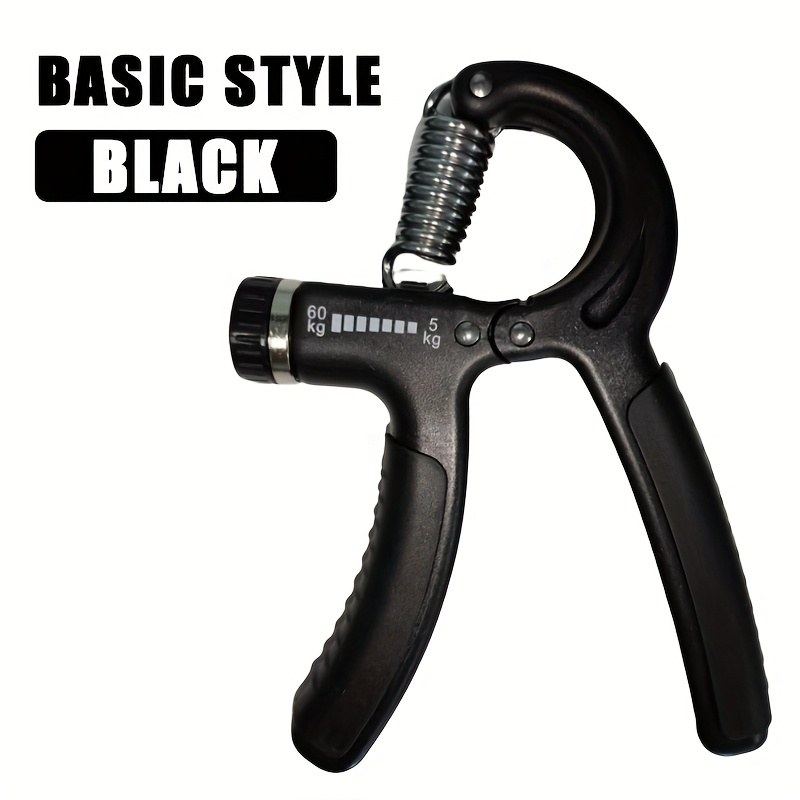
Strong hands make every other exercise safer. Finish your arm day with one minute of grip work using a 5–100kg Counting Hand Grip Strengthener — 10–15 squeezes per hand, 1–2 rounds, starting at a low resistance setting.
Comparison: Which Arm Exercise Does What?
| Exercise | Main Muscle | Position Trained | Equipment | | --- | --- | --- | --- | | Standing dumbbell curl | Biceps | Mid-range | Dumbbells | | Hammer curl | Brachialis + forearms | Mid-range | Dumbbells | | Incline dumbbell curl | Biceps | Stretched (lengthened) | Dumbbells + bench | | Overhead extension | Triceps long head | Stretched (lengthened) | Dumbbell | | Dumbbell kickback | Triceps | Contracted (shortened) | Dumbbells | | Bench dips | Triceps + chest | Compound, mid-range | Dip bar or chairs | | Grip squeezes | Forearms, hands | Isometric | Grip strengthener |
Biceps get a mid-range move, a thickness move, and a stretch move; triceps get a stretch move, a contraction move, and a heavy compound move. That is a complete arm.
How to Program Your Arm Workout
- Frequency: 1–2 dedicated arm sessions per week, spaced at least 48 hours apart. If you already do pressing and pulling in your week, one focused arm day is plenty.
- Rest: 45–90 seconds between sets. Arms recover faster than legs, so keep the pace honest.
- Progression: When you hit the top of a rep range on all sets with strict form, move up in weight slightly. Arms respond well to small jumps — even 2.5 lbs makes a difference.
- Total volume: Aim for 6–10 total sets per muscle per session. More is not better; arms are small muscles that fatigue quickly.
Common Arm Training Mistakes Men Make
- Curling the same weight forever. Muscles adapt. If you have curled 20 lbs for a year, you have one year's experience at 20 lbs, not one year of progress.
- Training biceps and never triceps. The triceps are two-thirds of your upper arm. Treat them like it.
- Half reps everywhere. Full range of motion — full stretch to full contraction — builds more muscle than short, bouncy partials at double the weight.
- Forgetting forearms and grip. A strong grip lets you hold heavier weights on every other exercise. It is worth two minutes at the end.
If you are building your home setup from scratch, our dumbbell exercise guide covers the fundamentals of safe dumbbell technique, and upper-body training shows how arm work fits into a complete upper-body day.
Safety Notes
- This guide is for healthy adults. If you have elbow tendinitis, shoulder issues, wrist problems, or any medical concern, check with a doctor or physical therapist before starting a new arm program.
- Elbow pain during curls or extensions is a stop signal, not a warm-up sensation. Reduce weight, shorten range of motion, or swap the exercise. Persistent pain needs professional assessment, not more reps.
- Keep wrists straight and neutral on every movement — bent wrists transfer force to tendons and ligaments instead of muscle.
FAQ
Q: How often should men train arms?
One to two dedicated arm sessions per week is plenty for most men, especially if your week already includes pressing and pulling movements that involve the arms. Train arms at least 48 hours apart.
Q: Do I need heavy weights to build bigger arms?
Not necessarily — but you do need progressive overload over time: more weight, more reps, slower lowering phases, or harder variations. Most men do best with moderate weights they can control strictly in the 8–15 rep range.
Q: Should I train biceps and triceps on the same day?
Yes, pairing them is efficient. Biceps and triceps are opposing muscles, so you can alternate sets with minimal rest — while one works, the other recovers.
Q: Will arm workouts alone give me bigger arms?
Arm exercises build the arms directly, but overall nutrition and full-body training matter too. Arms grow when you eat enough to support recovery and train them progressively — and results vary widely.
The Bottom Line
A serious arm workout is simpler than the internet makes it look: one stretch-position move and one mid-range move for biceps, one stretch-position move and one contraction move for triceps, a heavy dip, and some grip work. Keep the form strict, the reps full-range, and the weight progressing slowly. Train both sides of the arm with equal respect — the triceps are doing two-thirds of the work back there.
