Ankle mobility exercises to improve squat depth, balance, and walking comfort — simple stretches and strength moves for stiff ankles, with technique cues.
Ankle Mobility Exercises: Small Joints, Big Impact
Nobody thinks about their ankles until something goes wrong — a wobbly squat, heels lifting off the floor, knees caving inward, or that stiff, wooden feeling on the first steps of the morning. Yet the ankle is the foundation of nearly every movement you make on your feet: walking, climbing stairs, lunging, squatting, balancing. When ankle mobility is limited, the body compensates — usually at the knees or lower back, which then complain instead.
The good news: ankles respond well to consistent, gentle work. The joint is small, the surrounding muscles are small, and a few minutes of targeted exercises most days can produce noticeable change over several weeks. This guide gives you a complete routine: how to test your baseline, the stretches and strength moves that matter, and how to progress safely.
A quick note: these exercises are for general stiffness and mobility. If you have had a recent sprain, fracture, or surgery — or you have swelling, instability, or sharp pain — see a physiotherapist or doctor before working through this routine. Mobility work should never be done through acute injury.
This guide contains affiliate links. If you buy through them, VÉLORA may earn a commission at no extra cost to you.
Why Ankle Mobility Matters
Ankle dorsiflexion — the shin traveling forward over the foot while the heel stays down — is the key movement. When it is restricted, heels lift early in squats, knees track inward on stairs, and calves stay chronically tight. Good ankle mobility supports deeper, more comfortable squats, steadier balance, a more natural stride, and less compensatory stress on the knees.
Most of us lose it gradually from years of sitting, stiff footwear, and never moving the joint through its full range. The fix is equally gradual: regular, patient work. Results vary — some feel a difference in two weeks, others need two months — but the direction of change is reliably positive with consistency.
Test First: The Knee-to-Wall Test
Starting position: Half-kneel facing a wall — one foot flat on the floor a few inches from the wall, the other knee on the ground behind you, front heel glued down.
Technique: Keeping the heel down and the knee tracking over the middle of the foot, drive the front knee toward the wall. Slide the foot back to find the farthest distance from which your knee can just touch the wall without the heel lifting, then measure it.
What it means: Roughly 10–13 cm (4–5 inches) or more is generally considered good; less suggests restricted dorsiflexion worth working on. Test both ankles — most people have a noticeable side-to-side difference, and the stiffer side deserves extra attention. Retest every two to three weeks; gains of a centimeter or two are real progress.
Warm Up the Feet and Ankles
Cold, stiff feet do not stretch well. Spend two minutes here before the main exercises.
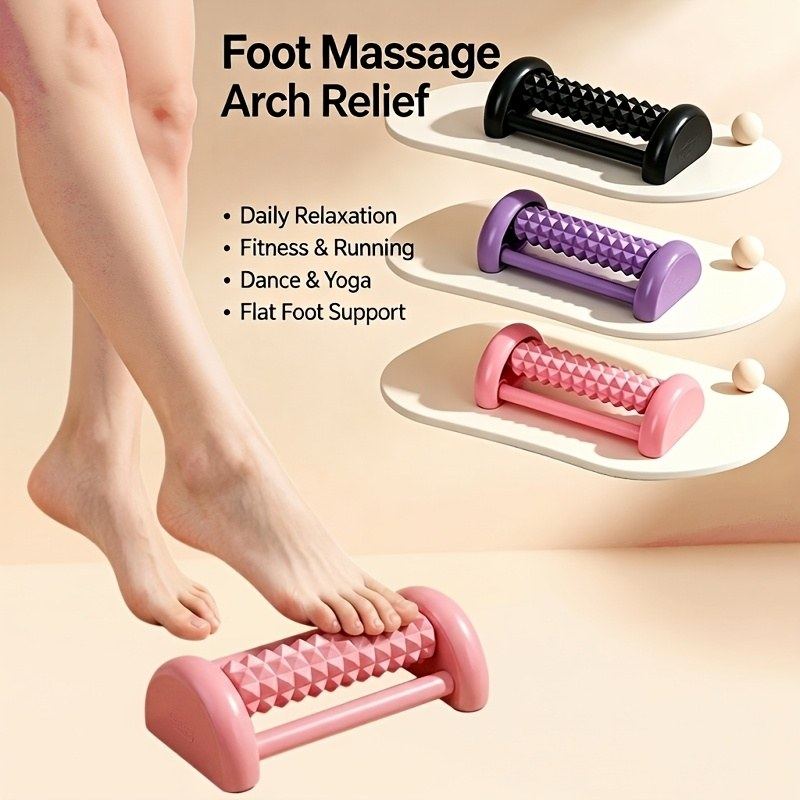
Foot rolling. Place a massage ball or roller under your bare foot and roll slowly from heel to toes, pausing on tender spots. The Foot Roller Massager for Arch Relaxation is shaped for exactly this. 1–2 minutes per foot, moderate pressure. Common mistake: bearing full weight on a hard ball on day one — start light.
Ankle circles. Lift one foot and draw slow, large circles with the toes — 10 in each direction per foot. Move deliberately through the full range rather than rushing.
The Exercises
Do this routine 3–5 times per week. Stretches: 2–3 sets of 30–60 second holds per leg. Strength moves: 2–3 sets of 10–15 repetitions. Breathe normally — exhale as you ease into each stretch, never forcing through pain.
Stretches
1. Wall calf stretch (straight knee). Face a wall, hands on it. Step one foot back about a meter, back leg straight, heel pressed into the floor, front knee slightly bent. Lean in until you feel a stretch high in the back calf. Common mistakes: letting the back heel lift; rotating the back foot outward. Beginner modification: bring the back foot closer to the wall.
2. Bent-knee calf stretch (soleus). Same setup, but bend the back knee while keeping the heel down — the stretch moves lower, near the Achilles. The soleus does much of the work in walking and standing, yet most people never target it. Technique tip: keep the knee tracking over the toes; the stretch should feel deep and low, not sharp.
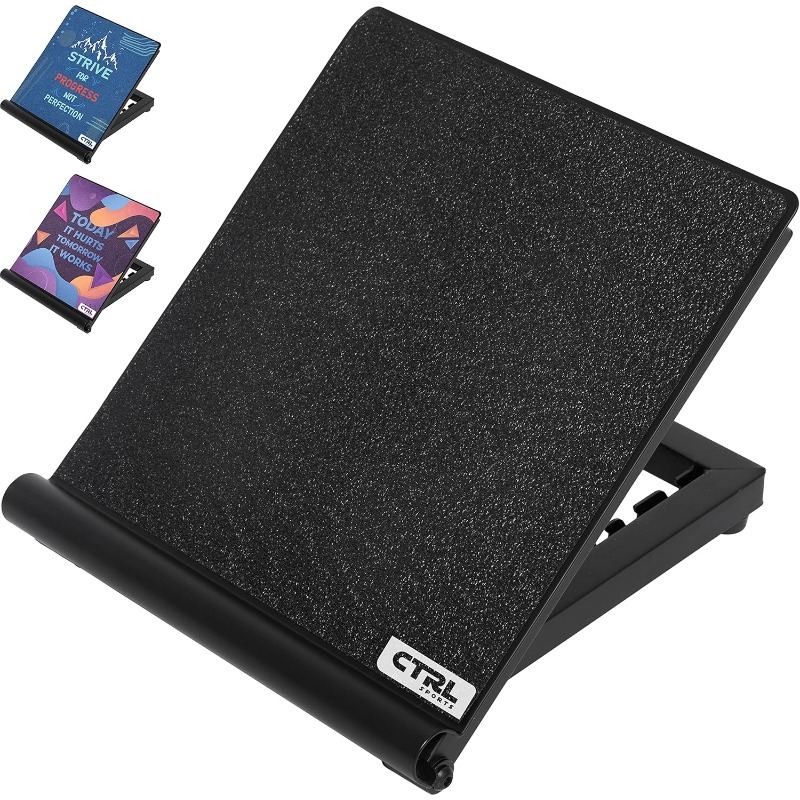
3. Slant board stretch. Stand on a slant board with heels lower than toes, knees soft, and let your body weight stretch both calves and the Achilles. An adjustable slant board lets you start at a gentle incline and increase the angle over weeks — far more practical than a stack of books. Hold 30–60 seconds, 2–3 sets. Safety: hold a wall or sturdy furniture for balance, especially at steeper angles.
4. Half-kneeling dorsiflexion mobilization. Same position as the knee-to-wall test: drive the knee forward over the toes, hold 2–3 seconds at end range, return. This trains the joint to use its range, not just passively stretch into it. 2–3 sets of 10–12 per leg. Common mistake: letting the knee collapse inward — keep it aligned over the second toe.
Strength Moves
Stretching without strength creates range you cannot control. These small muscles stabilize the ankle in every step.
5. Tibialis raises. Stand with your back against a wall, feet about 30 cm in front. Keeping heels down, lift your toes toward your shins as high as possible, then lower slowly. The tibialis anterior — the shin muscle — is weak in almost everyone with stiff ankles, and strengthening it balances the powerful calves. 2–3 sets of 12–15. Beginner modification: do them seated, lifting the forefoot.
6. Ankle alphabet. Seated, lift one foot and "write" the alphabet in the air with your big toe — capital letters, as large as possible. It looks silly and works brilliantly, moving the ankle through every combination of its range. One full alphabet per foot. Technique tip: move from the ankle, not the knee.
7. Seated heel raises. Seated, feet flat, knees at 90 degrees: press through the balls of your feet to lift your heels high, pause, lower slowly. Rest your hands on your knees for extra resistance. 2–3 sets of 15–20. This builds the soleus, which powers walking and stair climbing.
Balance Progression
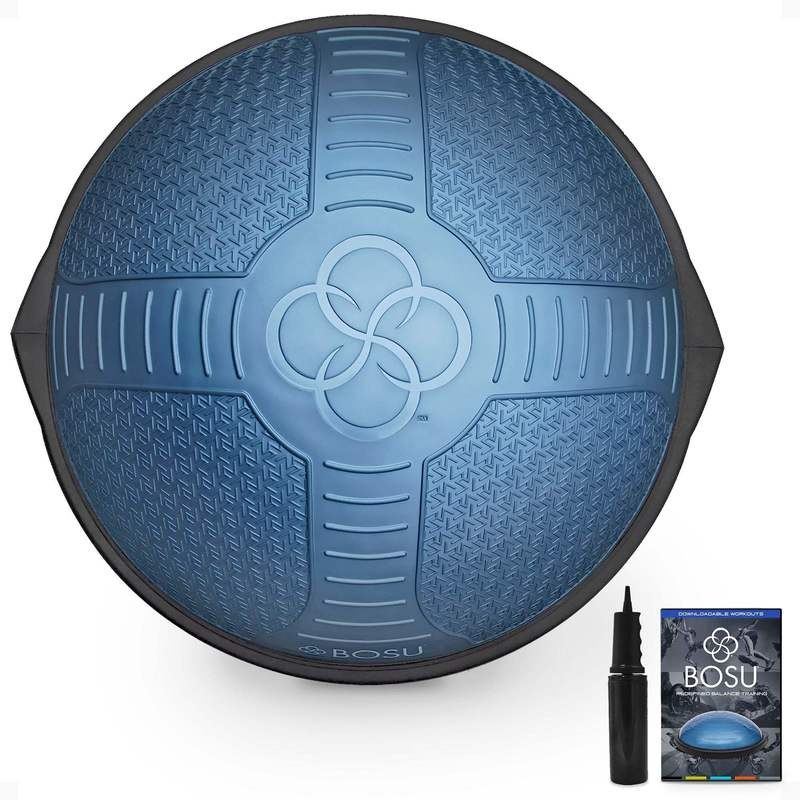
8. Single-leg balance. Stand on one foot near a wall, the other foot lifted slightly. 20–30 seconds per side, 2–3 rounds. When that feels easy, try closing your eyes or turning your head slowly. For a bigger challenge, a balance trainer adds an unstable surface that trains the small ankle stabilizers far more than flat ground. Safety: always keep a wall or chair within reach. Wobbling is training; falling is not.
The Routine at a Glance
| Order | Exercise | Dose | | --- | --- | --- | | 1 | Foot rolling | 1–2 min per foot | | 2 | Ankle circles | 10 each direction, per foot | | 3 | Wall calf stretch (straight knee) | 2–3 × 30–60 sec per leg | | 4 | Bent-knee calf stretch | 2–3 × 30–60 sec per leg | | 5 | Slant board stretch | 2–3 × 30–60 sec | | 6 | Dorsiflexion mobilization | 2–3 × 10–12 per leg | | 7 | Tibialis raises | 2–3 × 12–15 | | 8 | Ankle alphabet | 1 alphabet per foot | | 9 | Seated heel raises | 2–3 × 15–20 | | 10 | Single-leg balance | 2–3 × 20–30 sec per side |
Total: about 15–20 minutes. On busy days, the minimum effective dose is the knee-to-wall mobilization, one calf stretch per leg, and tibialis raises — under 8 minutes.
This routine pairs well with general balance practice — see our balance exercises guide — and slots neatly into a low-impact training week without adding joint stress.
How to Progress
- Lengthen holds first. When 30 seconds feels easy, extend toward 60 before adding intensity.
- Raise the slant board angle. Move up one notch every week or two, only if the current angle feels comfortable.
- Advance balance gradually. Eyes open → eyes closed → unstable surface. One step at a time.
- Track knee-to-wall distance. An extra centimeter every few weeks is genuine, lasting progress.
- Stay consistent. Three to five short sessions per week beat one long weekend session.
Expect meaningful change over 4–8 weeks of consistent work, though this varies — long-standing stiffness takes longer to unwind. There is no fixed timeline, and anyone selling a "7-day ankle fix" is selling something.
Common Mistakes
- Stretching through pain. Strong stretch sensation is fine; sharp pain, pinching at the front of the ankle, or lingering soreness means you pushed too far. Back off.
- Only stretching the big calf muscle. The bent-knee soleus stretch is the one most people skip and most people need. Do both.
- Ignoring the shin muscle. Tight calves plus a weak tibialis is the classic stiff-ankle combination. The tibialis raises are not optional.
- Letting the knee cave inward. In every knee-over-toe movement, the knee must track over the middle of the foot.
- Bouncing. Ease in, breathe, hold. Ballistic bouncing at end range irritates tendons.
FAQ
Q: How long until my ankles feel looser?
Many people notice easier movement within 2–4 weeks of consistent practice (3–5 sessions per week), with more durable change over 6–8 weeks. Retest with the knee-to-wall test every few weeks — measurable gains keep motivation honest.
Q: Can these exercises fix a sprained ankle?
No — this routine is for general stiffness, not injury rehabilitation. A sprain needs assessment and a rehab plan from a physiotherapist. Once cleared, mobility work like this is often part of returning to activity, but timing and dosage should come from your clinician.
Q: Why do my ankles click during these exercises?
Painless clicking or popping is common and usually harmless — tendons moving over bony surfaces. If clicking comes with pain, swelling, or instability, stop and get it assessed rather than working through it.
Q: Should I do ankle work before or after workouts?
Both: the dynamic mobilizations (knee-to-wall drives, ankle circles) make a good warm-up before lower-body training, while the longer static stretches fit better afterward or on rest days.
Q: Do I really need a slant board?
Not strictly — wall stretches work. But a slant board gives a consistent, measurable incline and lets you progress the angle in small steps, which is hard to replicate with improvised setups.
The Bottom Line
Ankle mobility is an invisible foundation — you never notice it until it limits you, and never appreciate it until it improves. Ten focused exercises, fifteen minutes, a few times a week: that is the entire prescription. Test your knee-to-wall distance now, work the routine for a month, and test again. Small joints, honestly, make a surprisingly big difference to how your whole body moves.