Doing ab workouts but seeing little change? These 8 mistakes stall progress for most women — from breath-holding to the wrong muscles. Here is how to fix each.
Ab Workout Mistakes: 8 Errors That Stall Your Progress
You do ab workouts three times a week. Your arms ache after push-ups, your legs burn after squats — but your midsection never seems to change, and planks still wreck your lower back. Frustrating? Absolutely. Unusual? Not at all.
The truth is that ab training has one of the highest error rates of any exercise category. Most mistakes are invisible: you are doing the reps, sweating through the workout, and feeling effort somewhere — just not where it counts. Here are the eight errors that stall progress for most women, and exactly how to fix each one.
This guide contains affiliate links. If you buy through them, VÉLORA may earn a commission at no extra cost to you.
Mistake 1: Never Actually Engaging Your Core
The error: You go through the motions — crunches, planks, leg raises — while your deep core muscles stay switched off. The work gets stolen by your neck, hip flexors, and lower back.
Why it stalls you: An unengaged core means the target muscles never receive the stimulus they need to adapt. You can do hundreds of reps and still not train your abs.
The fix: Before every exercise, create a gentle brace — firm 360-degree tension around your waist at about 20–30 percent effort — and breathe behind it. Learn it in our core engagement guide: the cough test teaches the feeling in one session. For two weeks, make engagement — not rep count — your goal.
Mistake 2: Holding Your Breath Through Every Rep
The error: You brace so hard you go red in the face, holding your breath for entire sets. Or the opposite: you breathe randomly, exhaling on the easy part and gasping on the hard part.
Why it stalls you: Breath-holding spikes blood pressure and forces you to release all tension at the end of the hold, which breaks the core's support exactly when fatigue sets in — the moment your back is most vulnerable.
The fix: Exhale on the effort (the curl up, the roll out, the lift) and inhale on the return. Keep the breath flowing behind a moderate brace. If you cannot talk in short phrases mid-set, you are bracing too hard — ease off to a sustainable tension.
Mistake 3: Only Training the "Six-Pack" Muscle
The error: Every session is crunches, sit-ups, and toe touches — all rectus abdominis, all day. The deep stabilizers (transverse abdominis), obliques, and lower back get nothing.
Why it stalls you: A strong-looking surface muscle over a weak stabilizer system means poor posture, back complaints, and a plateau: the rectus abdominis adapts quickly to the same crunches, and progress stops within weeks.
The fix: Build sessions around variety. A balanced week includes an anti-extension move (plank or dead bug), an anti-rotation move (Pallof press or bird dog), a rotation move (Russian twist or cable chop), and a flexion move (crunch) — plus something for the lower back. A good breakdown of trunk functions applies here too.
Mistake 4: Letting Your Neck and Hip Flexors Do the Work
The error: Your neck aches after crunches. Your hip flexors cramp during leg raises. These are your body's cheat codes — bigger, easier muscles taking over for under-recruited abs.
Why it stalls you: Every rep "completed" by your neck is a rep your abs did not do. You leave the session tired, sore in the wrong places, and no closer to your goal.
The fix: For crunches, keep your eyes on the ceiling and imagine your ribs sliding toward your hips — your head should barely move, and your hands rest lightly, doing nothing. For leg raises, start with reverse crunches (knees bent, curling the pelvis up) instead of straight-leg raises until your abs can own the movement. Smaller range, better target — always.
Mistake 5: Racing Through Reps
The error: Fifty crunches in ninety seconds. Plank challenges where form collapses at minute two. Momentum does half the work and the muscles do the other half — badly.
Why it stalls you: Muscles adapt to time under tension and control, not to rep tallies. Fast, sloppy reps train momentum; slow, deliberate ones train muscle.
The fix: Slow every rep down: two seconds up, a one-second squeeze, two seconds down. Quality sets of 8–15 controlled reps beat marathon sets every time. Aim for 2–4 sets per exercise, resting 30–60 seconds between sets.
Mistake 6: Training Abs Every Single Day
The error: "Abs are different — you can do them daily." So you hammer them seven days a week, wondering why they always feel tired and never stronger.
Why it stalls you: Abdominal muscles recover like every other muscle — they need 24–48 hours between hard sessions. Daily maximal training piles fatigue on fatigue, and performance (and progress) quietly declines.
The fix: Train abs hard two to four times per week, with at least one rest day between sessions. On other days, your core still gets plenty of indirect work from squats, rows, carries, and daily life. More sessions do not mean more results — recovered sessions do.
Mistake 7: No Progression — Same Routine for Months
The error: The same 10-minute YouTube ab video, week after week, month after month. It felt hard in January; by June you could do it in your sleep — and your body agrees, which is why it stopped changing.
Why it stalls you: Muscles adapt to a fixed stimulus and then coast. Without a new challenge — more resistance, longer holds, harder variations, slower tempos — there is no reason for them to keep adapting.
The fix: Progress one variable at a time, roughly every two to three weeks: add a set, extend a hold by 10 seconds, slow the tempo, move from knee planks to full planks, or add light resistance. Tools make progression measurable: the Ab Wheel Roller with Knee Pads scales up rollouts, and Dual-Sided Core Sliders upgrade mountain climbers on any smooth floor.
Mistake 8: Expecting Ab Exercises to Reveal Abs
The error: Training hard while expecting visible definition to appear from exercise alone — and quitting in frustration when it does not.
Why it stalls you: Ab exercises build and strengthen the muscles underneath. What sits on top — body fat, water retention, bloating, posture — responds to nutrition, sleep, stress, hydration, and overall activity, not to more crunches. This is the spot-reduction myth in its most stubborn form: no exercise removes fat from one chosen area.
The fix: Keep training your core for strength, stability, and posture — those benefits are real and worth having. Pair it with honest habits: mostly whole foods, enough protein, regular walking and strength training, 7–9 hours of sleep, and patience. Results vary widely between women, and anyone promising visible abs in a fixed number of days is selling something, not teaching something. See our Women's Fitness Myths guide for more myths worth dropping.
Quick Reference: Mistake vs. Fix
| Mistake | What It Feels Like | The Fix | |---|---|---| | Core never engaged | Back or neck hurts, abs feel nothing | Brace gently (20–30%) and breathe behind it before every set | | Holding your breath | Red face, pressure in head | Exhale on the effort, inhale on the return | | Only crunches | Quick plateau, weak posture | Add anti-extension, anti-rotation, rotation, and back work | | Neck/hip flexors dominate | Neck ache, hip cramping | Smaller range, eyes on ceiling, start with regressed versions | | Racing reps | High counts, no change | 2-1-2 tempo; 8–15 controlled reps per set | | Training daily | Perpetual fatigue | 2–4 hard sessions per week with rest days | | No progression | Easy for months, no change | Progress one variable every 2–3 weeks | | Expecting spot reduction | Frustration, quitting | Train for strength; pair with nutrition, sleep, and patience |
Building a Smarter Ab Session
Put the fixes together and a good session practically writes itself. Here is a template:
- Warm-up (2 minutes): 360-degree breathing drills and 10 slow dead bugs to wake up engagement.
- Main work (10–15 minutes): Pick 3–4 exercises covering different functions — for example, dead bug (anti-extension), bird dog (anti-rotation), side plank (lateral stability), and a slow crunch (flexion).
- Finisher (optional, 3 minutes): One controlled burnout, like a plank hold or slow mountain climbers on sliders.
- Frequency: 2–3 sessions per week with rest days between.

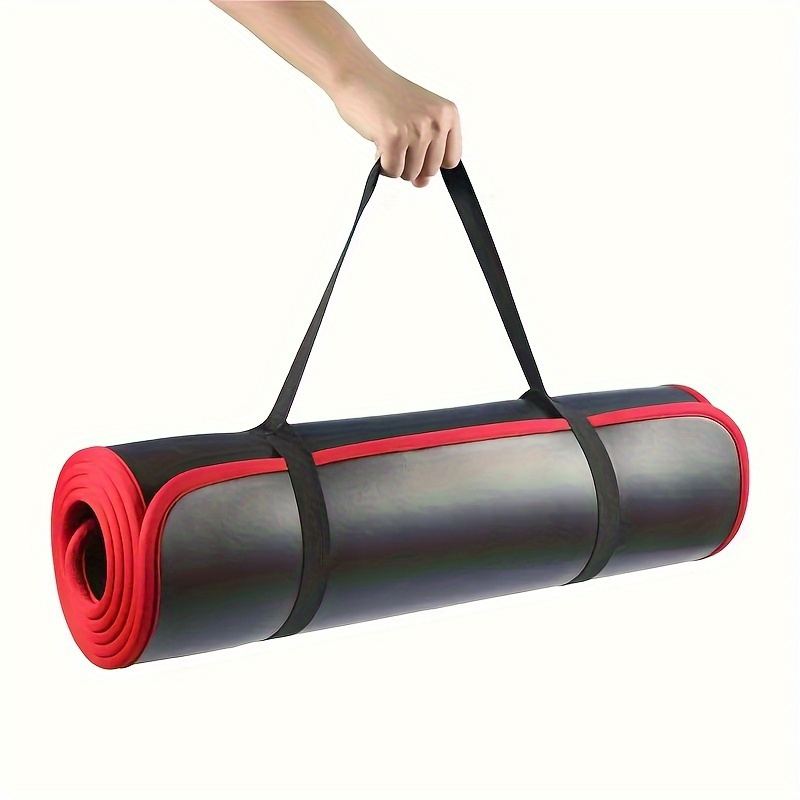
A comfortable surface matters more than people think — grinding through floor work on a hard floor is its own motivation-killer. The Extra-Thick 10mm Yoga Mat gives your spine and knees real cushioning for planks and crunches, and it is the same mat featured above.
Safety Notes
- Stop any exercise that causes sharp pain, dizziness, or pelvic pressure. Effort and muscle burn are normal; pain is information.
- If you are pregnant, postpartum, managing diastasis recti, or recovering from abdominal or back surgery, get professional guidance before pushing ab work — several of these mistakes matter even more then. Start with a postpartum-specific exercise guide if that is you.
- Never "push through" lower-back pain during ab exercises. Regress the movement, re-check your brace, and if pain persists, see a physiotherapist.
FAQ
Q: How long does it take to see progress from ab workouts?
Strength and stability improvements often show within a few weeks of consistent, well-executed training. Visible changes take longer and vary widely with body composition, nutrition, sleep, and genetics.
Q: Are crunches bad for you?
Crunches are not inherently bad — they are just overused and usually done badly. Done slowly, with an engaged core and the head resting lightly on the hands, they are a fine rectus abdominis exercise. The problem is when they are the only ab exercise you ever do, raced through with the neck doing the work.
Q: Why do I feel ab exercises in my back instead of my abs?
Your core is not engaged, or the exercise is too advanced for your current strength. Regress (knees down, smaller range), re-brace at a sustainable 20–30 percent, exhale on the effort, and slow down. If back pain persists rather than back effort, stop and get checked.
Q: Should women train obliques, or will it make the waist wider?
Train them. The idea that oblique work "widens" the waist is a myth — moderate oblique training builds a stronger, more stable trunk, and noticeable widening would require years of heavy, targeted loading most women never approach. Side planks and controlled rotation are part of a complete core.
Q: Is it better to do abs before or after a workout?
Generally after your main lifting or cardio, or on separate shorter days. Pre-fatiguing your core before heavy compound lifts reduces the bracing that protects your spine. Save hard ab work for the end.
Q: How many ab exercises do I actually need?
Three to four well-chosen exercises covering different functions, 2–4 sets each, twice or more per week. More exercises do not beat better execution.
The Bottom Line
Almost every stalled ab program fails for the same handful of reasons: the core never switches on, the breath gets held or ignored, the same easy routine repeats for months, and spot reduction is expected to do what only overall habits can do. Fix engagement first, slow your reps down, vary the functions you train, progress deliberately, and give your body rest days and realistic timelines. Your abs were never lazy — they were just never properly invited to the workout.
