Types of resistance bands explained: loop, tube, therapy, figure-8 and fabric bands compared — how each feels, what each is for, and which suits your training.
Types of Resistance Bands Explained: Loop, Tube, Therapy and More
Resistance bands are one of the best buys in home fitness — cheap, portable, joint-friendly, and genuinely effective. But "resistance band" covers at least half a dozen different tools that feel, stretch, and behave very differently. A thin therapy band will not do the job of a fabric hip loop, and a heavy tube with handles is a poor stand-in for a pull-up assist band. Buy the wrong type and the band sits in a drawer; buy the right one and it becomes part of nearly every workout.
This guide explains each type honestly: how it feels, what it is really for, and which one suits your training. Our roundup of the best resistance bands for women collects specific picks once you know what you are looking for.
This guide contains affiliate links. If you buy through them, VÉLORA may earn a commission at no extra cost to you.
How Band Resistance Actually Works
Before the types, one thing to understand: a band's resistance increases the further you stretch it. Unlike a dumbbell, which weighs the same at every point of the lift, a band loads the end of the movement most. This is called accommodating resistance, and it is why bands are kind to joints — the movement gets hardest where your muscles are typically strongest — and why they feel different from free weights.
Band "levels" are where the confusion starts. Colors mean nothing standardized: one brand's red is light, another brand's red is heavy. Some brands print pounds or kilograms on the band, but those numbers are rough estimates measured at a specific stretch length, not precise loads. Treat labels as loose guidance within a brand, and judge a band by how it feels in your hands, not by what the color chart claims. When in doubt between two, buy both if the set is cheap — circular resistance loops sold as multi-packs exist precisely so you can learn your levels without overpaying.
The Six Types, Explained
1. Mini Loops (Short Continuous Loops)
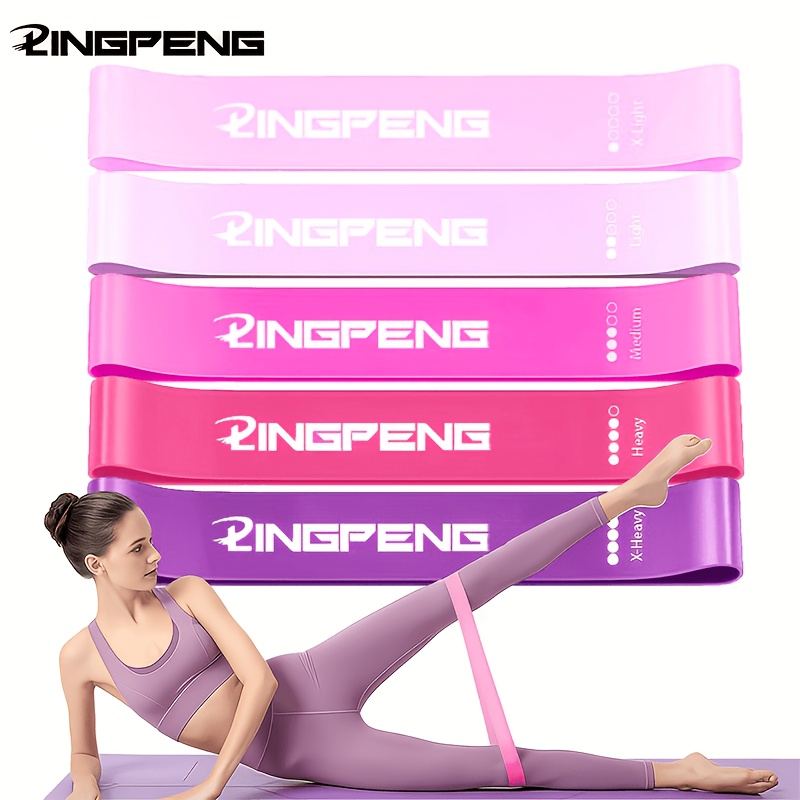
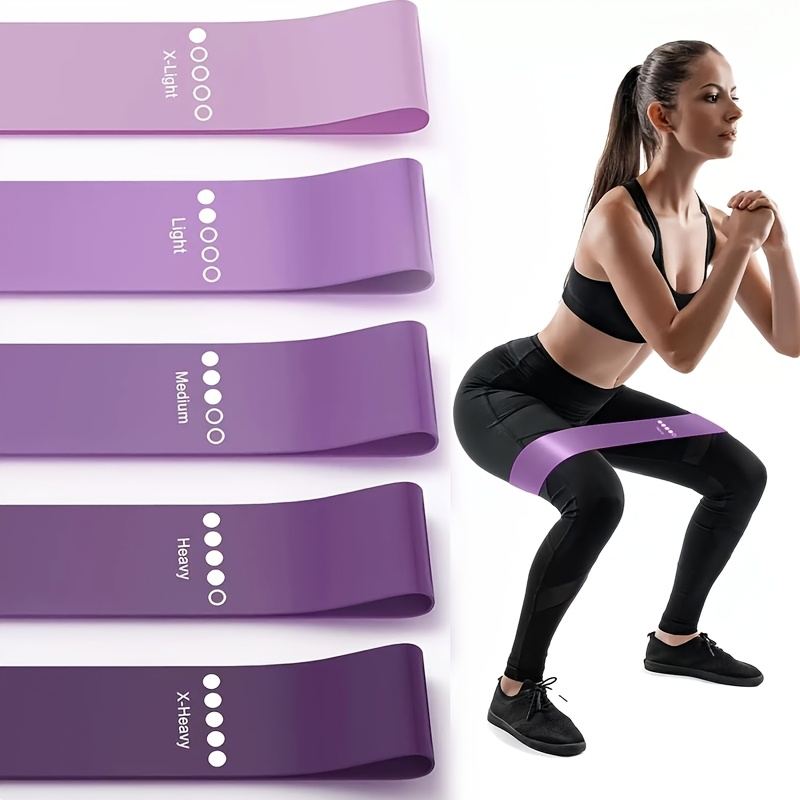
Small flat loops, usually 10–12 inches long, made of latex or rubber. You loop them around your thighs, ankles, or wrists. Their signature feel is constant tension on the glutes and outer hips: clamshells, lateral walks, glute bridges, and standing abduction all live here.
Mini loops are the glute-specialist's tool. They are small enough to toss in a bag, cheap in multi-packs like the Resistance Band for Arms and Legs loop bands, and the fastest way to make bodyweight leg exercises meaningfully harder. Their weakness is range: they do not work well for upper-body training, and very strong legs outgrow the heaviest latex loops — which is when fabric bands enter the picture.
2. Fabric / Hip Bands
Wider loops made of woven fabric with rubberized inner grips. They do the same job as mini loops — glutes, hips, outer thighs — but they stay in place. Latex loops roll, pinch, and snap against skin; fabric bands sit still. The tradeoff is stretch: fabric bands offer less elongation, so the resistance curve feels firmer and the exercise range is shorter.
For home glute training, fabric bands are usually the better daily driver. They last longer than latex, they do not degrade in sunlight the same way, and the non-slip lining means you spend your sets training instead of re-adjusting the band.
3. Tube Bands with Handles
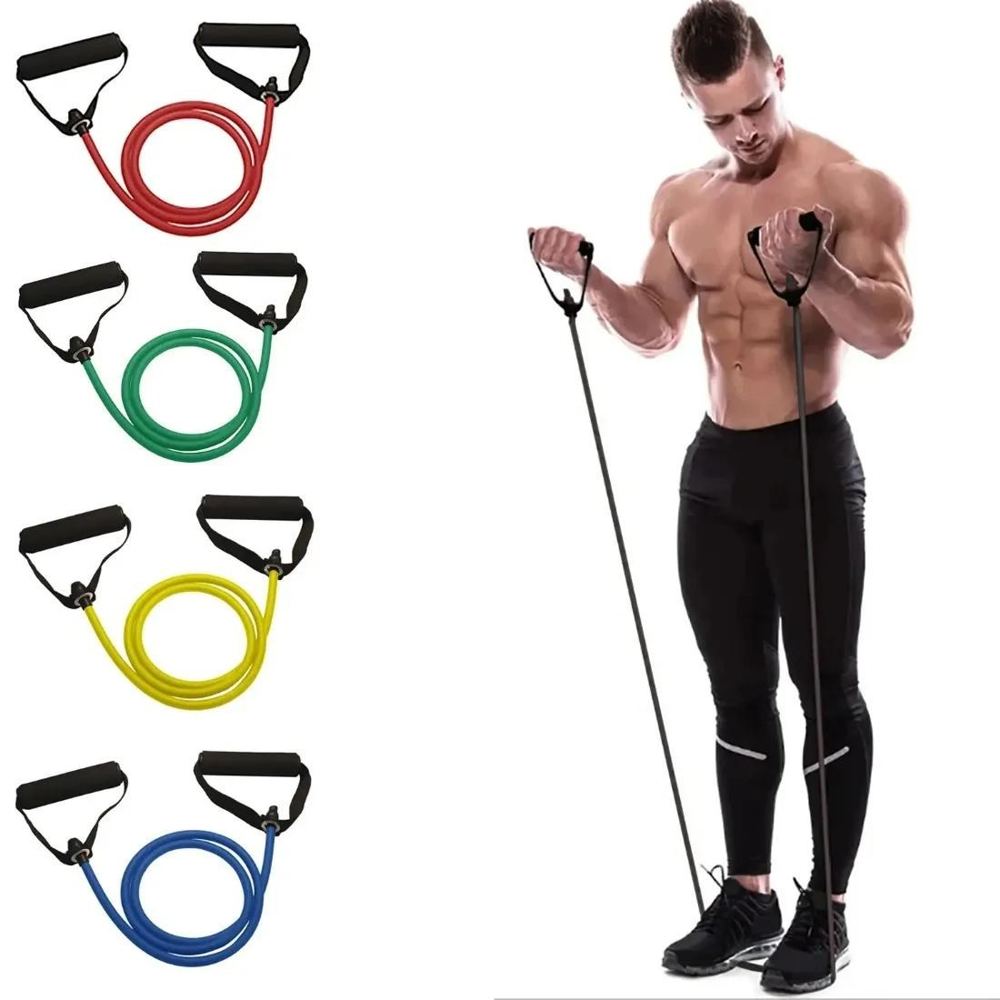
The classic home-gym kit: a length of round latex tubing with a handle at each end and often a door anchor included. These are the dumbbell substitutes of the band world — chest press, rows, bicep curls, shoulder press, triceps pushdowns. Stacking multiple tubes on the handles increases resistance, and sets like the Temu Resistance Bands with Handles Home Gym Set typically cover light through heavy in one box.
The feel is gym-like for pressing and pulling, which makes tubes the best all-rounder for full-body training. Watch out for the handles themselves: cheap plastic handles and carabiner clips are the failure point of budget sets. Inspect the connections before every session, and never anchor a tube to anything with a rough edge that could abrade the latex.
4. Therapy / Flat Bands
Long flat ribbons of thin latex, usually sold open-ended (not a loop). These are the gentlest of all — the rehab and mobility band. Physical therapists use them for shoulder external rotation, gentle activation, stretching assistance, and prehab work. They provide the least resistance of any type, which is exactly their virtue: they let small stabilizing muscles work without larger muscles taking over.
If you are returning from injury, nursing cranky shoulders, or want a warm-up tool rather than a workout tool, therapy bands are the right call. They are too light for serious strength progression on big muscle groups, so pair them with another type for that. If you train with dumbbells too, our resistance bands vs dumbbells comparison shows where each tool wins.
5. Figure-8 Bands
A band shaped like the number 8 with soft handles at each loop — essentially a therapy band pre-shaped for the upper body. They shine for chest flys, shoulder work, and posture exercises, and the handles make them comfortable for people who dislike gripping flat latex. They are a niche tool: lovely for what they do, limited outside of it. Think of them as an upper-body specialist for gentle-to-moderate resistance.
6. Pull-Up Assist / Power Bands
Long, thick, heavy-duty loops (often 41 inches around) built for serious load. Their original job is looped over a pull-up bar to lighten bodyweight pull-ups and dips; they also work for heavy deadlifts, assisted stretching, and explosive athletic training. These are the strongest bands you can buy, and they demand respect: a heavy power band stores real energy and can snap back hard. They are overkill for general home fitness unless pull-up progression is specifically your goal.
Comparison Table: Type, Feel, Best Use, Watch Out
| Type | Resistance style | Best use | Watch out | | --- | --- | --- | --- | | Mini loops | Light–medium, constant tension | Glutes, hips, warm-ups, travel | Roll and pinch; strong legs outgrow them | | Fabric / hip bands | Medium–firm, short stretch | Glute and leg strength at home | Less stretch range than latex | | Tube with handles | Light–heavy, stackable | Full-body dumbbell substitute | Inspect handles and clips; anchor carefully | | Therapy flat bands | Very light, gentle | Rehab, prehab, mobility, warm-ups | Too light for strength progression | | Figure-8 bands | Light–medium, handled | Upper-body toning, posture work | Niche; limited lower-body use | | Pull-up assist bands | Heavy–very heavy | Assisted pull-ups, heavy lifts | Stores real energy; respect the snap-back |
Choosing for Your Goal
Glutes and legs at home. Start with a fabric hip band set for daily training and a mini loop pack for travel and warm-ups. This pairing covers almost every lower-body band exercise worth doing.
Full-body strength without weights. Tube bands with handles and a door anchor are the single most versatile purchase. One kit replaces a rack of dumbbells for pressing, pulling, and arm work — and packs into a drawer. If you are torn between equipment types, read our resistance bands vs dumbbells breakdown first.
Travel. Mini loops win outright: they weigh nothing, fit in a pocket, and turn a hotel room into a leg day. Add a therapy band for upper-body activation and you are set.
Gentle start, rehab, or seniors. Therapy flat bands first. Graduate to mini loops when the movements feel easy. Never rush this progression — small stabilizer muscles strengthen quietly and reward patience.
Core work. Bands are excellent here, but technique matters more than resistance. Our no-equipment core workout pairs well with light loop work once the basics are solid.
Care: When to Retire a Band
Latex bands are consumables, not heirlooms. Inspect before every session: look for small nicks, cracks, thinning spots, or discoloration — any of these means the band is telling you it is done. A band that breaks mid-rep is startling at best and dangerous at worst, so retire questionable bands immediately rather than coaxing one more workout out of them.
Storage matters more than people think. Keep bands out of direct sunlight and away from heat, which degrade latex quickly. Do not store them stretched around objects, and keep them away from sharp edges, rough concrete, and anything with a burr.
FAQ
Q: Do resistance bands really build muscle, or just tone?
Bands build real strength when used with progressive effort — more stretch, heavier bands, slower tempos, more reps. The word "tone" is marketing; what bands build is muscle and strength, same as any resistance. Results vary, but consistent progressive band training produces genuine, measurable strength gains.
Q: Why do band colors differ between brands?
There is no industry standard for band colors, so every brand makes up its own. Always go by the labeled resistance range within one brand, and better yet, by how the band feels. Buying a multi-level set from one brand is the simplest way to learn your levels.
Q: Can one band type replace dumbbells completely?
Tube bands with handles come closest for full-body training. But bands and dumbbells feel different — constant gravity load versus increasing stretch load — and each has movements the other cannot do well. Many home trainers use both; our bands vs dumbbells guide compares them exercise by exercise.
Q: How long do resistance bands last?
With indoor storage away from sun and heat, latex bands typically last many months of regular use; fabric bands often last longer. Inspect before every session and retire any band showing nicks, cracks, or discoloration — a failing band gives warning signs if you look.
Q: Are fabric bands better than latex loops?
For glute and hip training at home, usually yes — they stay put, do not pinch, and last longer. Latex mini loops still win for travel, warm-ups, and the lightest activation work. Most well-equipped home gyms eventually own both.
Conclusion
There is no single best resistance band — there is the right band for the job. Mini and fabric loops own glute training, tubes with handles own full-body strength, therapy bands own gentle rehab and warm-ups, and power bands belong to serious pull-up and lifting work. Start with the type that matches your main goal, buy it as a multi-level set so you can progress, store it out of the sun, and inspect it before every session. Chosen well, a few dollars of elastic becomes one of the hardest-working tools in your home gym.
