New to resistance training? Understand bands vs dumbbells, choose your starting resistance, learn the key moves, and follow a safe first-week plan.
Resistance Training for Beginners: Everything You Need to Know
If the phrase "resistance training" makes you picture a crowded weight room and people grunting under barbells, you are not alone. Resistance training simply means making your muscles work against something: a band, a dumbbell, your own body, or a machine. It is one of the most useful things a woman can do for her long-term strength, bone health, posture, and everyday energy — and it starts far more gently than most people imagine.
You do not need a gym membership or a trainer. You need a clear starting point, a few simple tools, and a plan that respects where your body is right now. That is exactly what this guide gives you.
This guide contains affiliate links. If you buy through them, VÉLORA may earn a commission at no extra cost to you.
What Is Resistance Training, Really?
Resistance training is any exercise where your muscles contract against an opposing force. That force can be:
- Your bodyweight — squats, push-ups, planks
- Resistance bands — elastic bands that get harder as they stretch
- Free weights — dumbbells, kettlebells, barbells
- Machines — fixed-path equipment at a gym
- Everyday objects — a heavy bag, a full water jug, a sturdy chair
The mechanism is the same in every case: you challenge a muscle with a load it is not used to, it adapts by getting a little stronger, and over time those small adaptations add up.
Why Bother? The Honest Benefits
Here is what resistance training reliably offers, without the hype:
- Everyday strength — carrying groceries, lifting luggage, climbing stairs without thinking
- Better posture — stronger back and glute muscles hold you upright through long desk days
- Metabolic health — muscle tissue is metabolically active, and strength work supports healthy blood sugar and steady energy
- Confidence with movement — knowing how your body moves under load makes everything else feel easier
What it will not do: it will not "tone" one chosen spot (spot reduction is a myth), it will not transform your body in two weeks, and it will not make you bulky by accident — building large amounts of muscle takes years of deliberate, heavy training. Results vary widely depending on consistency, nutrition, sleep, and genetics.
Bands vs Dumbbells vs Machines: Which Should You Start With?
This is the first real decision, and there is no single right answer — only the right answer for your space, budget, and comfort:
| | Resistance Bands | Dumbbells | Gym Machines | |---|---|---|---| | Cost | Lowest — a full set costs less than one month of most gym memberships | Moderate — a starter set is affordable; adjustable pairs cost more | Highest — requires a gym membership | | Space needed | Almost none — they fit in a drawer | A corner of a room | A gym | | Beginner-friendliness | Very high — gentle start, easy on joints | High — intuitive to learn | High — the fixed path guides your form | | Progression | Good — stack bands or shorten them; limited at the top end | Excellent — small weight jumps available | Excellent — pin-loaded in small steps | | Full-body coverage | Excellent with a door anchor | Excellent | Excellent, but machine-dependent |
Our recommendation for most women starting at home: begin with a band set plus one light pair of dumbbells. Bands cover pulling and pressing angles beautifully and travel anywhere; dumbbells give you the steady, predictable load that builds confidence. Many women train productively with this setup for years.
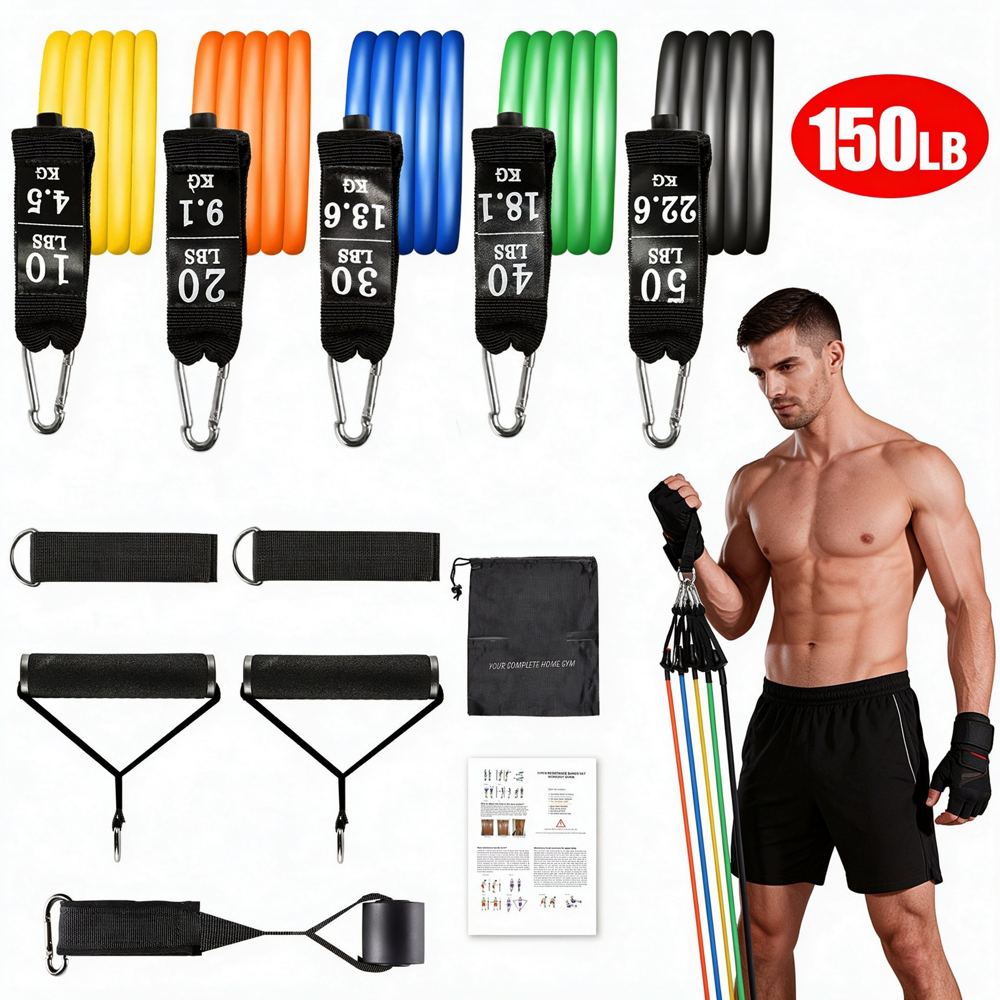
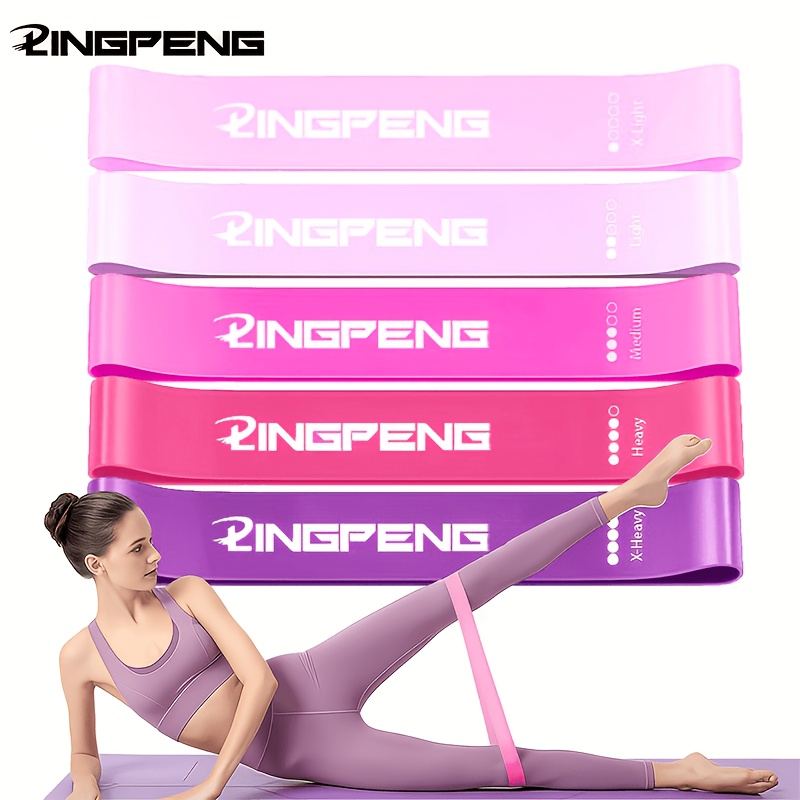
A set like the 11-Piece Resistance Band Set with Door Anchor gives you five resistance levels plus handles and an anchor, covering nearly every beginner move in this guide. Add loop bands such as the Loop Resistance Bands for Arms and Legs for glute and leg work.
How to Choose Your Starting Resistance
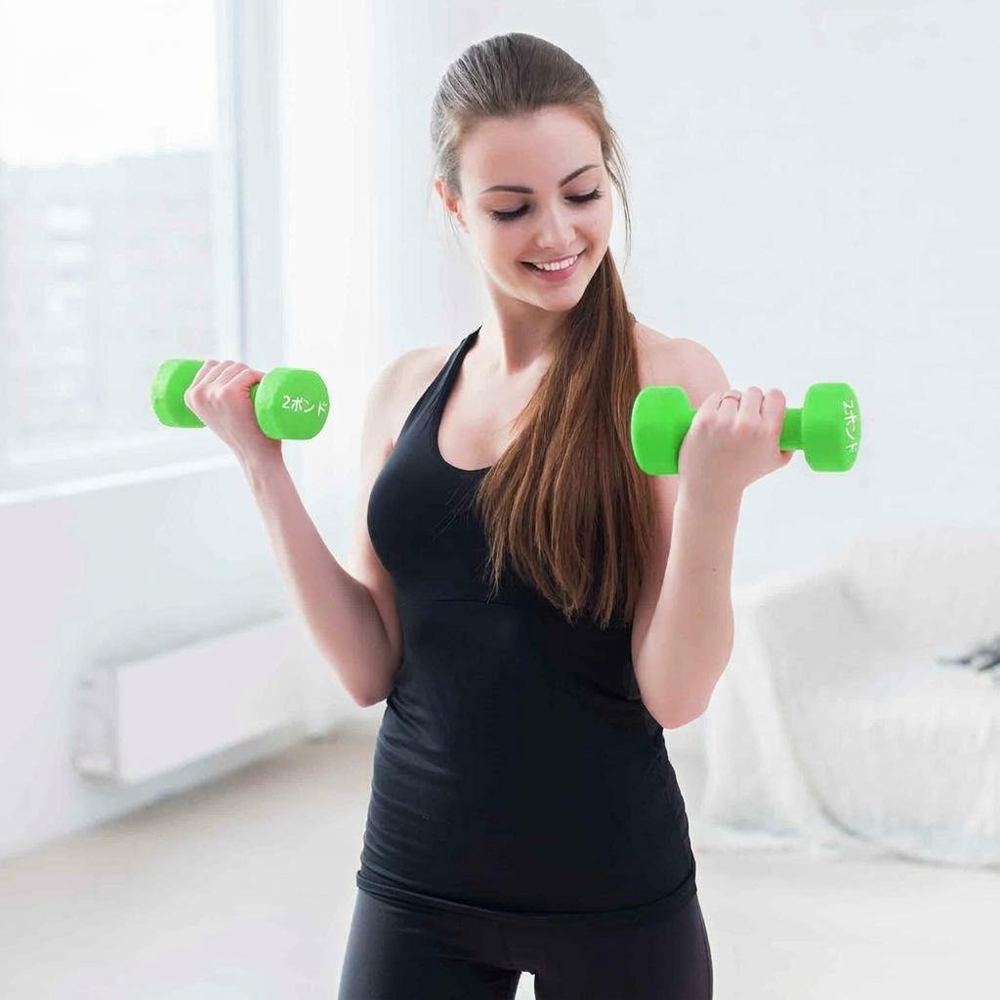
The right starting resistance is one you can move with good form while the last two or three reps feel challenging. Upper-body moves (rows, presses, curls): most beginners start with 2–5 kg (5–10 lb) dumbbells or the lightest one or two band levels. Lower-body moves (squats, deadlifts, bridges): most start with bodyweight or 4–8 kg (10–15 lb), since the legs are naturally stronger. Start lighter than your ego suggests — the first two weeks are about learning movement patterns, not testing limits.
The 6 Foundational Moves
These six exercises train every major muscle group. Learn them in this order, and you have a complete beginner program.
1. Glute Bridge — Wake Up Your Glutes
Purpose: Strengthens glutes and hamstrings; teaches hip extension, the foundation of squats and deadlifts.
How to: Lie on your back, knees bent, feet flat and hip-width apart. Press through your heels and lift your hips until your body forms a straight line from shoulders to knees. Squeeze your glutes at the top for one second, then lower slowly — keep your ribs down, do not arch your lower back. Exhale as you lift, inhale as you lower.
Sets/reps: 2–3 sets of 10–15 reps, resting 45–60 seconds between sets.
Beginner modification: Lift halfway and focus on the squeeze. A loop band just above your knees teaches your knees to track outward.
2. Bodyweight Squat — The King of Lower-Body Moves
Purpose: Trains quads, glutes, and core stability; the most functional movement in this list.
How to: Stand with feet slightly wider than hip-width, toes turned out 10–15 degrees. Push your hips back and bend your knees, chest proud, knees tracking over your toes. Lower until your thighs are roughly parallel to the floor, then drive through your whole foot to stand — keep your heels down. Inhale as you lower, exhale as you stand.
Sets/reps: 2–3 sets of 8–15 reps, resting 60–90 seconds between sets.
Beginner modification: Squat to a chair — tap it lightly and stand. This teaches depth and removes the fear of falling backward.
3. Band Row — Posture's Best Friend
Purpose: Strengthens the upper and mid-back; counteracts desk-hunch.
How to: Loop a band around a sturdy post or use a door anchor at chest height, arms extended with light tension. Pull the handles toward your lower ribs, squeezing your shoulder blades together — elbows close, torso still. Return slowly until your arms are nearly straight. Exhale as you pull, inhale as you return.
Sets/reps: 2–3 sets of 10–15 reps, resting 45–60 seconds between sets.
Beginner modification: Step closer to the anchor to reduce tension, or use the lightest band.
4. Knee Push-Up — Upper-Body Foundation
Purpose: Builds chest, shoulder, and triceps strength; teaches the pressing pattern.
How to: Hands under shoulders, knees on the floor, body straight from knees to head. Lower your chest toward the floor, elbows at roughly 45 degrees — core braced, no sagging or piking. Press back up without locking your elbows hard. Inhale as you lower, exhale as you press.
Sets/reps: 2–3 sets of 5–12 reps, resting 60–90 seconds between sets.
Beginner modification: Elevate your hands on a sturdy bench or step — the higher the hands, the easier the rep. Work down to the floor over weeks.
5. Dumbbell Overhead Press — Strong Shoulders
Purpose: Builds the shoulder and tricep strength you use to lift things overhead.
How to: Stand or sit tall, a dumbbell in each hand at shoulder height, palms forward. Press straight overhead until your arms are nearly straight (soft elbows), ribs down — do not lean back. Lower slowly. Exhale as you press up, inhale as you lower.
Sets/reps: 2–3 sets of 8–12 reps, resting 60–90 seconds between sets.
Beginner modification: Press one arm at a time — this halves the core demand and lets you focus on each side.
6. Romanian Deadlift — Hips and Hamstrings
Purpose: Trains the posterior chain (glutes, hamstrings, back); teaches the hip hinge that protects your back in daily lifting.
How to: Stand tall, dumbbells (or a band under your feet) in front of your thighs, feet hip-width apart, knees soft. Push your hips straight back as the weights slide down your thighs — back flat, weights close to your legs. Lower until you feel a hamstring stretch, then drive your hips forward to stand, squeezing your glutes. Inhale as you hinge down, exhale as you stand.
Sets/reps: 2–3 sets of 8–12 reps, resting 60–90 seconds between sets.
Beginner modification: Practice the hinge with no weight, back flat, until the pattern feels natural. Then add the lightest dumbbells you own.
Your First Week: A Safe Starter Plan
Do not do all six moves on day one. Ease in:
- Day 1: Glute bridge, bodyweight squat, band row — 2 sets each, easy effort
- Day 2: Rest or a gentle walk
- Day 3: Knee push-up, overhead press, Romanian deadlift — 2 sets each, easy effort
- Day 4: Rest
- Day 5: Repeat Day 1's three moves, 2–3 sets, slightly more effort
- Day 6–7: Rest or light activity you enjoy
After week one, move to three full sessions per week covering all six moves, 2–3 sets each. Add one set, a few reps, or a slightly heavier band every one to two weeks — only when the current version feels manageable with good form. Our How to Start Strength Training for Women guide covers the mindset and setup in more detail.
Common Beginner Mistakes
- Going too heavy too soon. The number-one beginner error. Form first, load second — always.
- Skipping the warm-up. Five minutes of marching, arm circles, and bodyweight squats prepares your joints and muscles.
- Rushing reps. Two seconds up, one-second squeeze, two seconds down builds far more strength than bouncing through reps.
- Training through sharp pain. Muscle burn is normal; joint pain, sharp twinges, and dizziness are not. Stop and reassess.
- No rest days. Muscles get stronger during recovery. Beginners need about 48 hours between sessions hitting the same muscles.
Safety Notes
- Check with a clinician before starting if you are pregnant, managing a heart condition, high blood pressure, joint problems, or recovering from surgery or injury.
- Inspect bands before each use — a nicked or torn band can snap. Anchor bands only to sturdy, fixed objects (a closed door with the anchor on the hinge side, a heavy post).
- Keep your spine neutral on hinging and rowing moves — rounding under load is the fastest route to a back strain.
- Stop any exercise that causes sharp pain, dizziness, or chest discomfort, and seek medical advice if symptoms persist.
FAQ
Q: Will resistance training make me bulky?
For the vast majority of women, no. Building large amounts of muscle requires years of heavy, deliberate training plus a calorie surplus. What most women experience is firmer, stronger muscles and better posture — not bulk.
Q: How many days per week should a beginner train?
Two to three full-body sessions per week with at least one rest day between them. This gives muscles time to recover and adapt, which is when the actual strengthening happens.
Q: Bands or dumbbells — which is better?
Neither is universally better; they complement each other. Bands are cheaper, portable, and gentle on joints. Dumbbells offer steady, measurable load that is easy to progress. Starting with both covers every beginner need.
Q: How long before I notice a difference?
Strength — doing more reps or handling more resistance — often improves within 3–4 weeks of consistent training. Visible changes take longer and vary widely with nutrition, sleep, consistency, and individual factors.
Q: Can I do resistance training if I have bad knees?
Often yes — glute bridges, band rows, and upper-body work are knee-friendly. Get clinician guidance first if you have a diagnosed knee condition.
The Bottom Line
Resistance training is not a club you need permission to join — it is a skill you build one session at a time. Start with bands and light dumbbells, learn the six foundational moves with honest form, train two to three times a week, and progress gradually. The women who succeed are not the ones who start the hardest; they are the ones who start simply and keep showing up.