A full-body resistance band routine for men: 8 exercises with form cues, sets/reps ranges, weekly plans, and honest advice on building strength with bands.
Resistance Band Exercises for Men: A Full-Body Strength Routine
Plenty of men dismiss resistance bands as a warm-up toy. That is a mistake. Bands provide real, progressive resistance — tension genuinely increases as you stretch them — and they let you train every major muscle group anywhere: at home, in a hotel room, or in the park. They are also unusually kind to joints, because no heavy weight crashes down at the bottom of a rep.
This guide is a complete full-body strength routine built around resistance bands: eight exercises with clear technique cues, sensible sets and reps ranges, and a weekly plan. Bands can build real strength and muscle for most men — results vary, and they do have a loading ceiling compared to a barbell — but used well, they are a legitimate strength tool, not a compromise.
This guide contains affiliate links. If you buy through them, VÉLORA may earn a commission at no extra cost to you.
Why Bands Deserve a Place in Men's Training
Resistance bands work because muscle does not know what is pulling on it — it only knows tension. A stretched band creates the same kind of muscular demand as a dumbbell, with resistance that increases through the range of motion, matching how muscles produce more force near full extension. Bands cost a fraction of a dumbbell set, weigh almost nothing, and train silently — ideal for home, travel, or easing back in after time off. Our broader resistance band workout guide covers the fundamentals if you want the deeper background.
Choosing the Right Bands
Two styles cover almost everything:
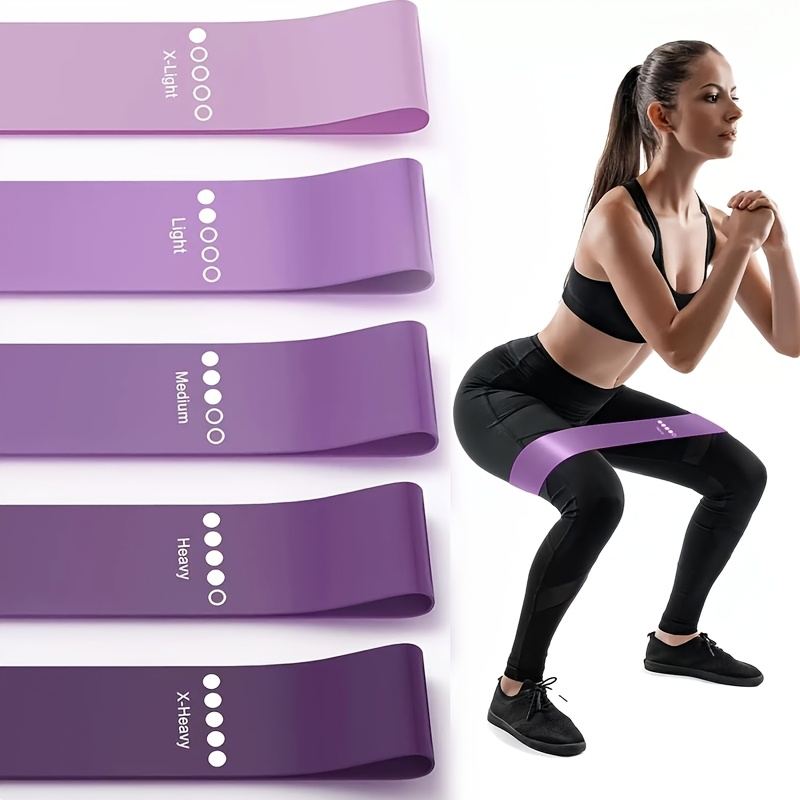
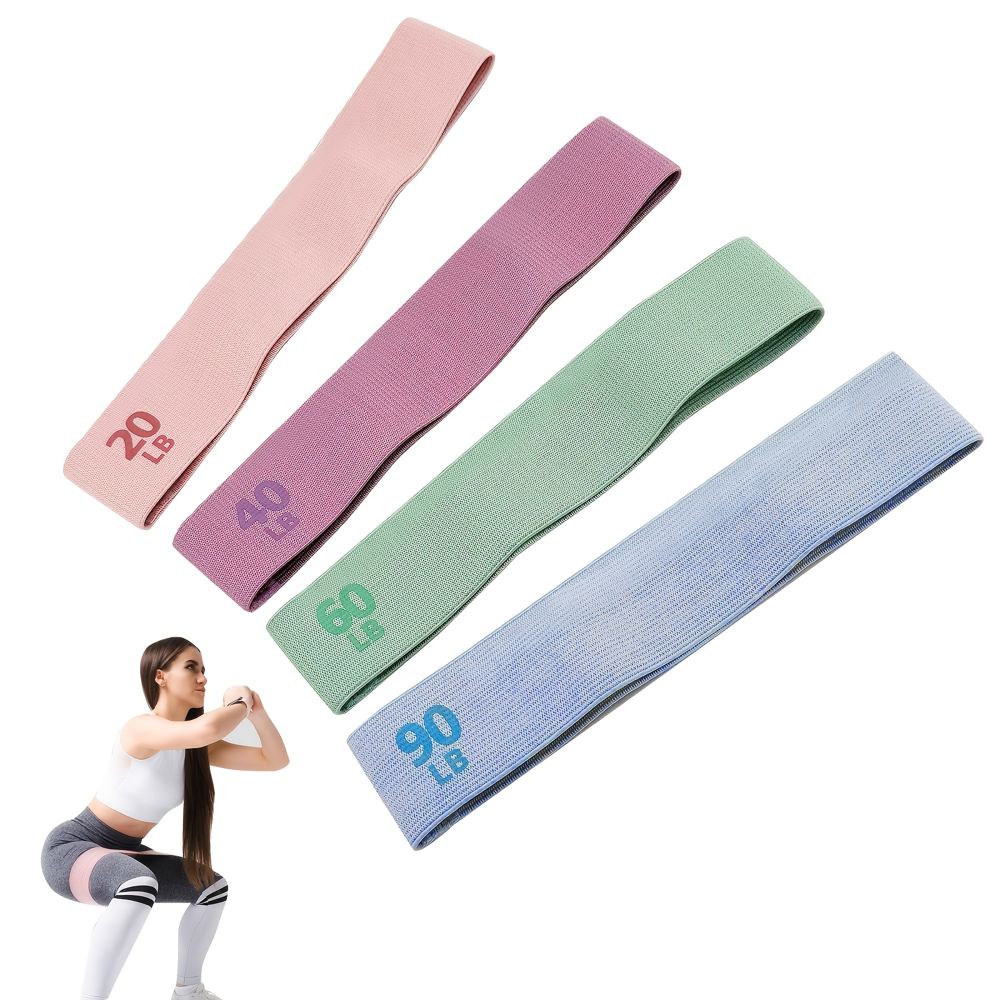
- Loop bands (flat, circular loops). The workhorse for lower-body work — squats, hinges, bridges. A set of Circular Resistance Loops in several thicknesses gives you a real strength range.
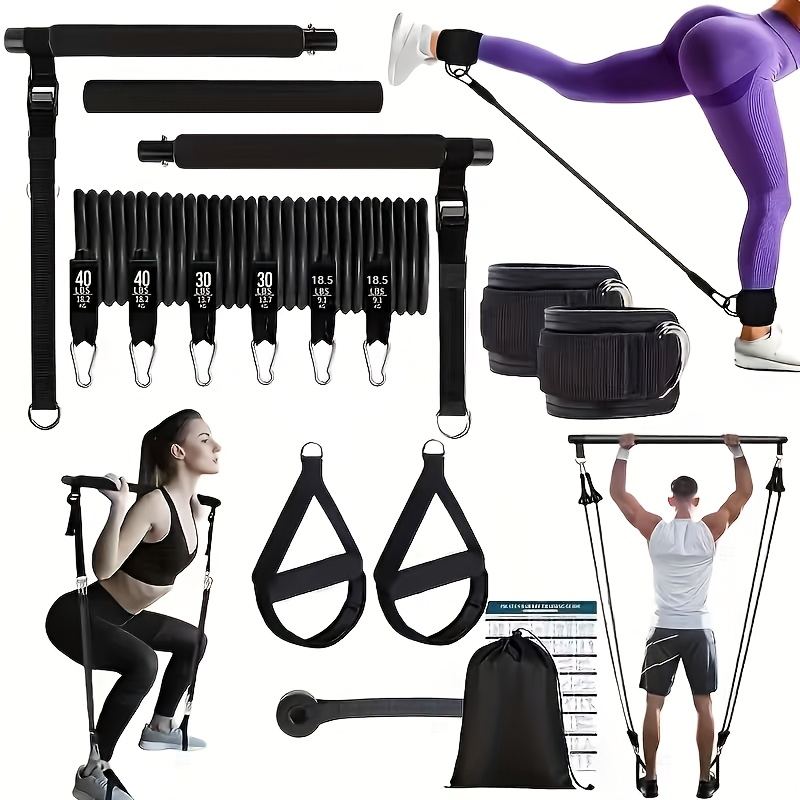
- Tube bands with handles (and door anchors). Better for pressing and rowing movements that mimic dumbbell and cable work. A set with weight indicators helps you track progression honestly instead of guessing.
A 14-piece pilates stick and band kit is another good-value option that adds variety. Before every session, check bands for nicks or thinning — a snapped band is no joke — and never stretch one toward your face.
The Full-Body Band Routine: 8 Exercises
Warm up for 5 minutes first: march in place, 10 arm circles each direction, 10 hip hinges, 10 bodyweight squats. Then rest 60–90 seconds between sets.
1. Band Squat
Purpose: Trains the quads, glutes, and core in the fundamental squat pattern.
Starting position: Stand on a loop band, feet shoulder-width apart, band across your upper back and held at the shoulders.
Technique: Push your hips back and bend your knees, chest up, knees tracking over toes. Lower until thighs are roughly parallel, then drive up through your heels.
Breathing: Inhale as you lower, exhale as you stand.
Sets and reps: 2–4 sets of 8–20 reps.
Beginner modification: Squat to a chair instead of full depth.
Common mistake: Knees collapsing inward — push them gently outward as you descend.
2. Band Romanian Deadlift
Purpose: Builds the hamstrings, glutes, and lower back in the hip-hinge pattern.
Starting position: Stand on the band, feet hip-width apart, holding it with both hands in front of your thighs.
Technique: With soft knees, hinge at the hips and slide the band down your thighs, back flat. Stop at a deep hamstring stretch, then drive your hips forward to stand.
Breathing: Inhale on the way down, exhale as you drive the hips forward.
Sets and reps: 2–4 sets of 10–15 reps.
Beginner modification: Use a lighter band and a shorter range of motion.
Common mistake: Rounding the lower back — stop the descent the moment your back wants to round.
3. Anchored Chest Press
Purpose: Trains the chest, shoulders, and triceps — the pushing muscles.
Starting position: Anchor a tube band at chest height behind you. Face away, a handle in each hand at chest level.
Technique: Press forward until your arms are nearly straight, squeezing your chest. Control the return — never let the band snap your arms back.
Breathing: Exhale as you press, inhale as you return.
Sets and reps: 2–4 sets of 8–15 reps.
Beginner modification: Step closer to the anchor, or press one arm at a time.
Common mistake: Flaring elbows to 90 degrees — keep them at roughly 45 degrees to protect the shoulders.
4. One-Arm Anchored Row
Purpose: Builds the lats, rhomboids, and biceps — the pulling muscles that balance all that pressing.
Starting position: Anchor the band at chest height and face it in a staggered stance, one handle in hand, arm extended.
Technique: Pull the handle to your ribcage, driving the elbow back and squeezing the shoulder blade toward your spine. Lower slowly.
Breathing: Exhale as you pull, inhale as you extend.
Sets and reps: 2–3 sets of 10–15 reps per side.
Beginner modification: Row with both arms using a lighter band.
Common mistake: Shrugging the shoulder toward the ear — keep it down and back.
5. Standing Overhead Press
Purpose: Develops the shoulders and triceps, plus core stability from standing.
Starting position: Stand on the band, feet shoulder-width apart, handles at shoulder height.
Technique: Press straight overhead, bracing your core and keeping your ribs down. Lower under control.
Breathing: Exhale as you press up, inhale as you lower.
Sets and reps: 2–3 sets of 8–12 reps.
Beginner modification: Use a staggered stance for balance.
Common mistake: Arching the lower back to "help" — if you must lean, the band is too heavy.
6. Band Pull-Apart
Purpose: Strengthens the rear deltoids and upper back — the muscles that undo desk posture.
Starting position: Stand tall, arms extended at shoulder height, holding a light band with an overhand grip.
Technique: Pull the band apart until it touches your chest, squeezing your shoulder blades together. Pause one second, return slowly.
Breathing: Exhale as you pull apart, inhale as you return.
Sets and reps: 2–3 sets of 12–20 reps.
Beginner modification: Use the lightest band you own — this is precision work, not heavy work.
Common mistake: Going so heavy the neck takes over — go lighter than your ego wants.
7. Pallof Press
Purpose: Trains anti-rotation core stability — the kind of strength that protects your spine in real life.
Starting position: Anchor the band at chest height. Stand sideways to it, handle at your chest with both hands.
Technique: Press the band straight out and hold 2–3 seconds, resisting the pull to rotate you. Return slowly, then switch sides.
Breathing: Exhale on the press; keep breathing during the hold.
Sets and reps: 2–3 sets of 8–12 presses per side.
Beginner modification: Stand closer to the anchor or use a lighter band.
Common mistake: Letting the hips rotate toward the anchor — if you twist, the band wins.
8. Band Biceps Curl
Purpose: Direct arm work — because honest programs admit men care about arms.
Starting position: Stand on the band, feet hip-width apart, handles at your sides, palms forward.
Technique: Curl toward your shoulders, elbows pinned at your sides. Squeeze at the top, lower over 2–3 seconds.
Breathing: Exhale as you curl, inhale as you lower.
Sets and reps: 2–3 sets of 10–15 reps.
Beginner modification: Curl one arm at a time with a lighter band.
Common mistake: Swinging the torso — if your body moves, the band is too heavy.
Bands vs Dumbbells vs the Gym: An Honest Comparison
| Factor | Resistance Bands | Dumbbells | Full Gym | | --- | --- | --- | --- | | Cost to start | Very low | Moderate | High (membership) | | Space needed | Almost none | A corner | A commute | | Portability | Fits in a bag | Heavy to move | None | | Maximum load | Limited ceiling | High with full set | Highest | | Joint friendliness | Very high | Moderate | Varies | | Noise | Silent | Some clanking | Loud | | Best for | Home, travel, beginners to intermediates | Serious home training | Maximum loading, machines |
The honest takeaway: bands are the best starting point for most men and remain useful forever as accessory and travel tools. If you outgrow your heaviest band on key lifts, adding dumbbells — see our bands versus dumbbells comparison — is the natural next step.
A Simple Weekly Plan
| Day | Session | | --- | --- | | Monday | Full routine (exercises 1–8), 3 sets each | | Tuesday | Rest or 20–30 min walk | | Wednesday | Full routine, focus on slower reps | | Thursday | Rest | | Friday | Full routine, 4 sets of the big four (squat, deadlift, press, row) | | Saturday | Optional: walk or light band mobility | | Sunday | Rest |
If three full sessions feel like too much, two per week still builds real strength.
Progressing When You Can't Add Weight
- Use a thicker band or double up. Log what you used last time.
- Slow the tempo. A 3-second lowering phase makes the same band dramatically harder.
- Add pauses. Pause 2 seconds at the hardest point of each rep.
- Add reps, then sets. Work a band up to 20 clean reps before moving to the next thickness.
Safety Notes
- This guide is for healthy adults. If you have a heart condition, joint issues, high blood pressure, or other medical concerns, check with your doctor before starting.
- Stop and seek advice if you feel chest pain, severe dizziness, unusual shortness of breath, or sharp joint pain. Muscle effort and next-day soreness are normal; joint pain is not.
- Inspect bands before each session and replace any that show cracks or thinning.
FAQ
Q: Can men build real muscle with just resistance bands?
For beginners and intermediates, yes — progressive band training builds genuine strength and muscle, though results vary with consistency, nutrition, sleep, and training history. Advanced lifters will eventually need heavier loading, but bands remain excellent for accessory work, travel, and joint-friendly volume.
Q: How long should a band workout take?
The full eight-exercise routine takes 35–50 minutes including the warm-up. Short on time? The big four (squat, deadlift, press, row) for 3 sets each make a solid 25-minute session.
Q: Are bands bad for joints?
Quite the opposite for most people. Bands load the joint heaviest where your muscles are strongest and lightest in the stretched position, which many lifters find more comfortable than free weights. Controlled form still matters.
Q: How often should I do this routine?
Two to three full-body sessions per week with at least one rest day between them suits most men. Muscles adapt between sessions, so rest days are part of the program.
The Bottom Line
A set of resistance bands and this eight-exercise routine give you a complete full-body strength program that fits in a drawer and costs less than a month at most gyms. Train two to three times a week, progress one small thing at a time, balance every push with a pull, and give it eight to twelve weeks of honest consistency. The men who get results from bands are the ones who actually use them, week after week.
