How to choose dumbbells: hex vs adjustable vs neoprene, weight ranges for beginners, coatings, grips, and the questions to ask before you buy — plus honest picks.
How to Choose Dumbbells: A Complete Buying Guide
Dumbbells are the single most versatile piece of home gym equipment you can own. They work for every major muscle group, take up little space, and last decades if you buy well. But walk into any fitness store or browse online and you will find dozens of types — hex, neoprene, adjustable, spin-lock — at prices ranging from pocket change to serious money. This guide explains every type honestly, helps you pick the right weights, and points out the red flags to avoid before you spend anything.
This guide contains affiliate links. If you buy through them, VÉLORA may earn a commission at no extra cost to you.
The Main Types of Dumbbells
Hex (Rubber-Coated) Dumbbells
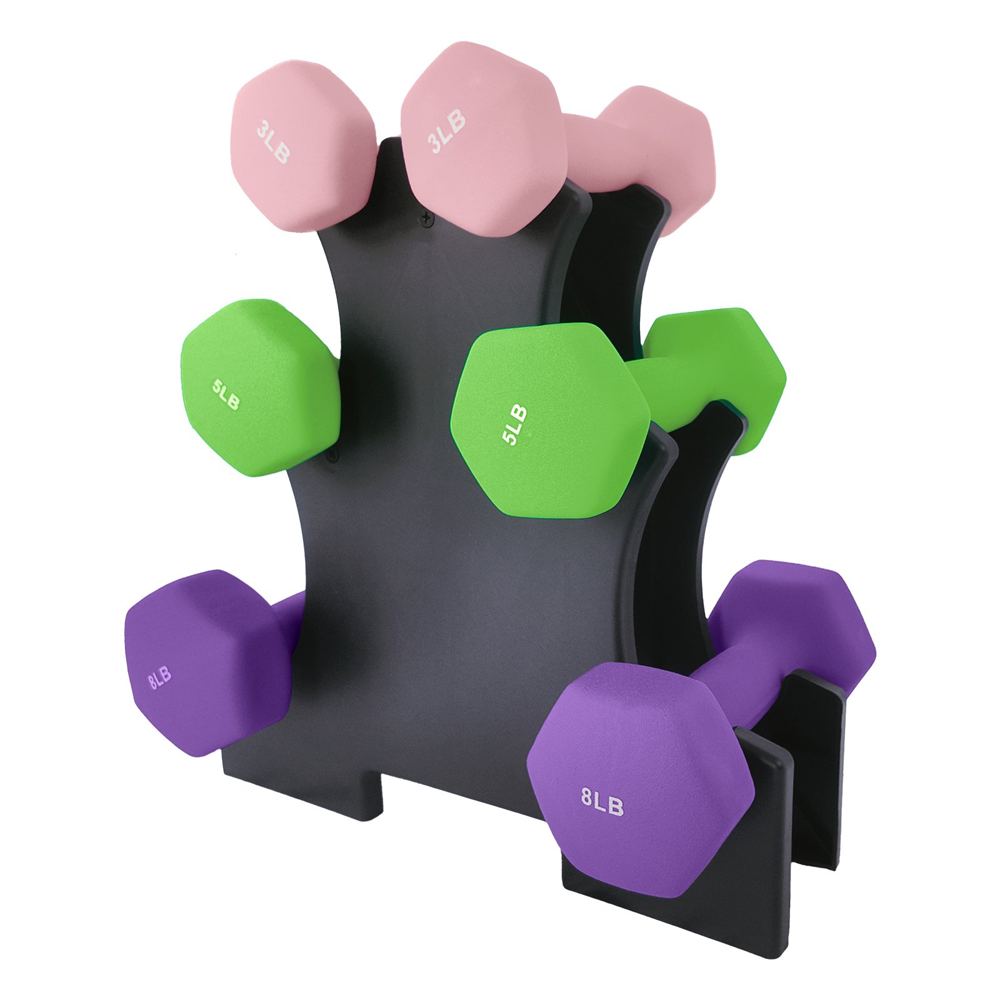
The classic gym dumbbell: a cast-iron core with a six-sided rubber-coated head. The hex shape stops them rolling away, and the coating protects floors and reduces noise. Sold in fixed weights, they are the workhorse choice for most home gyms. A compact hex dumbbell kit with a stand keeps a useful range tidy in one footprint. Downside: a full range of fixed weights gets expensive and takes up real space.
Neoprene and Vinyl-Coated Dumbbells
These are the colorful dumbbells — light to medium weights (usually 1–15 lb) coated in soft neoprene or vinyl. They are comfortable to grip, gentle on floors, and friendly for beginners because the small increments let you progress gradually. The 3 Pair PVC Dumbbell Set with Case is a good example of the category: light pairs in a tidy case, ideal for someone starting out. Downside: the coating can wear with heavy use, and they do not go heavy enough for serious lower-body training.
Adjustable (Dial) Dumbbells
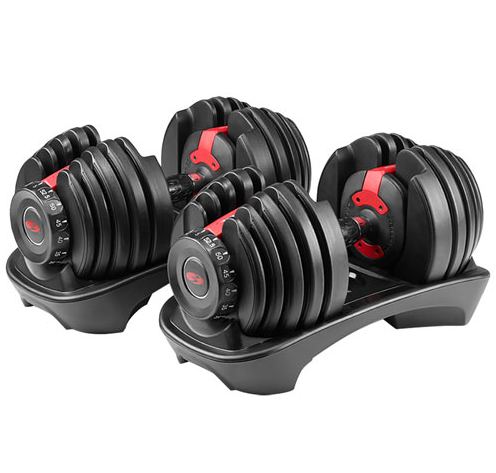
A pair of adjustable dumbbells replaces a whole rack — one handle, and a dial or pin mechanism that changes the weight from roughly 5 to 52.5 lb. The Bowflex SelectTech 552 is the best-known example. They save enormous space and are cheaper than buying fifteen fixed pairs. For a detailed head-to-head of the two approaches, see our guide on adjustable dumbbells for women and our take on whether adjustable dumbbells are worth it. Downside: higher upfront cost, a bulkier feel than a single fixed dumbbell, and dial mechanisms need care — drop them hard and the mechanism can jam.
Spin-Lock (Plate-Loaded) Dumbbells
The old-school option: a short bar with threaded ends, where you slide weight plates on and tighten spin-lock collars. Cheap and expandable. Downside: changing weights between exercises is slow and fiddly, and collars can loosen mid-set.
Studio / Urethane Dumbbells
Premium commercial-grade dumbbells with urethane coating that resists cracking and odor better than rubber. Beautiful and durable — and priced accordingly. Worth considering only if you train heavily and want buy-once equipment.
Dumbbell Types Compared
| Type | Pros | Cons | Best for | | --- | --- | --- | --- | | Hex (rubber-coated) | Won't roll; floor-friendly; durable; classic feel | Full range is expensive and bulky | Most home lifters building a lasting set | | Neoprene / vinyl | Comfortable grip; light increments; gentle on floors | Limited weight range; coating wears | Beginners, light toning work, small spaces | | Adjustable (dial) | Replaces a full rack; space-saving; quick changes | Higher upfront cost; bulky feel; mechanism needs care | Small spaces; people who want many weights in one pair | | Spin-lock | Cheap; expandable; plates can double for barbells | Slow weight changes; collars loosen; awkward balance | Tight budgets with patience | | Studio / urethane | Premium durability; comfortable; no odor | Expensive | Serious lifters wanting buy-once equipment |
How to Pick Your Weight Range
This is the question everyone asks, and the honest answer is that it depends on your current strength, the exercises you do, and how quickly you progress. Legs handle far more weight than shoulders — a weight that challenges your overhead press will feel light for goblet squats. That is why a small range beats a single pair.
These are starting ranges, not prescriptions — treat them as examples and adjust to what you can lift with good form:
- Women beginners: a set spanning roughly 2–15 lb covers most upper-body and beginner lower-body work. Many women start with 3 and 5 lb pairs for arms and shoulders, and 8–12 lb for rows and squats.
- Men beginners: roughly 10–50 lb across a few pairs — 15–20 lb for upper body, 25–40+ lb for goblet squats and deadlift patterns.
- General rule: choose a weight you can lift for your target rep range with the last two reps feeling challenging but doable, with good form throughout.
Buy for where you are now with a little room to grow. One pair that is perfect today will feel light in a few months — that is progress, not a purchasing mistake. Adjustable dumbbells solve this elegantly, which is why they are so popular for home gyms.
Grip, Coating, and Handle Details
Grip comfort matters more than beginners expect. Knurled (textured) metal handles give the most secure grip, especially as weights get heavier or your hands get sweaty. Smooth chrome handles can feel slippery. Neoprene and vinyl coatings are the most comfortable for light weights and are kind to hands, but they offer less grip security at higher loads.
Coatings protect your floors and your ears. Bare cast iron is loud, can rust, and will mark floors. Rubber coating is the standard middle ground — durable, quieter, floor-friendly. Neoprene/vinyl is softest but least durable under heavy use. Urethane is the premium option: tough, odor-free, and crack-resistant.
Handle thickness varies. Standard handles suit most hands. If you have small hands, look for contoured or slightly slimmer handles — many neoprene dumbbells are designed with this in mind. If grip strength is a goal in itself, thicker handles add challenge.
Shape affects daily use. Hex heads do not roll away when you set them down between sets — a genuine quality-of-life feature. Round heads roll; avoid them unless they come with a stand or cradle.
Space, Storage, and Budget
Space: A full set of fixed dumbbells needs a rack and real floor space. Adjustables need the footprint of one pair plus their cradle. Neoprene sets in a case tuck into a closet. Measure your space before you buy — the women's home gym dumbbell kit with hex weights on a stand shows how a compact stand keeps a useful range organized in a small footprint.
Budget tiers:
- Under $50: a light neoprene or PVC pair or two — enough to start, especially for upper-body work.
- $50–$150: a small multi-pair set (like a 3-pair set with case) or a spin-lock set with plates.
- $150–$350: a pair of adjustable dumbbells — the sweet spot for most home gyms.
- $350+: a quality hex set with rack, or premium adjustables.
Buy used when you can. Dumbbells are nearly indestructible, so second-hand iron is a bargain — check that spin-lock collars thread smoothly and adjustable mechanisms click cleanly through every setting.
Honest Product Picks
These are genuine recommendations based on who each product suits:
- Best all-rounder for women starting a home gym: the Women's Home Gym Dumbbell Kit with Hex Weights and Stand. Hex weights in a sensible range with a stand that keeps everything organized — the classic, no-regrets choice.
- Best space-saver: the Bowflex SelectTech 552. One pair replaces many fixed weights, and the dial makes weight changes fast. Best for small spaces and people who want to progress without buying new pairs every few months. Handle with reasonable care — do not drop them.
- Best budget starter set: the 3 Pair PVC Dumbbell Set with Case. Light pairs in a portable case — perfect for beginners learning the movements before investing more. For more exercise ideas, see our guide to dumbbell exercises for women.
Red Flags to Avoid
- No weight markings, or markings that rub off. You need to know what you are lifting. Avoid unmarked or sticker-labeled weights.
- Wobbly or loose heads. On fixed dumbbells, the head should be firmly attached to the handle. Any rattle or play is a defect — return it.
- Suspiciously cheap adjustables from unknown brands. Dial mechanisms are precision parts. A bargain adjustable that jams mid-workout is not a bargain.
- Strong chemical smell that does not fade. Cheap rubber coatings can off-gas badly. Air them out; if the smell persists after a week, consider returning.
- Spin-lock collars that do not thread smoothly. Cross-threading under load is dangerous. Test every collar before first use.
- Round heads with no stand. They will roll across your floor, under furniture, and possibly onto your foot.
Questions to Ask Before You Buy
- What is the heaviest weight I will need in the next year — and does this option reach it?
- How much floor space do I actually have, including a rack or cradle?
- Will I need to change weights quickly between exercises, or can I take my time?
- Do I share equipment with someone much stronger or weaker than me?
- Is noise a concern — downstairs neighbors, sleeping children?
- What is my honest budget, including storage?
FAQ
Q: How many dumbbells does a beginner need?
Most beginners do well with two to three pairs spanning a light-to-moderate range — light pairs for shoulders and arms and a heavier pair for rows and squats. A single adjustable pair covers the same ground in less space.
Q: Are adjustable dumbbells as good as fixed dumbbells?
For most home training, yes — they offer the same weights with far less space and cost. The trade-offs are a bulkier feel, a dial mechanism that needs reasonable care, and a higher upfront price. Heavy lifters who drop weights or need very heavy loads may still prefer fixed hex dumbbells.
Q: What weight dumbbells should a woman start with?
There is no single right answer, but a common starting point is 3–5 lb for shoulder and arm exercises and 8–12 lb for larger movements like rows and squats. Start lighter than you think, master the form, and progress in small steps.
Q: Do I need a rack or stand?
Not strictly, but it helps a lot. A stand keeps weights organized, off the floor, and easy to grab — which means you will actually use them. For adjustable dumbbells the cradle is essential for weight changes. For a few light pairs, a case or a corner of the room works fine.
Q: Can I build muscle with just dumbbells at home?
Yes — dumbbells can train every major muscle group effectively, and progressive overload (gradually increasing weight, reps, or difficulty) is what drives muscle growth, not the venue. Results vary with consistency, effort, nutrition, and recovery, but the equipment itself is not the limiting factor for most people.
Q: Neoprene vs rubber coating — which is better?
Neoprene is softer and more comfortable, ideal for light weights and beginners. Rubber is tougher and better for heavier weights and frequent use. For light dumbbells you will hold often, neoprene feels nicer; for a long-lasting set you will keep for years, rubber (or urethane) holds up better.
Conclusion
Choosing dumbbells comes down to matching the type to your space, budget, and strength — not to finding the "best" dumbbell in the abstract. Beginners in small spaces get the most value from a light multi-pair set or a quality adjustable pair; dedicated lifters building a permanent home gym will be happiest with rubber-coated hex weights on a stand. Buy for the lifter you are today with room to grow, and remember that the best dumbbells are the ones you will actually pick up three times a week.
