Elliptical vs treadmill for home use: impact, stride feel, space, price and noise compared — plus who should pick which, and the hybrid alternatives worth knowing.
Elliptical vs Treadmill for Home Use: An Honest Comparison
The elliptical and the treadmill are the two heavyweights of home cardio, and they promise nearly the same thing: a full cardio workout without leaving the house. But they deliver it in very different ways — one by removing impact from your stride, the other by reproducing the most natural movement humans have. Choosing between them comes down to your joints, your space, your budget, and honestly, which motion you enjoy enough to repeat.
This comparison explains how each machine actually feels, what each demands of your home, what each costs to own, and who should pick which — including the two alternatives that are quietly better for some people.
This guide contains affiliate links. If you buy through them, VÉLORA may earn a commission at no extra cost to you.
How the Movements Actually Feel
The elliptical glides your feet along a fixed oval path while your hands push and pull the moving handles. Your feet never leave the pedals, so there is no impact at all — the machine carries your weight through the stride. The full-body involvement is real: legs drive, arms pump, and your core stabilises. The sensation is smooth and rhythmic, though some people find the fixed stride path slightly artificial at first, like walking on a path somebody else drew. Stride length matters: too short a stride makes tall users feel cramped, too long makes short users overreach.
The treadmill reproduces walking and running exactly as you know them. Belt speed sets the pace; incline simulates hills. The motion needs no learning curve — if you can walk, you can use a treadmill — and the variety is built in: strolls, power walks, jogs, sprints, hill intervals. The cost of that naturalness is impact: every footfall lands with multiples of your body weight, softened by the deck but never eliminated.
One more difference that surprises buyers: the elliptical lets you pedal backwards, working the movement in reverse for variety; the treadmill is strictly forward.
Joint Impact and Injury Friendliness
This is the elliptical's strongest argument. Zero impact, full body in motion, joints supported through every moment of the stride — it is one of the friendliest cardio machines for knees, hips, and ankles with wear and tear. Many people who cannot run at all can use an elliptical comfortably for 30 minutes.
The treadmill is the honest trade-off. Walking on a cushioned deck at a brisk pace is moderate impact and suits most healthy people; incline walking is often the sweet spot, raising effort without pounding. Running, though, carries real overuse risk — shin splints, knee irritation, stress reactions — especially for new runners who do too much too soon. Results and tolerance vary widely: some people run for decades without issue, others find their knees protesting within months. Start easy either way, and treat joint pain as information, not a challenge.
Space Realities
Both machines are large, but in different ways. An elliptical needs its length plus arm clearance — the handles sweep forward and back, so the effective footprint is bigger than the machine's stated dimensions suggest. Measure the room, not the spec sheet.
Treadmills need length for the belt — runners want a longer belt than walkers — plus clear space behind the machine for safe dismounts. Folding models help with storage but not with in-use footprint. Ceiling height matters for both: on an incline treadmill or a tall elliptical, your head rises several centimetres above standing height. Low ceilings have ended many home-gym dreams at the delivery stage.
Price and Maintenance
Ellipticals and treadmills sit in similar price bands for comparable quality — both cost more than bikes for a durable machine. The treadmill has more to wear out: motor, belt, and deck all need periodic attention (lubrication, alignment checks), and heavy running accelerates that wear. The elliptical's drivetrain is simpler and quieter to maintain, though cheap ellipticals develop wobbles and squeaks that test your patience.
Expect to spend meaningfully on either if you want it to last years of regular use; the cheapest models of both types are where most regrets live.
Noise
Ellipticals are the quieter machine — a smooth magnetic drive and no footfall means apartment-friendly operation. Treadmills hum, whir, and thump: belt motor plus every landing. If you live above someone, the elliptical is the considerate choice, and the treadmill is a conversation with your neighbour. A dense mat helps both, but physics favours the machine with no impact. More on this in our quiet home gym equipment guide.
The Honest Alternatives: Rower and Bike
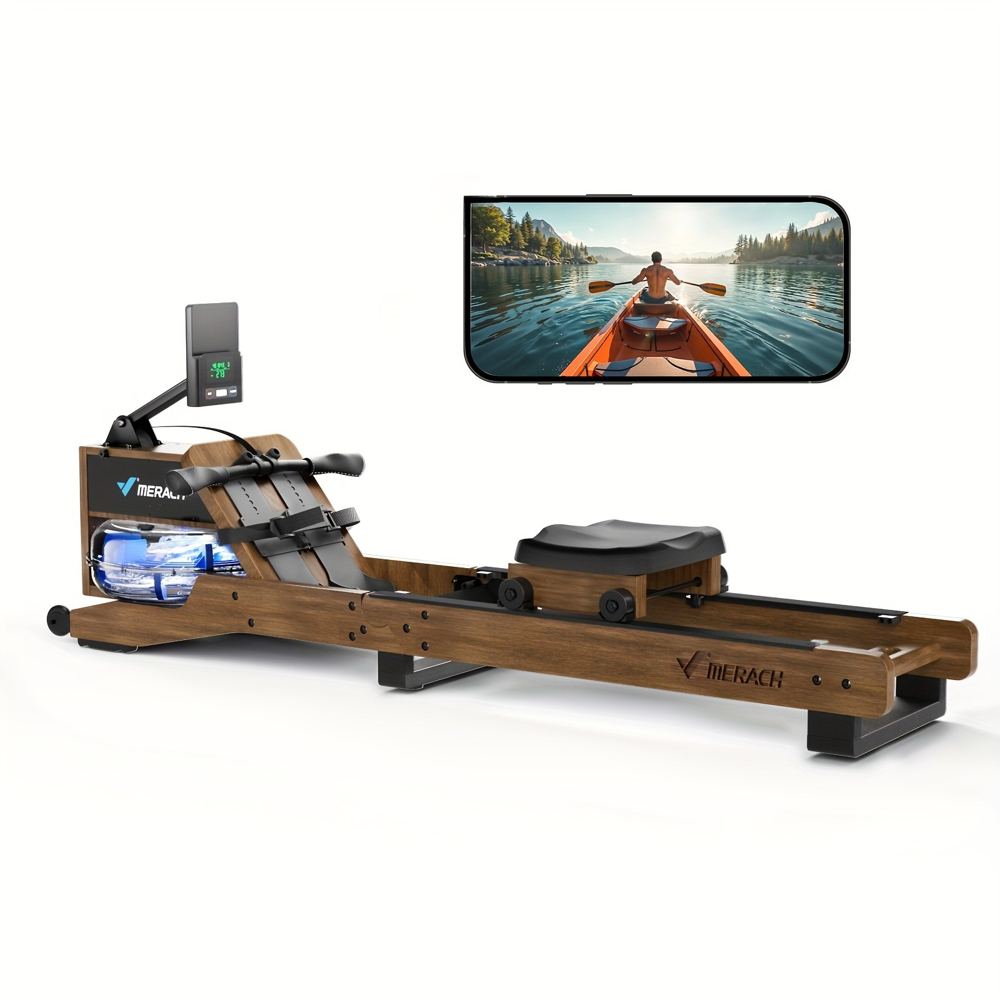
Before you commit, know that many people who rule out one of these machines end up happiest with neither. A rowing machine gives you genuine low-impact, full-body cardio — legs, back, and arms all working — in a machine that stores upright against a wall. The MERACH foldable water rowing machine is an example of the category: water resistance that feels natural, a frame that folds away. Our rowing machine buying guide covers what to look for.
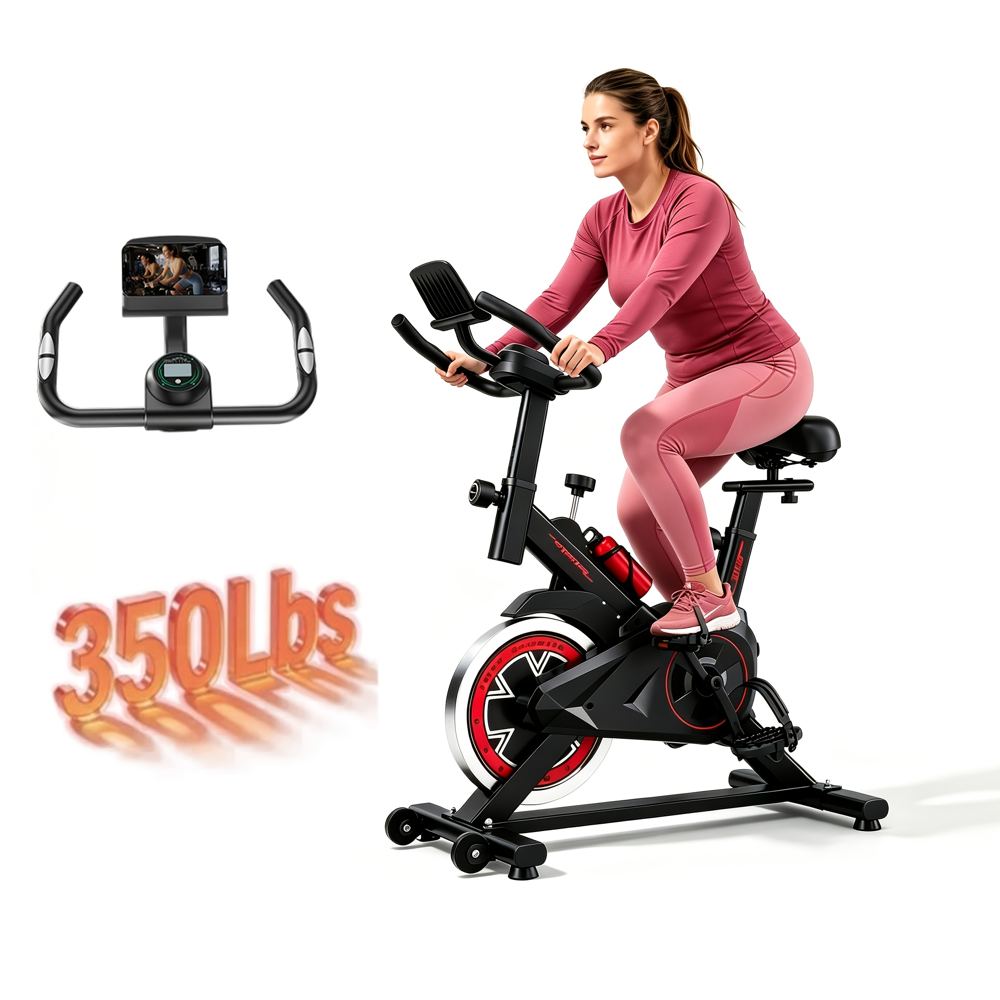
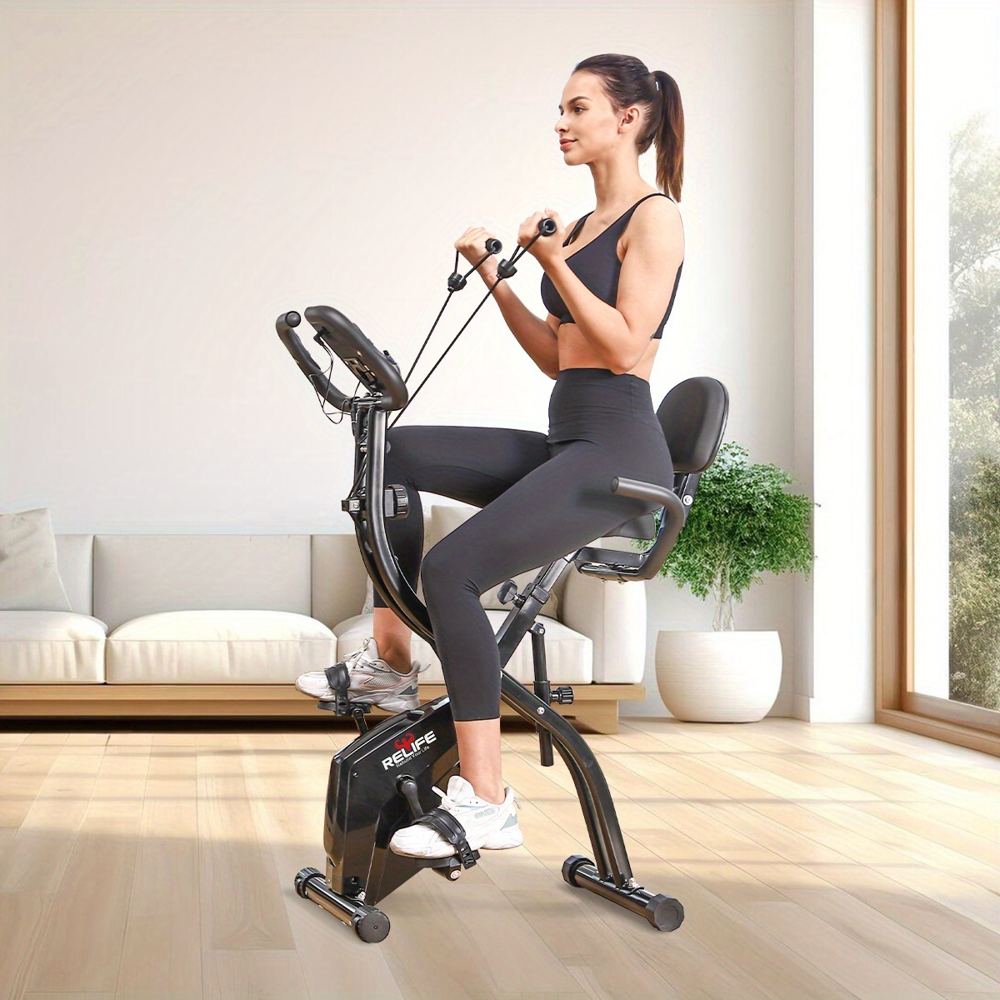
A stationary bike is the other escape route: smaller, quieter, cheaper to maintain, and kind to joints. A heavy-duty magnetic exercise bike suits committed riders, while the RELIFE 3-in-1 folding exercise bike is built for the space-constrained. If the elliptical-vs-treadmill debate is really "which big machine," the bike asks whether you need a big machine at all.
Head-to-Head Table
| Factor | Elliptical | Treadmill | | --- | --- | --- | | Joint impact | Near zero — feet never leave pedals | Moderate for walking; high for running | | Stride feel | Smooth, guided, slightly artificial at first | Completely natural — it's walking/running | | Full-body involvement | High — arms and legs together | Moderate — legs lead, arms assist | | Space needed | Large; add handle-sweep clearance | Large; add rear safety clearance and belt length for runners | | Ceiling height | Matters — stride lifts your head | Matters — incline raises your head further | | Noise | Quiet; apartment-friendly | Belt hum plus footfall thump; neighbours will know | | Price for a durable machine | Mid-high | Mid-high | | Maintenance | Low — simpler drivetrain | Regular — belt, deck, motor | | Bone-density benefit | Minimal (non-weight-bearing) | Yes — weight-bearing, especially walking/running | | Learning curve | Short — a few sessions to feel natural | None for walking; running form takes guidance |
Who Should Pick Which
Choose the elliptical if: your joints have history and you want full-body cardio without impact; you live in an apartment and value quiet; you like the idea of arms and legs working together; or you want the lowest-injury-risk path to regular cardio.
Choose the treadmill if: you are a walker or runner who wants the real motion, including hill training; bone density matters to you (the weight-bearing edge is genuine); you want maximum workout variety from strolls to sprints; or specificity counts because you train for walking/running events.
Choose the rower if: you want low-impact full-body work in a machine that stores upright — and you enjoy the rhythm of pulling.
Choose the bike if: space, noise, and budget are the binding constraints, or joint concerns rule out everything with footfall.
If you are choosing a treadmill specifically for walking, see our guide to compact treadmills and under-desk exercise options — walking pads change the space and cost equation considerably.
Getting Started Safely on Either Machine
Warm up. Five minutes at an easy pace before any real effort — cold joints and sudden intensity are the usual start of an overuse story.
Build gradually. For the treadmill, begin with walking sessions of 15–20 minutes, adding a few minutes per week before introducing any jogging. For the elliptical, start with 10–15 minutes at light resistance and comfortable stride. Increase only one variable at a time: duration, then resistance or speed.
Posture. On the elliptical, stand tall, avoid leaning heavily on the handles, and let your legs do the work — death-gripping the arms unloads the legs and the workout. On the treadmill, keep a natural upright posture and resist holding the rails except for balance at the start.
Cool down. Finish with five easy minutes and gentle stretching for calves, quads, and hip flexors.
FAQ
Q: Is an elliptical as good a workout as a treadmill?
It can be. With arms and legs engaged, an elliptical workout at a challenging resistance burns substantial energy and trains cardio fitness well. The treadmill's edge is weight-bearing (bone health) and running specificity. "As good" depends on your goal: for heart fitness with happy joints, the elliptical is excellent.
Q: Will a treadmill damage my knees?
Walking on a cushioned treadmill is moderate impact and fine for most healthy knees. Running increases the load and the overuse risk — build mileage slowly, run on the deck rather than concrete-hard settings, and back off at the first sign of joint pain rather than pushing through it. Existing knee conditions deserve a clinician's opinion first.
Q: Which machine is better for weight loss?
Neither machine causes weight loss by itself — body weight depends on overall activity, food, sleep, and individual factors, and no equipment can promise results. Both support the cardio side of an active lifestyle when used consistently. Pick the one you will use; the unused machine burns zero.
Q: Do ellipticals really work your arms?
Yes, genuinely, when you use the moving handles actively — pushing and pulling rather than resting your hands on them. The arms will not build much strength, but they contribute real effort to the cardio workout. If your arms are just along for the ride, the workout is legs-only.
Q: Can I use an elliptical if I'm very short or very tall?
Stride length is the fit question: shorter users can feel overstretched on long-stride machines, taller users cramped on short ones. If possible, test the stride before buying, or choose a machine with adjustable stride. For treadmills the equivalent is belt length — walkers need less, runners more.
Conclusion
The elliptical is the joint-friendly, quiet, low-maintenance full-body machine; the treadmill is the natural, versatile, weight-bearing one with more to maintain and more noise to manage. Most buyers should decide on three questions: how are my joints, how are my neighbours, and how much space do I truly have? Answer those honestly and the choice makes itself. And if neither big machine fits your reality, the rower and the bike are not compromises — for many homes, they are simply the better answer.
