Build muscle at home without a full gym: the minimal equipment that works, a full-body dumbbell plan, progressive overload rules, and honest nutrition guidance.
How Men Can Build Muscle at Home Without a Full Gym
You do not need a gym membership to build muscle. You need progressive resistance, consistent training, enough food, and patience. That is the entire list. Yet the home-training conversation is dominated by two unhelpful extremes: either "buy $3,000 of equipment" or "do 500 push-ups a day and you'll be huge." Neither is the honest answer.
The honest answer is that muscle grows in response to a challenge it has not fully adapted to — and you can create that challenge at home with a modest amount of equipment. This guide shows you exactly what equipment actually matters, a complete full-body home program built around it, the rules of progressive overload without machines, and the nutrition basics that make training productive. No hype, no shortcuts, no guaranteed timelines. Results vary widely between individuals — genetics, age, sleep, nutrition, and consistency all shape the outcome.
This guide contains affiliate links. If you buy through them, VÉLORA may earn a commission at no extra cost to you.
The Minimum Equipment That Actually Builds Muscle
Forget the Instagram home gyms. Here is what covers roughly 90% of effective muscle-building:
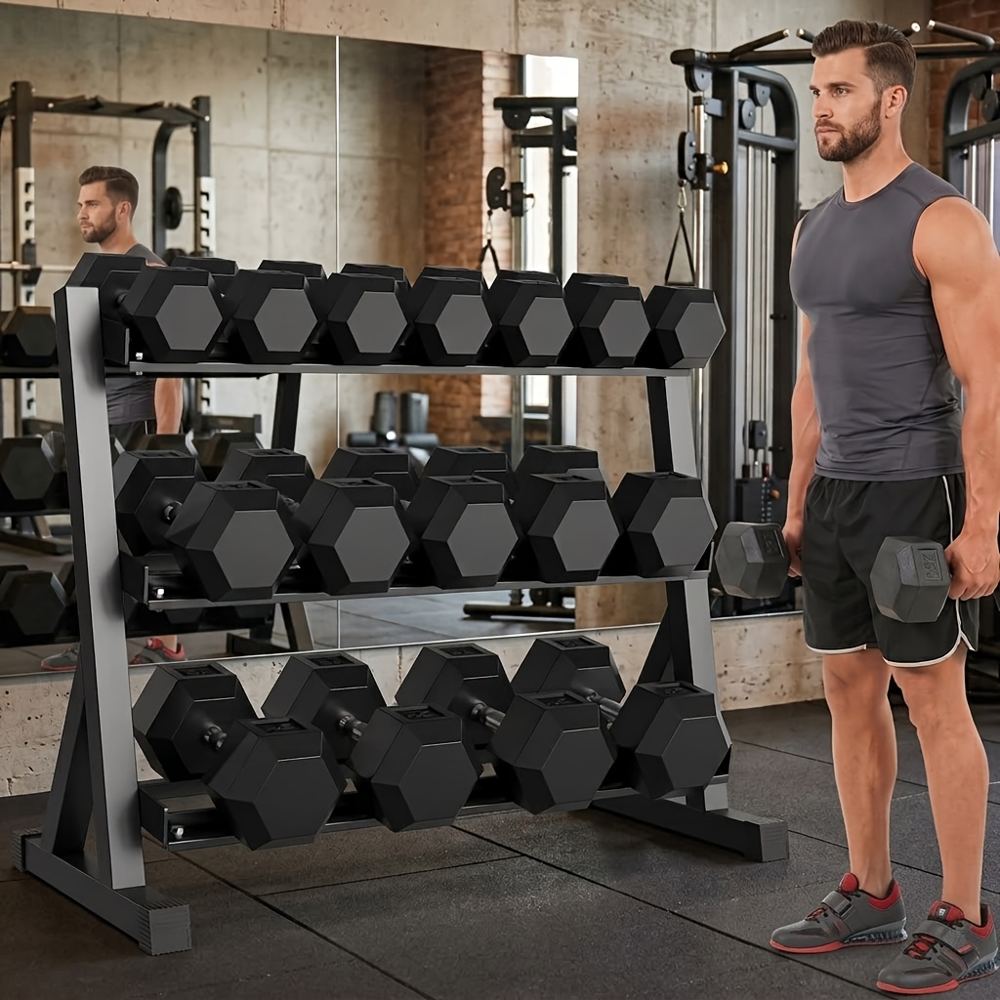
- Adjustable dumbbells (essential). The single most versatile home tool. A hex dumbbell set with a storage rack gives you the full weight range for pressing, rowing, squatting, curling, and hinging — the core of muscle building.
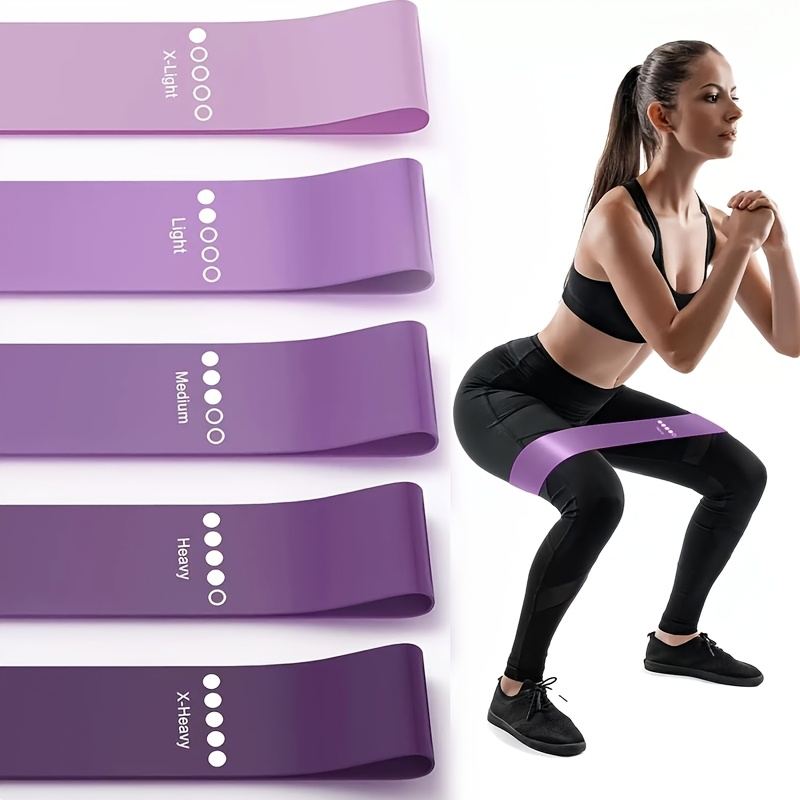
- Resistance bands (highly useful). Loop bands and tube bands add constant tension and cover warm-ups, pull-aparts, and exercises that are awkward with dumbbells alone. A set of circular resistance loops is inexpensive and lasts years.
- A sturdy bench (useful). Enables presses, split squats, rows, and step-ups. A folding adjustable bench stores in a corner.
- A pull-up bar (useful). Doorway bars add the single best upper-back builder to your arsenal.
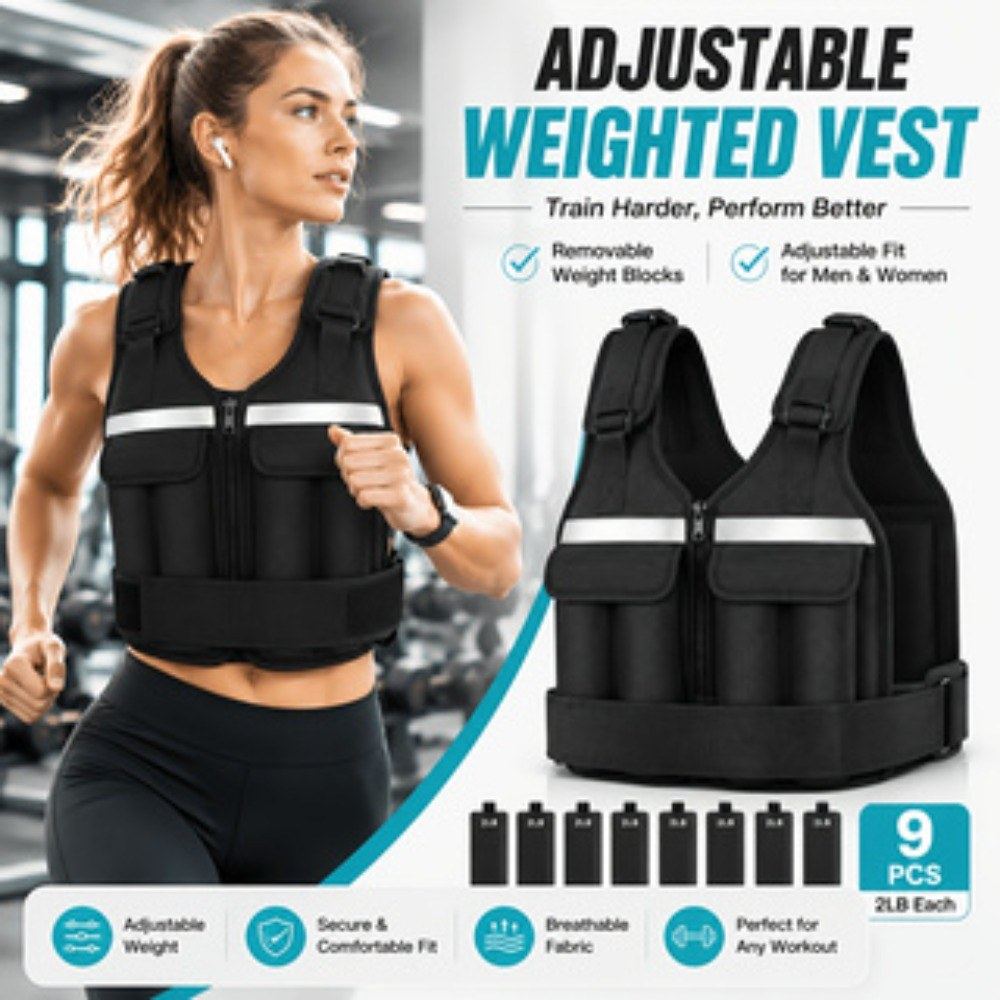
- A weighted vest (advanced). Once bodyweight exercises get easy, an adjustable weighted vest with removable weight blocks makes push-ups, dips, lunges, and pull-ups progressively loadable again.
Everything else — cable machines, leg presses, specialty bars — is optional. If you are outfitting a home gym on a budget, our home gym equipment under $100 guide ranks the best-value pieces, and our home gym vs. gym membership cost breakdown shows the real math.
The Principle That Makes It All Work: Progressive Overload
Muscles do not grow because you "feel the burn." They grow because you repeatedly ask them to do slightly more than they are used to. That is progressive overload, and it is non-negotiable whether you train in a gold-plated gym or a garage.
At home without machines, progress like this:
- Add weight — the adjustable dumbbell's whole purpose. Small jumps (2.5–5 lbs) sustained over months are enormous.
- Add reps — from 8 to 12 to 15 with the same weight, then jump weight and restart lower.
- Add sets — from 2 to 3 to 4 sets of an exercise.
- Slow the tempo — a 3-second lowering phase makes the same weight significantly harder.
- Improve the variation — knee push-ups to full push-ups to weighted push-ups; bodyweight squats to goblet squats to Bulgarian split squats.
- Shorten rest — same work in less time is more demanding.
Track one of these in a notebook or phone app. If your numbers are not moving up over weeks, your muscles have no reason to change.
The Full-Body Home Program
Train 3 days per week on non-consecutive days (Monday/Wednesday/Friday works well). Each session hits every major movement pattern: squat, hinge, push, pull, and carry/core. Alternate Workout A and Workout B so each pattern gets two variations across the week.
Warm-up (5 minutes): march in place, arm circles, 10 bodyweight squats, 10 hip hinges, 10 leg swings per side.
Workout A
1. Goblet Squat — Hold a dumbbell at your chest, feet wider than shoulders, sit down between your heels keeping your chest up. Drive through your whole foot to stand. Exhale on the way up. 3–4 sets of 8–15 reps. Beginner: bodyweight squats to a chair.
2. One-Arm Dumbbell Row — One knee and hand on a bench, back flat, dumbbell hanging. Pull the weight to your hip, squeezing your shoulder blade at the top. Lower slowly. 3 sets of 8–12 reps per side. Beginner: lighter weight, focus on the squeeze.
3. Dumbbell Floor Press — Lie on your back, dumbbells at chest level, knees bent. Press straight up until arms are extended, lower until your upper arms touch the floor. 3–4 sets of 8–12 reps. Beginner: lighter weight; the floor limits range safely.
4. Romanian Deadlift — Dumbbells against thighs, soft knees, push hips straight back keeping your back flat. Feel the hamstrings stretch, squeeze glutes to stand. 3 sets of 8–12 reps. Beginner: practice the hinge with no weight first.
5. Standing Dumbbell Curl — Elbows pinned to ribs, curl to shoulders, squeeze, lower slowly. 2–3 sets of 8–12 reps.
6. Plank — Forearms on floor, body straight from head to heels, brace the core like expecting a punch. 2–3 rounds of 20–60 seconds. Beginner: knees on the floor.
Workout B
1. Bulgarian Split Squat — Back foot on a bench, front foot forward, lower straight down until the front thigh is near parallel. 2–3 sets of 8–12 reps per leg. Beginner: reverse lunges.
2. Dumbbell Overhead Press — Dumbbells at shoulder height, press straight overhead without arching the back. 3 sets of 6–12 reps. Beginner: seated with back support.
3. Bent-Over Dumbbell Row (both arms) — Hinge to 45 degrees, flat back, row both dumbbells to your ribs, squeeze shoulder blades. 3 sets of 8–12 reps. Beginner: one arm at a time.
4. Push-Up (weighted when ready) — Hands under shoulders, body straight, chest to near the floor. Add the weighted vest once you can do 15+ clean reps. 3 sets of as many clean reps as possible (8–20 typical). Beginner: knees down or hands elevated on a bench.
5. Overhead Dumbbell Triceps Extension — One dumbbell overhead with both hands, bend only the elbows to lower behind the head, extend back up. 2–3 sets of 8–12 reps. Beginner: seated, light weight.
6. Glute Bridge (weighted) — Back on the floor, dumbbell across hips, drive hips up to a straight line, squeeze one second, lower slowly. 2–3 sets of 12–20 reps. Beginner: bodyweight.
Rest 60–90 seconds between sets of big movements, 30–60 seconds for smaller ones. Total session time: 40–55 minutes.
Equipment Options Compared
| Option | Cost range | Best for | Limitations | | --- | --- | --- | --- | | Adjustable dumbbells | Moderate, one-time | Everything: presses, rows, squats, curls | Upper limit on max weight for very strong lifters | | Resistance bands | Low | Warm-ups, pull-aparts, travel, joint-friendly work | Resistance curve changes through the range; hard to quantify | | Bodyweight only | Free | Beginners, travel, conditioning | Hard to progressively load legs and back long-term | | Weighted vest | Moderate | Making push-ups, dips, lunges, pull-ups loadable again | Max load limited (typically 20–50 lbs) | | Full gym membership | Ongoing monthly | Heavy barbells, machines, social environment | Cost, travel time, crowded hours |
For most men, adjustable dumbbells plus bands plus a pull-up bar covers years of productive training. The vest extends bodyweight movements when they get easy.
Eating to Support Muscle Growth (Without Obsessing)
Training provides the stimulus; food provides the materials. You do not need a perfect diet, but you need the basics:
- Protein: Aim for roughly 0.7–1 gram of protein per pound of bodyweight per day, spread across meals. Meat, eggs, dairy, fish, beans, lentils, tofu — whatever you actually eat consistently.
- Total calories: To gain muscle efficiently, eat slightly more than you burn — a modest surplus of a few hundred calories a day. If you gain weight rapidly, you are eating too much; if the scale and your lifts stall for weeks, eat a little more.
- Carbohydrates: Fuel your training. Rice, oats, potatoes, bread, fruit — carbs around workouts support performance and recovery.
- Sleep: 7–9 hours matters as much as any supplement. Muscle repair happens during sleep, and chronic short sleep measurably impairs training progress.
Be honest about your goal: building noticeable muscle while staying lean is slow for natural lifters. Visible changes typically take months of consistent training and eating, and the rate varies enormously between individuals.
Common Home-Training Mistakes
- Program-hopping. Switching routines every two weeks because of a new video. Pick one program and run it for 8–12 weeks before judging it.
- No progression plan. Doing the same weights for the same reps for months, then wondering why nothing changed. Track and increase.
- Skipping legs. Upper-body-only training is the fastest route to imbalances and a weak back. The program above trains legs every session.
- All-or-nothing weeks. Missing one session does not ruin a month. Do the next session as scheduled. Consistency over a year beats perfection for three weeks.
Making It Work in an Apartment
Home training in a small or shared space is entirely feasible: dumbbells and bands are quiet, a folding bench tucks away, and bodyweight work needs a few square meters. If noise is a concern, our quiet home gym equipment guide covers neighbor-friendly options. Rubber-coated dumbbells protect floors, and controlled lowering (no dropping weights) keeps things peaceful.
Safety Notes
- This guide is for healthy adults. If you have a heart condition, joint injury, back problems, or any medical concern, check with your doctor before starting a strength program.
- Learn each movement with light weight before loading it. Video yourself from the side — what you feel and what you are doing are often different.
- Stop and seek advice for sharp joint pain, chest pain, severe dizziness, or pain that worsens across sessions. Normal muscle soreness is fine; joint pain is not.
- Keep your training area clear and make sure benches and pull-up bars are stable before loading them.
FAQ
Q: Can men really build muscle at home without a gym?
Yes. Muscle grows in response to progressive overload — gradually increasing challenge over time — and dumbbells, bands, and bodyweight provide that. The equipment matters far less than consistent, progressive training plus adequate protein and sleep.
Q: How long does it take to see muscle gains at home?
Strength typically improves within the first few weeks (mostly your nervous system learning the movements). Visible muscle changes usually take several months of consistent training, and the timeline varies widely by genetics, age, nutrition, sleep, and consistency.
Q: Is 3 days a week enough to build muscle?
For most men, yes — especially beginners and intermediates. Three full-body sessions provide plenty of stimulus per muscle group with good recovery. What matters more than a fourth or fifth day is that the three days are progressive, consistent, and sustained for months.
Q: Do I need to eat a lot to build muscle at home?
You need enough — a modest calorie surplus and adequate protein (roughly 0.7–1 g per pound of bodyweight daily). "Eat everything in sight" builds fat faster than muscle. Track your weight and your lifts: if both creep up slowly, your nutrition is right.
The Bottom Line
Building muscle at home comes down to four things: adjustable dumbbells (plus bands and a pull-up bar when you can), a full-body program you repeat three times a week, progressive overload tracked in a notebook, and enough protein and sleep to recover. That is the whole formula — no gym required, no exotic equipment, no secrets.
