A complete dumbbell workout for men at home: a full-body routine with form cues, set and rep ranges, plus how to pick adjustable vs fixed dumbbells.
Dumbbell Workout for Men at Home: A Full-Body Routine
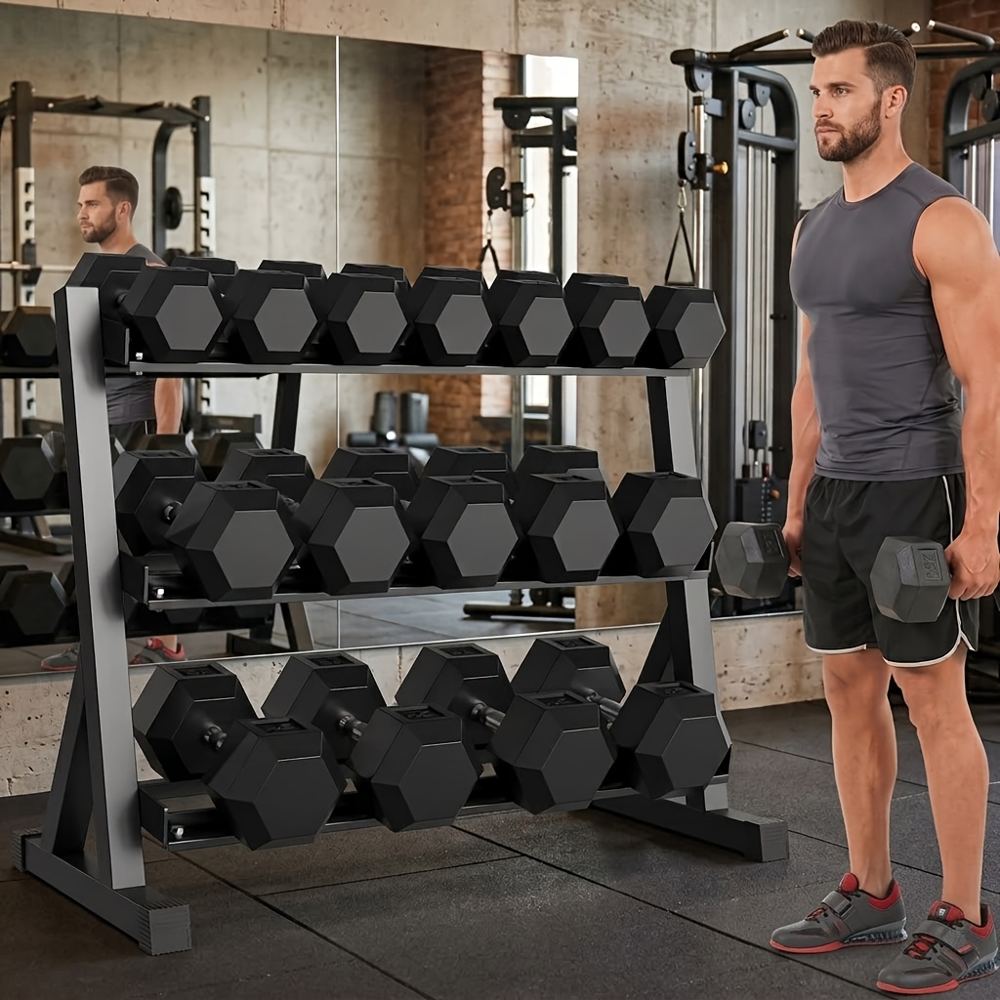
Dumbbells are the most versatile home fitness equipment ever made: one pair trains every major muscle group, works each side of your body independently, and carries you from your first workout to genuinely demanding sessions — in a corner of your living room, with no commute and no monthly fee.
This guide gives you a complete dumbbell workout for men at home: a full-body routine with form cues, set and rep ranges, breathing, and beginner modifications, plus the adjustable-vs-fixed question settled so you buy the right kind once. Results vary between individuals; what this routine offers is a well-structured hour you can repeat two to three times a week.
This guide contains affiliate links. If you buy through them, VÉLORA may earn a commission at no extra cost to you.
Fixed vs Adjustable Dumbbells: An Honest Comparison
| Feature | Adjustable Dumbbells | Fixed Dumbbell Sets (Hex) | | --- | --- | --- | | Space needed | One pair replaces a whole rack | Needs a rack or floor space for multiple pairs | | Cost | Higher upfront, cheaper per weight step | Lower per pair, but adds up across weights | | Weight changes | Dial/lever between sets (10–20 seconds) | Grab the next pair instantly | | Durability | More moving parts; treat them with care | Nearly indestructible; safe to drop | | Best for | Small spaces, gradual progress | Dedicated home gyms, drop-friendly training |
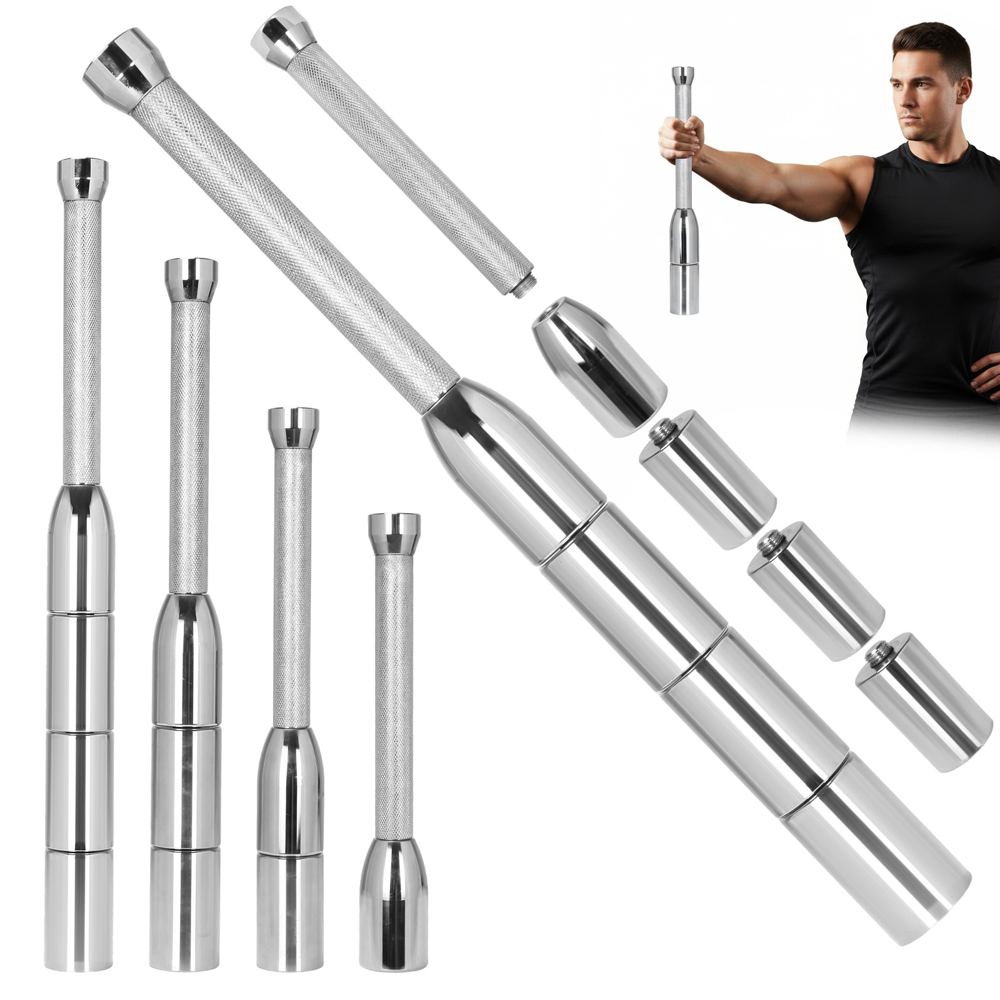
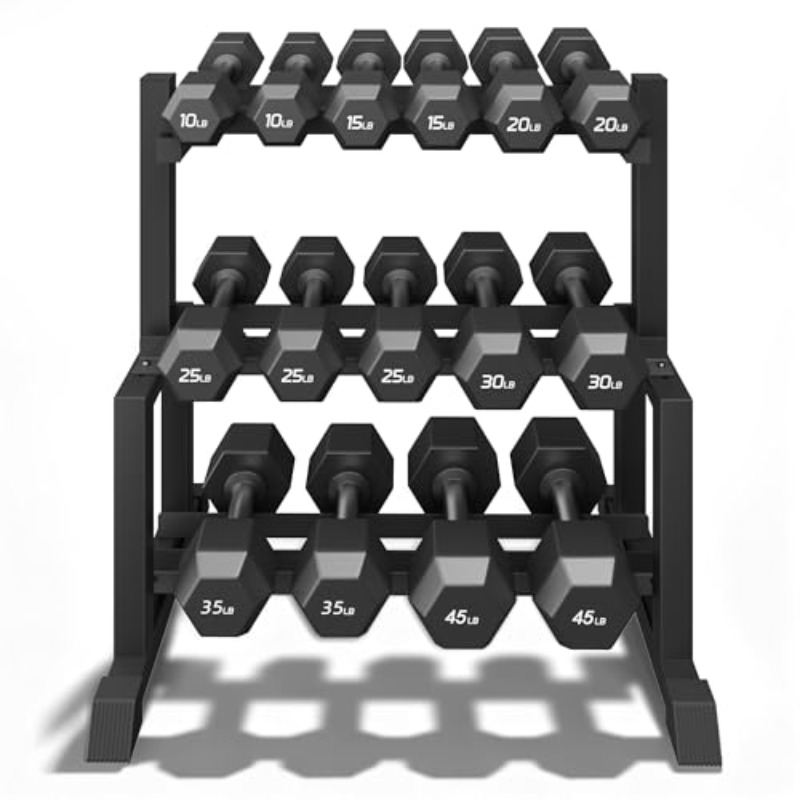
In an apartment or shared space, an adjustable dumbbell with wear resistant grips is the smartest first purchase: one pair covers your lightest warm-up to your heaviest working set. With a garage or spare room, a rubber-coated hex dumbbell set with rack is the classic, bombproof option. Our breakdown of whether adjustable dumbbells are worth it goes deeper on the trade-offs.
The Routine: Full-Body Dumbbell Workout
How to use it: 2–3 times per week on non-consecutive days (e.g. Monday, Wednesday, Friday). Warm up 5 minutes (march in place, arm circles, bodyweight squats, hip hinges), then 2–4 sets of each exercise in order, 8–15 reps, resting 60–90 seconds between sets. Pick weights that make the final 2 reps challenging with clean form. Total: 45–60 minutes.
1. Goblet Squat
Purpose: trains the quadriceps, glutes, and core in the knee-bend.
Starting position: stand feet slightly wider than shoulder-width, toes slightly out. Cup one dumbbell vertically at chest height, elbows down.
Technique: sit back and down between your heels, chest up, knees tracking over toes, to about thigh-parallel with a flat back. Drive through your whole foot to stand.
Breathing: inhale going down, exhale standing up.
Beginner modifications: bodyweight only; hold a door frame for balance; shorten the depth.
Common mistakes: knees caving inward; heels lifting; rounding the lower back.
2. Romanian Deadlift
Purpose: builds the hamstrings, glutes, and lower back in the hip-hinge pattern.
Starting position: feet hip-width apart, a dumbbell in each hand against your thighs.
Technique: push your hips straight back with a slight knee bend, dumbbells sliding down your thighs. Back flat, chin tucked; stop at the hamstring stretch (usually just below the knees), then squeeze the glutes to stand.
Breathing: inhale on the way down, exhale on the way up.
Beginner modifications: very light dumbbells; single-leg with a chair once the two-legged hinge feels smooth.
Common mistakes: rounding the back to reach lower; squatting instead of hinging; jerking the weights up.
3. Dumbbell Floor Press
Purpose: trains chest, shoulders, and triceps; the floor shortens the range of motion, which is shoulder-friendly and needs no bench.
Starting position: lie on your back, knees bent, feet flat, dumbbells at chest height, elbows at roughly 45 degrees, wrists straight.
Technique: press the dumbbells straight up until arms are extended, then lower slowly until your upper arms touch the floor, keeping your lower back gently pressed down.
Breathing: exhale on the press, inhale on the lower.
Beginner modifications: one arm at a time with lighter weight; knee push-ups if pressing feels unstable.
Common mistakes: elbows flared to 90 degrees (stresses shoulders); bouncing the upper arms off the floor; holding the breath through reps.
4. Single-Arm Row
Purpose: builds the lats, upper back, and biceps while correcting left-right strength imbalances.
Starting position: hinge forward about 45 degrees with a dumbbell in one hand, bracing the other on a sturdy chair, table, or bench. Back flat.
Technique: pull the dumbbell toward your lower ribs, squeezing the shoulder blade toward the spine. Pause briefly, lower slowly, and do all reps on one side before switching.
Breathing: exhale on the pull, inhale on the lower.
Beginner modifications: lighter weight, shorter range; bent-over double row once the back stays flat reliably.
Common mistakes: rotating the torso to help the weight up; shrugging toward the ear; cutting the bottom of each rep short.
5. Standing Overhead Press
Purpose: develops the shoulders and upper chest while demanding full-body stability.
Starting position: stand tall, feet hip-width, dumbbells at shoulder height, palms facing each other or slightly forward, core braced.
Technique: press the dumbbells overhead without leaning back. Lower slowly to shoulder height, keeping glutes and abs tight and your torso still.
Breathing: exhale on the press, inhale on the lower.
Beginner modifications: seated on a sturdy chair; one arm at a time with lighter weight; half-range if overhead feels pinchy.
Common mistakes: arching the lower back (weight too heavy); shrugging; pressing forward instead of straight up.
6. Dumbbell Reverse Lunge
Purpose: trains the quadriceps, glutes, and balance through single-leg strength.
Starting position: stand tall with a dumbbell in each hand at your sides, feet together.
Technique: step one foot back, lower the back knee toward the floor with an upright torso, front knee tracking over toes. Push through the front foot to return; alternate legs.
Breathing: inhale stepping back, exhale returning.
Beginner modifications: bodyweight only; hold a wall or chair for balance; shorten the stride.
Common mistakes: front knee drifting past the toes with the heel lifting (step slightly longer); torso leaning forward (drop weight, chest up).
7. Dumbbell Curl
Purpose: isolates the biceps with strict form.
Starting position: stand tall, dumbbells at your sides, palms facing forward, elbows pinned at your ribs.
Technique: curl toward your shoulders, rotating palms slightly inward. Lower over 2–3 seconds, elbows pinned and torso upright.
Breathing: exhale on the curl, inhale on the lower.
Beginner modifications: lighter weight; hammer curls (palms facing each other) if wrists bother you.
Common mistakes: swinging the torso; elbows drifting forward; dropping the weight.
8. Overhead Triceps Extension
Purpose: builds the triceps — the largest muscle group of the upper arm — through a full stretch.
Starting position: stand tall holding one dumbbell with both hands by one end above your head, arms extended, elbows close to your ears.
Technique: bend only the elbows to lower the dumbbell behind your head until you feel a triceps stretch, then extend back without flaring.
Breathing: inhale lowering, exhale extending.
Beginner modifications: lighter weight; seated for stability; reduced range if shoulders are tight.
Common mistakes: elbows flaring wide; arching the lower back; bouncing at the bottom.
9. Farmer's Carry
Purpose: trains grip, forearms, shoulders, traps, and core through the most functional movement there is: carrying something heavy.
Starting position: stand tall with a heavy dumbbell in each hand at your sides.
Technique: walk 20–40 steps tall, shoulders back and down, core braced. Set the weights down, rest 60–90 seconds, repeat for 2–3 rounds.
Breathing: breathe naturally but keep the core braced — short, controlled breaths.
Beginner modifications: lighter weights and shorter carries.
Common mistakes: leaning to one side (weight too heavy or uneven); shoulders creeping to the ears; rushing the walk.
Weekly Schedule Options
| Schedule | Training days | Who it suits | | --- | --- | --- | | 2× per week | e.g. Tue, Sat | Genuinely busy men; still builds real strength | | 3× per week | e.g. Mon, Wed, Fri | The sweet spot — best balance of stimulus and recovery | | Alternating focus | 3× per week, swapping one exercise per session | Men who want variety without program chaos |
Whichever you choose, keep it for at least 6–8 weeks before changing anything. If your equipment collection grows, a heavy-duty 3-tier dumbbell rack keeps multiple pairs organized and your floor clear — tripping over dumbbells is a genuine injury risk.
Progression: Getting Stronger Over Time
Beginners stall by repeating the same weights and reps. Progress deliberately: add reps first (when all sets hit 15 clean reps, add weight), then go up by the smallest step your dumbbells allow and drop back to 8 reps. Slowing the lowering phase to 3 seconds makes light weights feel dramatically heavier. Log your numbers and compare this week to last — not to anyone else.
For the budget angle, our guide to home gym equipment under $100 shows how far a basic dumbbell setup goes, and resistance bands vs dumbbells compares the two most popular home options.
Safety Notes
- Train in a clear area on a stable surface. Put dumbbells down under control — never drop them toward your feet.
- Warm up before every session and stop any exercise that causes sharp joint pain, pinching, or dizziness.
- This guide is for healthy adult men. If you have a heart condition, high blood pressure, diabetes, or joint problems, check with your doctor first.
FAQ
Q: Can I build muscle with just dumbbells at home?
Yes — for the first several months and beyond, dumbbells provide enough load and variety to build real strength and muscle, provided you progress and eat and sleep enough. Each arm works independently, which trains stabilizers well. Barbells and machines are for later, not for starting. Results vary, and consistency matters more than equipment.
Q: How long should a dumbbell workout take?
This full routine takes 45–60 minutes including the warm-up. Short on time? The first five exercises (squat, hinge, press, row, overhead press) make a complete 30-minute session covering every movement pattern.
Q: How heavy should my dumbbells be?
Most men start with roughly 7–10 kg (15–22 lb) per hand for lower-body moves and 5–7 kg (10–15 lb) for upper-body ones. The right weight lets you finish every rep with good form while the last two feel challenging — adjustable dumbbells let you fine-tune per exercise.
Q: Should I do full-body workouts or split routines?
For the first 3–6 months, full-body is better: practicing every movement 2–3 times per week is how beginners learn fastest. Splits make sense later, when you need more weekly volume per muscle to keep progressing.
Q: Do I need a bench for a home dumbbell workout?
Not for this routine — every exercise works on the floor or standing. A bench adds pressing range of motion and supported rows later, but it is a "nice to have," not a requirement for the first months.
Q: How often should I increase the weight?
When you can complete all sets at the top of the rep range with clean form, go up one step and drop back to the bottom of the range — usually every 2–4 weeks per exercise at 3× per week.
The Bottom Line
A pair of dumbbells and this full-body routine is all you need to build strength at home: nine exercises, two to three sessions a week, steady progression, and honest form. Buy the right dumbbells once — adjustable for small spaces, a hex set with a rack if you have room — then spend your energy on what works: showing up, logging your numbers, and adding a little more each month.
