Looking for the best hip thrust machine for home? We compared foldable, plate-loaded and Smith-style glute machines on footprint, capacity and price.
Best Hip Thrust Machine for Home: 4 Glute Machines That Earn Their Floor Space
If you train glutes at home, you already know the awkward part. It's not the effort — it's the setup. The barbell hip thrust against a couch edge, the dumbbell digging into your hips, the five minutes of furniture rearranging before a single working set. A dedicated machine removes all of that, which is exactly why the search for the best hip thrust machine for home has exploded over the last couple of years.
Here's the thing, though: these machines are not cheap, and they're not small. Every pick below is a real commitment of money and floor space. So this guide is honest about who actually needs one, what separates a good glute machine from a wobbly disappointment, and which models make sense at different budgets and room sizes. We compared specs, dimensions and buyer feedback across the current home market — no hype, just the trade-offs laid out plainly.
This guide contains affiliate links. If you buy through them, VÉLORA may earn a commission at no extra cost to you.
Do You Actually Need a Hip Thrust Machine?
Honestly? Not everyone does. If you're new to glute training, resistance bands and dumbbell thrusts will build a solid foundation for months. A machine starts to make sense when one of these sounds familiar:
- You're thrusting more than about 100 lbs and barbell setup has become a workout in itself
- Your bench, couch or step keeps sliding, tilting or digging into your back
- You train glutes two or three times a week and want consistent, repeatable positioning
- You share your space and need something that folds or parks neatly between sessions
If that list resonates, a machine pays for itself in saved time and better sessions surprisingly fast.
What to Look for in a Home Glute Machine
Footprint and storage
Measure your space before you fall in love with a spec sheet. Most plate-loaded glute machines need roughly the footprint of a small desk, plus room behind you to load plates. Foldable designs exist and they're genuinely useful in apartments and spare rooms — just check the folded dimensions too, not only the in-use ones.
Weight capacity and plate compatibility
Look at two numbers: the machine's maximum load and the plate posts. Most home machines use standard 2-inch Olympic plates. If your current plates are 1-inch, budget for adapters or new plates. A capacity around 700 lbs or more sounds excessive — until you remember it also signals a frame that won't flex or creak under a hard working set.
Pad quality and back support
The back pad is where your shoulders rest through every rep, and it's where cheap machines cut corners. You want dense foam that doesn't bottom out, a pad wide enough for your shoulder blades, and a surface that grips your shirt instead of sliding. Your upper back should feel planted, not perched.
Adjustability
Seat height, footplate angle and back-pad position determine whether the machine fits your body or forces you into someone else's geometry. Shorter lifters in particular should check that the footplate can come close enough for a proper 90-degree shin angle at the top of the thrust.
Movement path
Different machines guide the load differently. Plate-loaded lever designs swing through an arc, Smith-style machines move in a straight line, and some hybrid designs add a 3D or rotating element. None is automatically best — the arc-style machines tend to feel most like a free barbell, while guided paths feel more locked-in and beginner-friendly.
The Best Hip Thrust Machines for Home
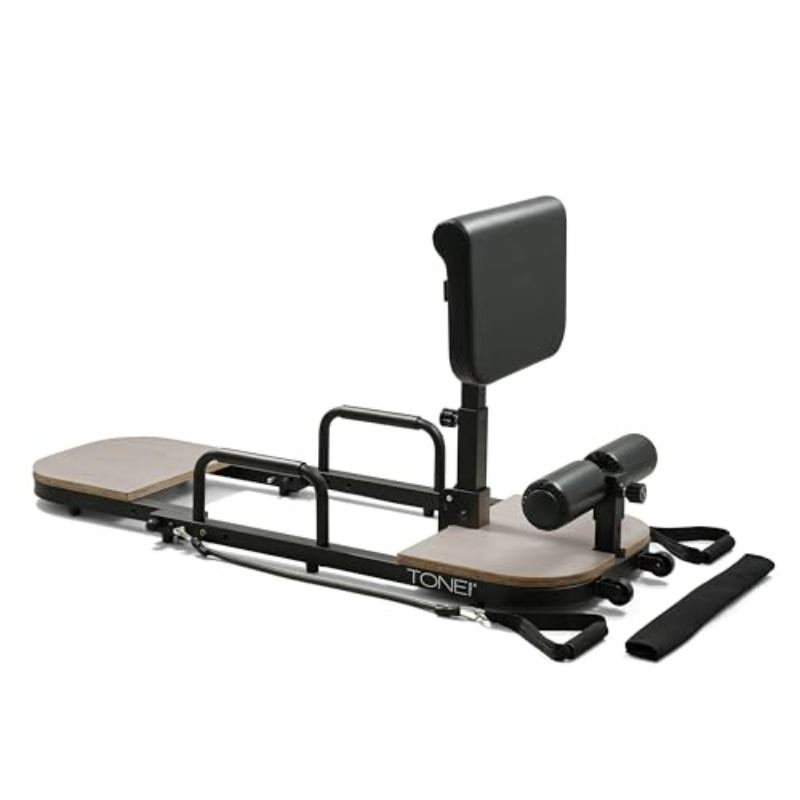
Foldable Hip Thrust Glute Machine Sissy Squat — the space-saving pick
At $439.75, this is the machine for anyone whose "home gym" is also a living room. It folds for storage, which in practice is the difference between a machine you use three times a week and one that slowly becomes a laundry rack. The built-in sissy squat function is a genuine bonus rather than a gimmick — it lets you finish a lower-body session with quad work on the same footprint.
The honest trade-off is ultimate load. Foldable frames trade some rigidity for convenience, so very heavy lifters may feel more movement than they'd like at the top end. For the vast majority of home lifters working in the 100–300 lb range, though, it's more than sturdy enough, and the storage story is unbeatable in this group.
Pros
- Folds away — the only realistic option for small apartments and shared rooms
- Doubles as a sissy squat station for quad finishers
- Lowest-friction setup of the plate-loaded group; easy to get in and out of
Cons
- Less rigid than fixed-frame machines at very heavy loads
- Folding mechanisms add parts that need occasional tightening
Price: $439.75
View on VÉLORA
GAOMON Hip Thrust Machine 770 LBS Plate Loaded — the heavy-duty pick
If your priority is load capacity and a frame that feels like it belongs in a commercial gym, the GAOMON is the one. The 770 lb rating is the highest here, and it shows in the details — thick steel, a wide stable base and a movement that stays smooth when the plates pile up. This is the pick for lifters who are already strong and intend to keep progressing for years.
The catch is size and commitment. This is not a fold-it-in-the-closet machine. It wants a dedicated corner of a garage or gym room, and it wants to stay there. Assembly is also the biggest job of the group, so set aside a proper afternoon and a second pair of hands.
Pros
- 770 lb capacity — the strongest frame in this roundup
- Smooth, stable lever path even under heavy loads
- Built for long-term progressive overload
Cons
- Large, fixed footprint; plan a permanent home for it
- Longest assembly of the group
Price: $479.01
View on VÉLORA
MERXENG 3D Hip Thrust Machine Glute Bridge Trainer
The MERXENG takes a slightly different approach with its 3D movement design, which aims to track the natural arc of a glute bridge more closely than a fixed lever. In practice, lifters who find straight-path machines feel "locked in" in a bad way tend to prefer this style — the motion feels freer and more like a well-executed barbell thrust, with the glutes doing the steering.
It sits in the middle of this group on price and footprint: not foldable, not the heaviest frame, but a thoughtful balance. If we had to describe it in one line, it's the connoisseur's pick — best suited to someone who has done plenty of barbell thrusts and knows exactly what they want the movement to feel like.
Pros
- 3D arc path feels natural and barbell-like
- Good middle ground on price, size and build
- Comfortable, well-shaped back support
Cons
- The freer movement path has a small learning curve
- Not foldable; needs a semi-permanent spot
Price: $440.51
View on VÉLORA
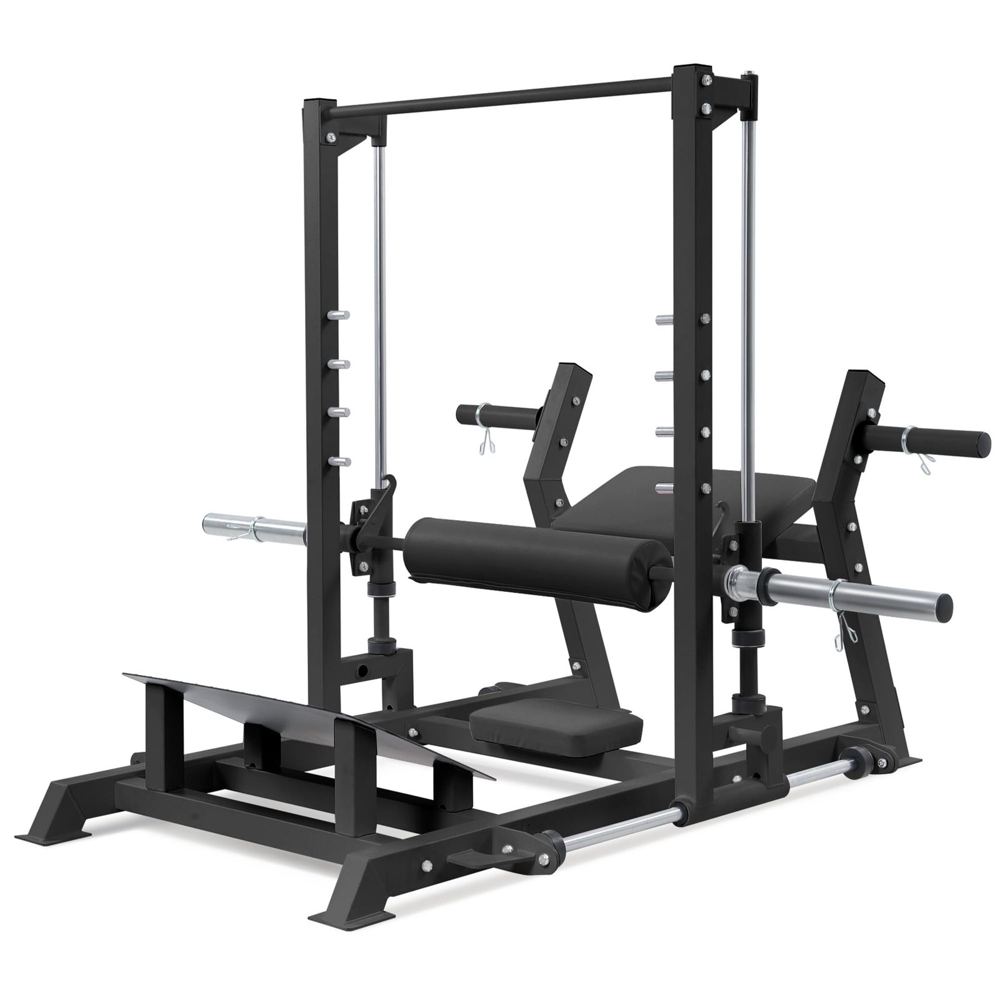
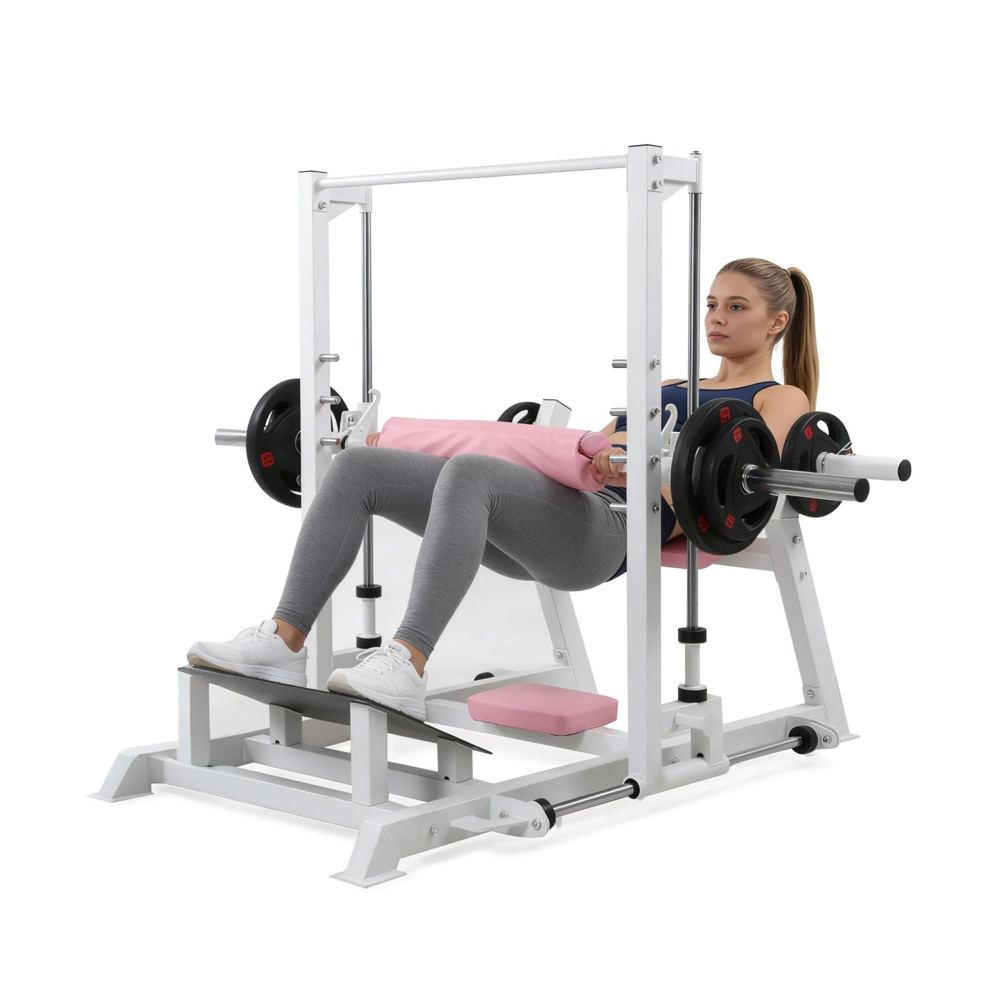
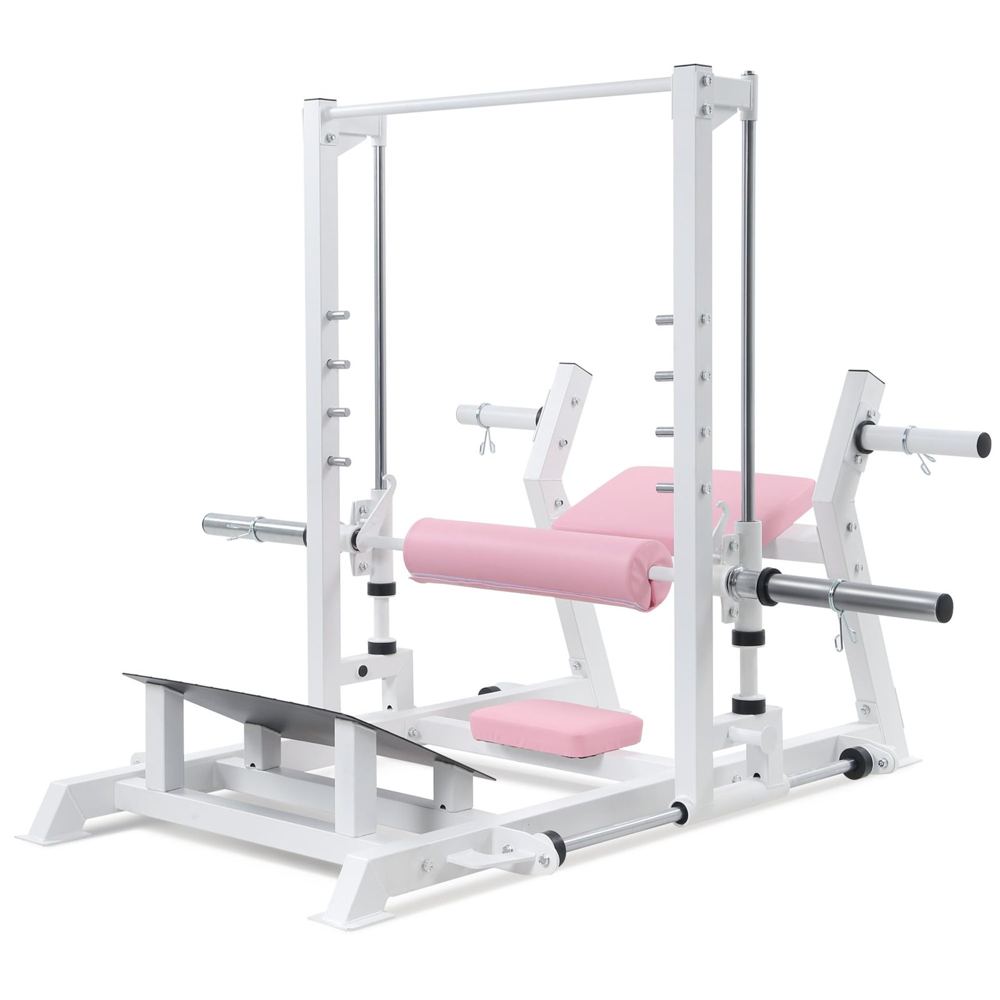
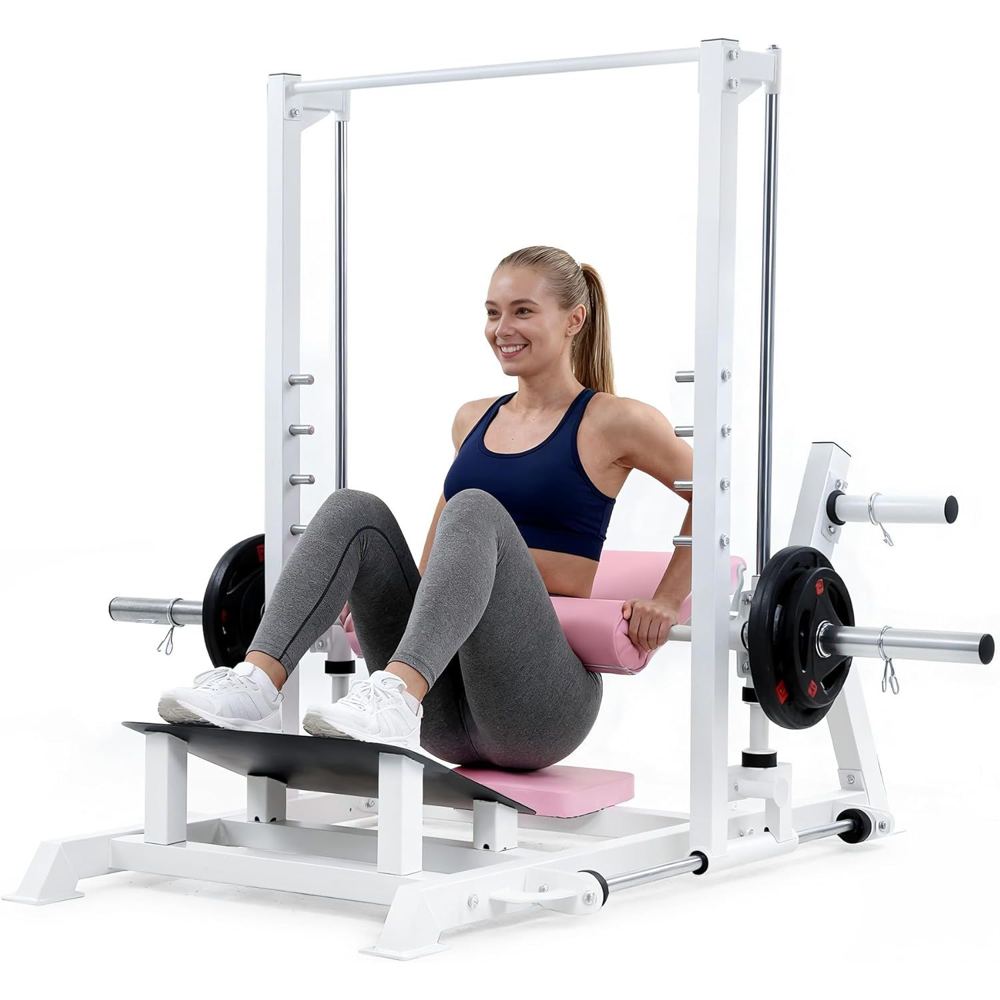
GOCAPTAIN Hip Thrust Smith Machine — the full-body option
The GOCAPTAIN reframes the purchase entirely: instead of a single-exercise machine, you get a Smith-style frame built around hip thrusts but capable of much more — squats, presses, lunges and other guided bar work. If your home gym is currently just a mat and some bands, this one purchase can anchor an entire training setup.
That versatility is also the compromise. A do-everything frame rarely matches a dedicated machine for pure hip thrust feel, and the guided bar path suits some lifters better than others. But judged as total value per dollar of equipment, it's hard to argue with — one footprint, a whole gym.
Pros
- Smith machine versatility: thrusts, squats, presses and more
- Guided bar path feels secure for solo training
- Best total-equipment value if you're building a gym from scratch
Cons
- Largest footprint of the group
- Hip thrust feel is good, not quite dedicated-machine good
Price: $457.47
View on VÉLORA
Ankle Strap for Cable Machine Glute Kickback — the $5.55 alternative
Not ready to spend $440? If you already own a cable machine or a functional trainer, this ankle strap is the smartest five dollars in glute training. Cable kickbacks with a padded, secure strap hit the glute medius and upper glute in a way thrusts don't, and they belong in a complete program alongside a main thrust movement.
It's obviously not a hip thrust machine replacement — it's the budget companion. But honestly, some lifters would get more from this strap plus a good set of bands than from a machine they rarely use. Know yourself, buy accordingly.
Pros
- Just $5.55 — the cheapest glute upgrade there is
- Padded strap stays secure through kickbacks and abductions
- Zero floor space
Cons
- Requires a cable machine you already own
- An accessory, not a full thrust solution
Price: $5.55
View on VÉLORA
Hip Thrust Machine vs Barbell: An Honest Word
A machine doesn't make the barbell obsolete. Barbell thrusts let you micro-load and move the heaviest absolute weight. But the machine wins on the things that decide whether you actually train: setup time, consistency and comfort. Most home lifters who buy one report the same thing — they simply thrust more often, and frequency beats perfection. Pair your machine work with banded accessories like the ones in our guide to the best resistance bands for women and you have a complete glute program.
Frequently Asked Questions
Are hip thrust machines worth it for home use?
For lifters who thrust at least twice a week, yes. The value isn't magic muscle growth — it's removing setup friction so sessions happen consistently and heavy sets feel safe alone. Casual once-a-month lifters are better served by dumbbells and bands.
How much space does a hip thrust machine need?
Most plate-loaded models need about 5 by 4 feet in use, plus plate-loading room. Foldable designs like our space-saving pick shrink dramatically for storage. Always measure your room against both the working and stored dimensions before ordering.
What weight plates do home glute machines use?
Nearly all use standard 2-inch Olympic plates. If you only own 1-inch plates, you'll need new plates or sleeve adapters. Remember to budget plates into the total cost if you're starting from zero.
Is a hip thrust machine better than a barbell?
It's different, not strictly better. Machines offer faster setup, a consistent movement path and a back pad designed for the job. Barbells allow the heaviest loads and cost less. Many serious home lifters end up preferring the machine for weekly volume and keeping the barbell for occasional max-effort days.
Can beginners use a hip thrust machine?
Yes — guided machines are arguably more beginner-friendly than a barbell because positioning is repeatable and there's no bar rolling or bench sliding. Start light, master the full lockout with a pause, and add weight gradually.
The Bottom Line
Short on space? The foldable sissy-squat combo is the realistic choice. Chasing heavy numbers for years? The GAOMON's 770 lb frame is built for it. Want feel above all? The MERXENG's 3D path. Building a whole gym around one purchase? The GOCAPTAIN Smith. And if budget is the deciding factor, the $5.55 ankle strap plus bands will carry you further than you'd expect.
Browse the full glute training collection on the glute training category page, and pair your machine with the accessories in our best resistance bands for women guide for complete, well-rounded glute sessions.